Movement exceeds limits of authority
Metrolinx
GO Transit commuter train 1028
Mile 34.4, Canadian National Railway Company Oakville Subdivision
Burlington, Ontario
The Transportation Safety Board of Canada (TSB) investigated this occurrence for the purpose of advancing transportation safety. It is not the function of the Board to assign fault or determine civil or criminal liability. This report is not created for use in the context of legal, disciplinary or other proceedings. See Ownership and use of content. Masculine pronouns and position titles may be used to signify all genders to comply with the Canadian Transportation Accident Investigation and Safety Board Act (S.C. 1989, c. 3).
Summary
On 14 March 2024 at 1702 Eastern Daylight Time, eastbound GO Transit commuter train 1028 was departing the Waterdown commuter lead track at the GO Aldershot Station in Burlington, Ontario, when it passed by signal 344 displaying a Stop indication. The train then ran through a dual control switch lined in the normal position and entered track 3 of the Canadian National Railway Company Oakville Subdivision main line at Mile 34.4 without authority. After entering track 3, train 1028 was directly in the path of GO Transit commuter train 1775, which was proceeding westbound at 54 mph. Both trains were brought to a stop by their respective crews, avoiding a collision by approximately 549 feet. Together, the 2 trains had more than 400 passengers on board; there were no injuries to the passengers or to the crews.
1.0 Factual information
1.1 The occurrence
This report references content from one or more locomotive voice and video recorders (LVVR).
Under section 28 of the Canadian Transportation Accident Investigation and Safety Board Act (CTAISB Act), every on-board recording is privileged. However, the Transportation Safety Board may make use of any on-board recording where it is necessary in the interests of transportation safety. For this reason, while the Board may refer to an on-board recording related to the causes or contributing factors or to the identification of safety deficiencies, other parties may not access or use privileged on-board recordings unless permitted by subsection 28(6) of the CTAISB Act.
Any references included in this report were considered necessary in the interest of transportation safety.
On 14 March 2024 at about 1330,All times are Eastern Daylight Time. the crew of GO Transit commuter train 1028 (GO 1028) reported for duty at the crew centre in Mimico, a suburb in the west of Toronto, Ontario.All locations are in the province of Ontario, unless otherwise indicated. The crew consisted of a locomotive engineer (LE) and a conductor—collectively referred to as the head-end crew—as well as a customer service ambassador (CSA), who was responsible for the safety and well-being of the passengers. All crew members were employees of Alstom, the operations contractor for Metrolinx. The head-end crew would be responsible for operating GO 1028 westward from Union Station to Aldershot Station (Aldershot), then returning eastward back to Union Station. The train would be travelling on track 3 of Canadian National Railway Company (CN) Oakville Subdivision main line.
After reporting for duty, the train crew made their way to Union Station, where they arrived at about 1515 and held an initial job briefing. At 1520, GO 1028 departed Union Station westward, with the head-end crew operating the train from within the cab car;A cab car is a specially equipped bi-level coach car that has a cab control station at one end from which a locomotive engineer can control train movements. it arrived at Aldershot at 1628 after an uneventful trip.
At Aldershot, GO 1028 was routed from track 3 of the CN main line to the CN Waterdown commuter lead (commonly referred to as pocket track 4A pocket track is a rail track commonly used on metro systems to allow certain trains to park off the main line or to change direction.). The train remained stopped there for about 33 minutes while it was detraining and entraining passengers and being refuelled. During this time, the conductor was close to the head end of the train and monitoring radio communications while the LE was in the coach car adjacent to the locomotive, from where he could monitor the refuelling process.
At about 1654, the LE entered the locomotive to prepare for the return trip eastward to Union Station.GO Transit commuter trains are configured with a cab car at one end and a locomotive at the opposite end. To prevent trains from having to be turned around, westward GO Transit train movements are operated with the cab car in the lead position, and eastward movements are operated with the locomotive in the lead position. He noticed that a substantial amount of rainwater had leaked onto his operating console, as well as the conductor’s table, likely due to an issue with the seal on the windshield. While alone in the locomotive, the LE cleaned up the water that had leaked into the cab, then attempted to adjust the windshield wipers that were not effectively clearing the water from the windshield. He also adjusted his seat.
At about 1655, the conductor boarded the locomotive. He immediately plugged in his company-issued tablet and began reviewing general bulletin orders and operating restrictions (i.e., whether the train would go through areas with planned protection for maintenance-of-way personnel or areas protected by slow order). The LE and the conductor held a short job briefing, during which they discussed upcoming operating restrictions. The Stop signal governing their movement—signal 344 (CN Waterdown East)—was not included in that discussion.
Meanwhile, the CSA was completing safety-related duties among passengers throughout the train. After ensuring that all doors were safely closed, he pressed the internal communication buzzer twice, as required,Section 3.3.2 of the Metrolinx General Operating Instructions (07 April 2023) requires that the CSA on board a train complete a pre-departure check before the train leaves an initial location. Once this check is complete and any discovered issues have been reported, the CSA presses the communication buzzer twice, to inform the head-end crew. to inform the head-end crew (who had just completed their job briefing) that, in terms of passenger safety, they were safe to proceed—a process commonly referred to as the “2-to-go buzzer”.
At 1701:50, upon hearing the 2-to-go buzzer, the LE began to slowly move the train eastward. He was looking ahead and again adjusting the windshield wipers and his seat. The conductor was looking down at his tablet. Neither crew member verbally acknowledged the Stop indication at signal 344.Crew members within physical hearing range must communicate to each other, in a clear and audible manner, the indication by name of each fixed signal they are required to identify. (Source: Canadian Rail Operating Rules, Rule 34: Fixed Signal Recognition and Compliance [effective 01 October 2022, approved by Transport Canada on 09 May 2022], pp. 27–28).
At 1702:31, after passing the Stop signal and travelling about 350 feet eastward, the train approached the switch that routes eastbound trains from pocket track 4 to track 3 on CN’s main line. Neither crew member observed that the switch was lined against their movement. They continued moving eastward until they heard the switch points being forced against the stock rail. This prompted the conductor to look up from his tablet for the first time since boarding the locomotive. The LE asked the conductor whether signal 344 had been permissive, but the conductor did not recall.
The crew realized that signal 344 must have been displaying a Stop indication. At 1703:02, the LE brought GO 1028 to a controlled stop with its head end at Mile 34.250 on track 3. The conductor made an emergency radio broadcast to all trains within proximity of Aldershot while the LE called the rail traffic controller (RTC) to inform him that their train was foul of track 3 without operating authority.
Meanwhile, at 1701:24, opposing GO Transit commuter train 1775 (GO 1775) was proceeding westward on track 3 of the CN main line after completing a station stop at Burlington West. The head-end crew of GO 1775—a conductor, an LE, and an LE trainee—were operating the train from the cab car; a CSA was also on board, managing passenger safety. The LE trainee was at the locomotive controls and the LE was standing directly behind him, to provide coaching. GO 1775 was 5 minutes behind schedule. In the past month, no other delay was reported for GO 1775. When GO 1775 approached signal 333T3 (CN Aldershot East), which was displaying a Clear to Limited indication,A Clear to Limited indication authorizes the train to proceed at track speed, but the crew must be prepared to pass the next signal at limited speed (a speed not exceeding 45 mph). the crew confirmed the signal within the cab, as prescribed by Rule 34 of the Canadian Rail Operating Rules (CROR). At 1702:06, GO 1775 passed signal 333T3 at 46 mph. Shortly after, while the train was proceeding at 54 mph, its head-end crew saw GO 1028 enter track 3. The crew immediately reacted. The conductor yelled to bring the train to a stop just as the LE was reaching past the LE trainee to make an emergency application of the train brakes; however, the trainee was already doing so. After the LE trainee made an emergency application of the train brakes, the LE called the RTC to inform him of the situation. GO 1775 came to a complete stop at 1703:26, with the head end of the train at Mile 34.146, avoiding a collision with GO 1028 by approximately 549 feet (figures 1 and 2).
Together, the 2 trains had more than 400 passengers on board. There were no injuries to the passengers or to the crews.
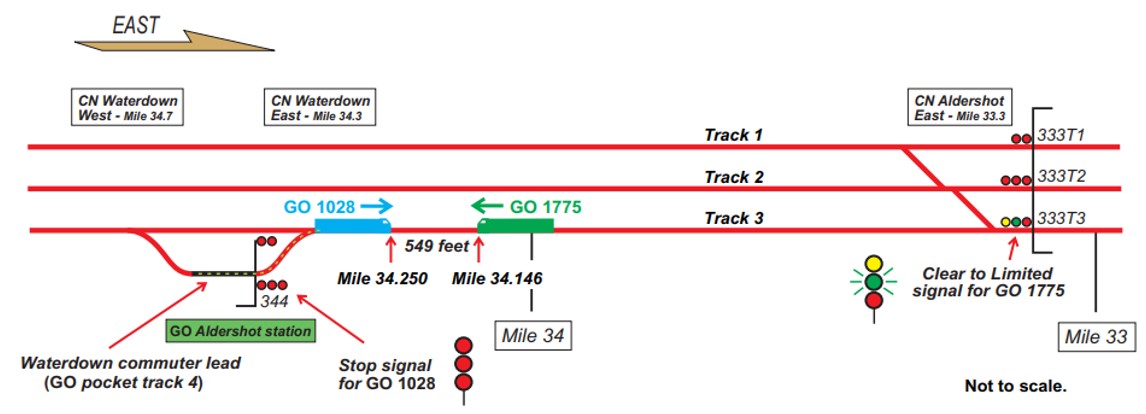
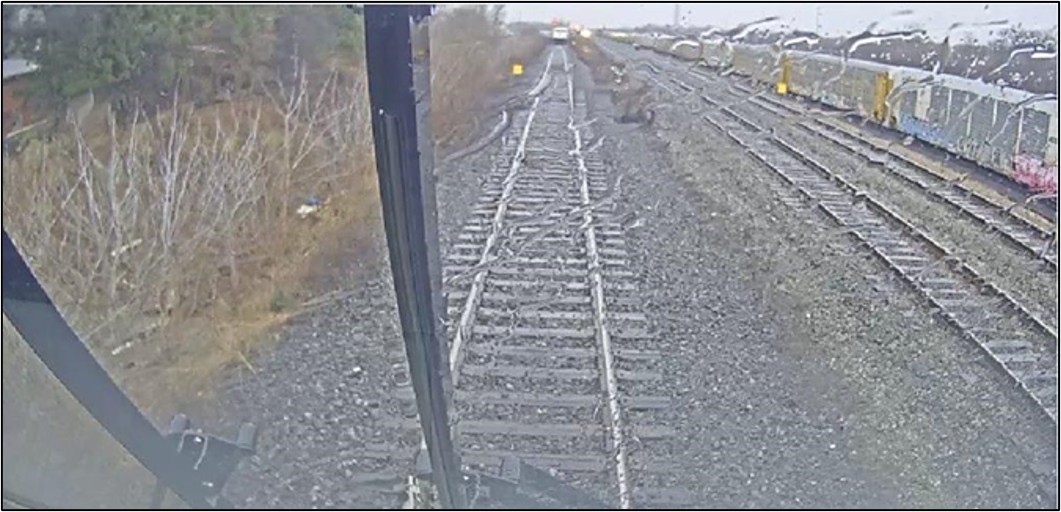
1.2 About Metrolinx
Metrolinx is an agency of the Government of Ontario that operates transit services in the Greater Toronto and Hamilton area, including GO Transit and UP Express (an airport rail link connecting Union Station to Toronto Pearson International Airport). It is governed by the Metrolinx Act, 2006, provincial legislation. It was created in 2006 to improve the coordination and integration of all modes of transportation in the Greater Toronto and Hamilton area.Metrolinx, “About Us,” at metrolinx.com/en/about-us (last accessed 27 April 2026).
GO Transit is a division of Metrolinx. It is the regional public transit service for the Greater Toronto and Hamilton area, operating a network of trains and buses. The GO network carries more than 70 million passengers per yearGO Transit, “About Us,” at https://www.gotransit.com/en/about-go (last accessed 27 April 2026). (about 230 000 passengers daily).
1.2.1 Metrolinx contractor for GO Transit train operations
GO Transit train operations and fleet maintenance services are provided by Alstom under contract from Metrolinx. Alstom employs, supervises, and manages all Metrolinx train crews and maintenance personnel. While Alstom runs the Metrolinx railway, it does not run Metrolinx’s Network Operations Centre (NOC).
1.2.2 Metrolinx Network Operations Centre
Metrolinx’s NOC is located in Oakville. It is the hub from which NOC controllers, RTCs, and Customer Protective Services (CPS) personnel conduct their activities. All employees working at the NOC are Metrolinx employees.
NOC controllers monitor all phases of Metrolinx train operations. They also provide instructions to operating crews when adjustments to service patterns are required and discuss on-time performance issues with train crews. Train crews are required to regularly respond to NOC enquiries and communicate up-to-date information on their location or any delays encountered.
Metrolinx RTCs oversee and direct all train movements throughout the Metrolinx network. Operating crews report to RTCs for all operational, mechanical, and safety issues that may affect the safe operation or on-time performance of their train. However, when GO Transit trains operate on CN track, as in this occurrence, their movements are dispatched by a CN RTC.
CPS personnel focus on passenger safety and security on board trains and within GO stations. They monitor closed-circuit security cameras and they communicate with field officers to maintain a security presence. They communicate directly with the CSAs.
1.2.3 Regulatory oversight for Metrolinx
When railways operate on federally regulated track, they are subject to regulatory oversight by Transport Canada (TC) under the authority of the federal Railway Safety Act (RSA). This was the case of Metrolinx in this occurrence.
However, when railways operate on provincially regulated track, they fall under provincial jurisdiction.
In Ontario, there are 3 provincial acts related to railways:
- the Shortline Railways Act, 1995 (SRA), which outlines safety requirements for railway operation for shortline railways that are under provincial jurisdiction and which references the RSA;
- the Ontario Northland Transportation Commission Act; and
- the Metrolinx Act, 2006, which is economic in nature, prescribing corporate structure but has no safety requirements.
When Metrolinx operates on provincial track, the Ministry of Transportation of Ontario (MTO) is responsible for its regulatory oversight. However, the province has no overall regulatory framework for rail operations and has not issued any safety-related regulations pursuant to the SRA. The MTO does not have employees with the expertise to provide the requisite oversight but rather relies on companion inspection agreements that it has with Transport Canada (TC) and Metrolinx:
- The Metrolinx–MTO agreement is for the provision of safety oversight and inspection services while operating on Metrolinx infrastructure.
- The TC–MTO agreement is for the provision of TC railway safety inspectors to perform oversight on Metrolinx railway operations on provincially regulated track. Neither the RSA nor the MTO agreement authorize TC inspectors to compel Metrolinx to take action to address identified safety hazards.
The Metrolinx–MTO agreement was last amended and renewed in January 2024.
1.3 Subdivision information
The Oakville Subdivision extends from Mile 0.96 (just outside Union Station in Toronto) to Mile 39.3 (Hamilton). Outside of the Union Station corridor, train movements are controlled by the centralized traffic control system (CTC), as authorized by the CROR. From Mile 0.96 to Mile 32.06, train movements are dispatched by a Metrolinx RTC in Oakville; from Mile 32.06 to Mile 39.3, train movements are dispatched by a CN RTC located in Edmonton, Alberta. Train traffic on the subdivision consists of VIA Rail Canada Inc. passenger trains, GO Transit commuter trains, and CN freight trains; the subdivision averages between 120 and 130 train movements daily.
In the area of Aldershot, the Oakville Subdivision consists of 3 main tracks where, generally, freight trains are routed on track 1, passenger trains on track 2, and commuter trains on track 3.
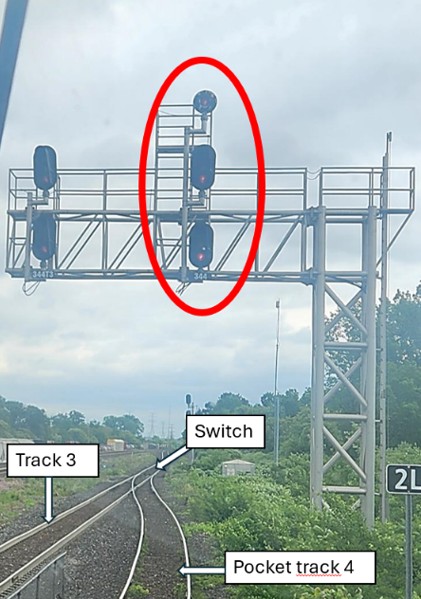
Signal 344 at CN Waterdown East is a high-mast, 3-aspect signal (Figure 3) governing eastbound train movements from pocket track 4 onto track 3 of the Oakville Subdivision.
1.4 Head-end crew information
1.4.1 Train GO 1028
The LE was hired by Alstom in 2015 as a CSA; he then qualified as a conductor in 2017 and LE in 2023.
The conductor was hired by Alstom in 2021 as a CSA; he then qualified as a conductor in 2023.
Both employees were familiar with the territory and they had worked together daily on this particular assignment for about a month.
According to the data collected during the investigation, the crew’s performance was not negatively affected by medical or physiological factors, including fatigue.
1.4.2 Train GO 1775
The LE qualified as a conductor in 2009 and an LE in 2014.
The conductor had 3 years of experience.
The LE trainee joined Alstom in 2017 as a CSA; he then qualified as a conductor in 2018. This was his 3rd day of training to qualify as an LE.
According to the data collected during the investigation, the crew’s performance was not negatively affected by medical or physiological factors, including fatigue.
1.5 Recorded information
1.5.1 Locomotive event recorder
A review of the locomotive event recorder data for GO 1028 indicates that about 33 minutes elapsed between the train’s arrival at Aldershot and its departure. After departing Aldershot, the train travelled 0.17 miles in 1 minute 8 seconds, reaching a maximum speed of 12.7 mph before the crew brought the train to a controlled stop.
1.5.2 Locomotive voice and video recorder
As part of its investigation, the TSB reviewed data from the LVVRs for each train. The LVVR systems are equipped with cameras and microphones that record the actions and interactions of operating personnel inside the cab of the controlling locomotive.
There were irregularities with the audio and video equipment on each train:Subsection 8(1) of the Locomotive Voice and Video Recorder Regulations states that railway companies must ensure the microphones are capable of clearly recording the voices of the operating employees and their communications. Subsection 9(2) states that the railway companies must ensure that the cameras are positioned in a manner that allows the recording of the portion of the interior of the controlling locomotive where operating employees carry out their work. It further states that the cameras must have an unobstructed view of the instruments and controls, as well as of the faces and upper bodies of operating employees, at a distance close enough to discern their facial features and expressions.
- On GO 1028, the audio and video were not synchronized (the video lagged a few seconds behind the audio). Of the 3 inward cameras, only 1 had audio capability. Additionally, the view from the camera used for recording the faces and upper bodies of the crew was a wide-angle view; therefore, whenever a crew member was leaning forward, that person’s face was not visible.
- On GO 1775, both the inward-and forward-facing cameras had audio capability. However, the audio quality was such that it was difficult to hear crew conversations clearly. There was only 1 inward-facing camera in the cab car and its angle did not cover the entire cab. The view of the conductor’s position was limited and there was no forward view of the crew members’ faces, nor was there a view of the cab car’s instruments and controls.
Finding: Other
Irregularities with the sound and video data quality from the LVVRs installed on trains GO 1028 and GO 1775 limited the information available to the investigation.
1.6 Job briefings
Initial and station-to-station job briefings are a critical component within Metrolinx operating procedures. Their purpose is to ensure that train crew members communicate to each other critical information about safe train operations. They establish and reaffirm situational awareness with respect to current operating conditions.
The Metrolinx General Operating Instructions (GOI) require that all crew members communicate critical information about safe train operations before and throughout their shift.Metrolinx, General Operation Instructions (April 2023), section 3.1: Job briefings, p. 3. They also require that a job briefing be held between head-end crew members before a train departs from a station stop:
3.1.4 PRIOR TO DEPARTING, EVERY STATION STOP
Prior to departing all station stops, the CNDR [conductor] will communicate the following to the ENGR [locomotive engineer] and must receive a verbal acknowledgement from the ENGR:
- What signal indication are we currently working on;
- What applicable speed changes apply between the current station and our next station stop; (This requirement will include, but not limited to Zone Speed – PS0 [permanent slow order] – TSO [temporary slow order])
- What is the location of our next Rule 42?
- What Rule 42/43 advance signals will be encountered?
- What is the next station stop?
- Have we received the proper signal to depart?Rule 42 of the Canadian Rail Operating Rules states the requirements for train crews when a section of track is protected due to planned track work and Rule 43 states the requirements when a section of track is protected by slow order. The proper signal to depart is any signal indication other than Stop that allows the train to proceed.,Metrolinx, General Operation Instructions (April 2023), section 3.1.4: Prior to departing, every station stop, p. 6.
In accordance with the GOI, the head-end crew of GO 1028 conducted a job briefing before departing eastward from Aldershot. However, the briefing was focused on upcoming operating restrictions and the crew did not discuss whether they had received the proper signal to depart (i.e., whether signal 344, directly in front of the locomotive, was displaying a signal indication other than Stop).
1.7 Centralized traffic control system
CTC is a system of interconnected track circuits, switches, and signals in the field that is used by a railway to control train routes remotely. Computer displays and controls are located in the RTC office. Signal indications (in combination with time tables) convey information to train crews that indicate the speed at which they may operate and how far they are permitted to travel. In addition, signal indications provide protection against certain conditions, including if the blockA length of track of defined limits, the use of which by a movement is governed by block signals. (Source: Canadian National Railway Company, Canadian Rail Operating Rules [effective 28 October 2021], Definitions, p. 10.) ahead is occupied, a rail is broken, or a switch is left open. Signals are actuated in the field by the presence of rolling stock on the track that completes the track circuit.
In the RTC office, track occupancy is displayed on the RTC’s computer screen. Track occupancy normally indicates the presence of a train but can also be an indication of an interrupted track circuit (e.g., a broken rail or a switch left open). The RTC can control certain signals (controlled signals)A controlled signal is a CTC block signal which is capable of displaying a Stop indication until requested to display a less restrictive indication by the RTC. A controlled location is a location in CTC, the limits of which are defined by opposing controlled signals. (Source: Canadian National Railway Company, Canadian Rail Operating Rules [effective 28 October 2021], Definitions, p. 10.) by requesting that they display either a Stop indication or a permissive indication. When an RTC requests a route for a train, the signal system determines how permissive the indication will be based on the presence of other track occupancies and how many consecutive signals have been requested.
The CTC operates independently of locomotive control systems and cannot override the control settings selected by the LE (such as throttle, train air brake, and locomotive independent or dynamic brake) to stop a train before it passes a signal displaying a Stop indication or another point of restriction.
1.7.1 Signal recognition and compliance
Signal recognition and compliance are governed by CROR Rule 34 (Fixed Signal Recognition and Compliance). Section 3.1.3 of the Metrolinx General Operating Instructions also contains provisions related to signal recognition and compliance. Rule 34 and section 3.1.3 both state that crew members within physical hearing range must clearly communicate to each other the indication by name of each fixed signal they are required to identify.Canadian Rail Operating Rules (effective 01 October 2022, approved by Transport Canada on 09 May 2022), Rule 34, pp. 27–28.,Metrolinx, General Operating Instructions (07 April 2023), section 3.1.3, p. 4. These instructions are followed by a list of signals that must be communicated, which includes block signals,A block signal is a fixed signal at the entrance to a block (i.e., a length of track of defined limits, the use of which by a movement is governed by block signals) to govern a movement entering or using that block. (Source: Canadian Rail Operating Rules [effective 01 October 2022, approved by Transport Canada on 09 May 2022], section 1: Definitions, p. 8) interlocking signals,An interlocking signal is a fixed signal at the entrance to or within interlocking limits to govern the use of the routes. (Source: Canadian Rail Operating Rules [effective 01 October 2022, approved by Transport Canada on 09 May 2022], section 1: Definitions, p. 11) and Stop signals.
1.8 Human factors issues associated with train operations
In railway operations, a variety of human factors issues can have an influence on the outcome of any given situation. In a complex system, such as rail transportation, even the most rigorous set of rules may not cover every contingency and interpretation. Even motivated and experienced employees are subject to slips, lapses,A slip or a lapse is an inadvertent or unintentional execution error during a given operation. and adaptationsAn adaptation is a deliberate deviation from a formal rule or procedure. These are often shortcuts that occur in repetitive jobs to make operations easier or gain some perceived operational efficiency. or other mistakes that are common to human performance.
Tasks that are relatively routine, predictable, and highly practised are susceptible to slips of attention and memory lapses, where the automatic routine is interrupted or disrupted during its execution and the interruption or disruption is not detected. Mitigations for skill-based performance slips of attention and memory lapses in operator performance include job briefing, communication, and effective procedures.
1.8.1 Train crew perception of signals displayed in the field
Train crew awareness of signal indications displayed in the field relies on visual detection and perception. A train crew’s accurate and timely visual perception of signals is essential for safe operations. The visual perception of signal indications and the associated crew action is a sequential process requiring the following steps: detect and see, identify and call, confirm between crew members, and adjust train speed accordingly.
When signal indications are not obscured or obstructed and there is good visibility, signal perception can be accomplished rapidly from relatively long distances. However, signal perception can be affected by environmental conditions and factors such as a crew’s fitness for duty, possible distractions, as well as their established mental models and expectations.
1.8.2 Closed-loop communications
Closed-loop communication is a practice used to avoid misunderstandings and requires that, when the sender communicates a message, the receiver repeats the message back and the sender confirms whether the message has been received accurately. While this approach is required for written authorities (e.g., CROR Rule 136) and radio communications, it is not typically used for routine in-cab verbal communications, where rules such as CROR Rule 34 apply.
CROR Rule 34 does not require full closed-loop communication. When a train encounters a signal indication in the field, 1 crew member must communicate the signal indication aloud within the locomotive cab to the other crew member. While the other crew member is also required to communicate the signal indication aloud, there is no requirement for the original sender to confirm that the message was received accurately or understood by the other crew member.
1.8.3 Mental models and expectations
People use their experience and knowledge to rapidly categorize the situation they are experiencing, expect what is to happen next, and select an appropriate course of action based on these expectations.G. Klein, “Naturalistic decision making,” Human Factors, Vol. 50, No. 3 (2008), pp. 456–460. In highly practised situations, attention and expectations are often driven by a person’s existing mental model of the situation, given that previous experience will dictate what information is important and how the situation will unfold.Ibid.
A mental model is an internal construct that enables people to describe, explain, and predict events and situations in their environment.E. Salas, F. Jentsch, and D. Maurino, Human Factors in Aviation, 2nd Edition (Academic Press, 2010), p. 66. When a mental model is adopted, it can be resistant to change. New convincing information must be assimilated to change the mental model. An inaccurate mental model risks interfering with a person’s situational awareness, notably in the perception of critical elements or the comprehension of their importance.M. R. Endsley, “Situation Awareness in Aviation Systems,” in J. A. Wise, V. D. Hopkin, and D. J. Garland, Handbook of Aviation Human Factors, 2nd Edition (Boca Raton, FL: CRC Press, 2010), Part II: Human Capabilities and Performance, Chapter 12, p. 12.
A mental model is critical for effective performance in dynamic time-critical environments since it reduces the need for time-consuming evaluation of the situation and enables quick actions. However, it can also lead to errors in how information is perceived and to inaccurate situation assessments. For instance, inaccurate mental models can lead operators to rely too heavily on the first piece of information offered (anchoring bias) and increase the tendency to look for evidence that confirms or matches the current situation or decision since previous experience will dictate what information to expect at any given time (confirmation bias). These biases can make it less likely for an operator to reassess the initial situation assessment and update it with new information or lead them to “hand-pick” information that supports their current state of awareness.A. Tversky and D. Kahneman, “Judgment under uncertainty: Heuristics and biases,” in D. Kahneman, P. Slovic, and A. Tversky (Eds.), Judgment under uncertainty: Heuristics and biases (Cambridge University Press, 1982).,Ibid., “Causal schemas in judgments under uncertainty”, in D. Kahneman, P. Slovic, and A. Tversky (Eds.), Judgment under uncertainty: Heuristics and biases, (Cambridge University Press, 1982). In many circumstances, people hear what they expect to hear and see what they expect to see.
1.8.4 Situational awareness
Situational awareness is the perception of the elements in the environment, the comprehension of their meaning, and the projection of their status in the future.M. R. Endsley, “Toward a theory of situation awareness in dynamic systems,” in Human Factors, Vol. 37, Issue 1 (1995), pp. 32–64. In a dynamic environment, building and maintaining effective situational awareness requires people to continuously extract information from the environment, integrate this information with relevant internal knowledge to create a coherent mental model of the current situation, and use this model to anticipate future events. Problems can occur in any of the 3 steps of situational awareness where critical elements are either not detected, their importance is not perceived, or their consequences are not anticipated. Communications are critical for a team to establish a shared situational awareness.
1.8.4.1 Team situational awareness
When people operate in a multi-crew environment, team situational awareness is essential for safe and effective operations. This involves having a shared perception and comprehension of a current situation to be able to project what will happen in the near future. Perception, comprehension, and prediction are driven by the information available and communicated among the team, by their experience and knowledge, and by the overriding working context.
For team situational awareness to develop and be maintained, the right information needs to get to the right person at the right time, which involves coordination among the team.K. T. Harris, C. M. Treanor and M. L. Salisbury, “Improving patient safety with team coordination: challenges and strategies of implementation,” Journal of Obstetric, Gynecologic, and Neonatal Nursing, Vol. 35, Issue 4 (2006), pp. 557–566. A team’s effectiveness is often reflected by the degree to which team members share information (e.g., questioning, confirming, coordinating, setting priorities, and contingency planning).C. A. Bowers, F. Jentsch, E. Salas, and C. C. Braun, “Analyzing communication sequences for team training needs assessment,” Human Factors, Vol. 40, Issue 4 (1998), pp. 672–679.
In safety-critical transportation industries, crew members must have a shared situational awareness; that is, each crew member’s awareness of a situation such as a signal indication is consistent with that of the other crew members. It is important that each crew member establish this situational awareness, but it is also important that they communicate to establish and maintain a shared situational awareness.E. Salas, C. Prince, D. P. Baker, and L. Shrestha, “Situation awareness in team performance: Implications for measurement and training,” Human Factors, Vol. 37, Issue 1 (1995), pp. 123–136.
1.9 System safety defences in signalled territory
1.9.1 Administrative defences
To mitigate operational hazards, the railway industry in Canada relies heavily on administrative defences such as rules, policies, and procedures, and on employees’ adherence to these requirements.
In signalled territory, the primary administrative defence is compliance with the CROR, which govern all federally regulated railways in Canada. For these rules to be effective, initial training, re-examination every 3 years, as well as monitoring of compliance are essential.
The effectiveness of the rules governing signal indications depends on a train crew’s ability to detect signal indications, interpret them correctly, and respond appropriately. To do this, a train crew relies on environmental cues, prior experience, and memory.
In the complex and dynamic environment of rail transportation, situational awareness requires the train crew to continuously extract information from the environment and integrate it with their knowledge to create a coherent mental model of the situation that helps prioritize information and anticipate future events. In familiar territory, attention and expectations are driven by the crew’s existing mental model. However, attention is a limited cognitive resource that can be diverted from a primary task by external stimuli or internal thoughts.U.S. Department of Transportation, Federal Railroad Administration, Why do Passenger Trains Pass Stop Signals? A Systems View, DOT/FRA/ORD-19/19, Final Report (June 2019), p. 47, at https://railroads.dot.gov/sites/fra.dot.gov/files/2019-12/Passenger%20trains%20pass%20stop%20signals2.pdf (last accessed 27 April 2026). When attention is directed toward information that is not critical to the task, it becomes a distraction. Distractions can impair the crew’s ability to detect and recognize signal indications. Memory lapses can also affect accurate recall of signal indications, particularly when attention is divided across multiple tasks.Ibid., p. 50. As attentional demands increase for other tasks, the retrieval of previously acquired information—such as the aspect of a recently observed signal—may be compromised.
These inherent limitations in human cognition are involuntary and cannot be entirely mitigated through training or procedural reinforcement. As a result, under certain conditions, signal indications may be missed, misinterpreted, or incorrectly recalled. When this occurs, the primary administrative defence fails.
To provide additional layers of defence, some railways have implemented company-specific procedures to supplement the CROR rules governing signal compliance.
For instance, to reduce or eliminate distractions, VIA Rail Canada Inc. (VIA) has introduced the cab red zone—special procedures that require crew members to cease non-essential communication and tasks during safety-critical operations. CN and Metrolinx have introduced similar procedures known as the critical focus zone. Although these procedures are designed to reinforce crew focus, they remain subject to the same limitations as other administrative defences: if crew members do not recognize the conditions that place them in such zones, the defence is compromised.
Administrative defences, even when layered, still rely on strict crew adherence and remain vulnerable to the inherent limitations of human cognition. These limitations underscore the need for additional layers of defence that do not rely solely on crew compliance to ensure the safe operation of trains.
1.9.2 Physical defences
To supplement administrative defences in signalled territory, railway operations in many countries have implemented physical defences in the form of advanced train control systems. These automated systems are designed to intervene when crews take inappropriate actions in response to signal indications. The term “advanced train control system” does not refer to a single technology or proprietary system but rather to a group of certified implementations that function as safety overlays on top of existing train control systems. Examples include the European Train Control System (ETCS), the Automatic Train Stop – Pattern (ATS-P) system in Japan, the Advanced Train Management System (ATMS) in Australia, and the positive train control (PTC) system in the United States. Appendix A provides an overview of the PTC implementation in the United States.
Canada has not yet implemented an advanced train control system. Canadian railways continue to rely on administrative defences. However, BNSF Railway has voluntarily implemented PTC on the New Westminster Subdivision in British Columbia.
The absence of mandatory physical, fail-safe defences capable of intervening to stop a train or control train speed to mitigate the risk of occurrences has been raised in TSB investigation reports since 1995.TSB Railway Investigation Report R95V0174. Crews not following signal indications has been cited as a cause or contributing factor in 28 TSB investigation reports,TSB rail transportation safety investigation reports R24D0070, R24C0020, R23V0205, R23Q0022, R23H0006, R23D0108, R19W0002, R18D0096, R16T0162, R16E0051, R15V0183, R15D0118, R14T0294, R14D0011, R13Q0001, R13C0049, R12T0038, R11E0063, R10V0038, R10Q0011, R09V0230, R07E0129, R99T0017, R98V0183, R98V0148, R96Q0050, R95V0218, and R95V0174. and this issue has been on the TSB Watchlist since 2012.TSB Watchlist, “Not following signal indications,” at https://www.bst.gc.ca/eng/surveillance-watchlist/rail/2025/rail-01.html (last accessed 27 April 2026). The TSB has issued 3 recommendations calling for additional backup safety defences (i.e., physical fail-safe train controls) in signalled territory—in 2000, 2013, and 2022 (Appendix B).
TC has been working with railway companies and industry stakeholders on potential solutions for advanced train control in Canada.
In 2013, TC established the Train Control Working Group under the Advisory Council on Rail Safety to examine fail-safe train control systems. The working group studied the feasibility of implementing various levels of train control in Canada. In 2016, it published its findings and concluded that a one-size-fits-all approach would not be appropriate for Canada, given the diversity of railway operations, geographic conditions, and risk profiles. Instead, it recommended a targeted, risk-based, rail corridor-specific implementation of an advanced train control system as the most suitable option. Since then, TC has taken steps to lay the groundwork for this solution, referred to as enhanced train control (ETC).
In February 2022, TC published a Notice of Intent,Government of Canada, Canada Gazette, Part I, Vol. 156, No. 6 (05 February 2022). outlining the path forward for ETC in Canada. The notice described a high-level policy direction and the intent to develop supporting governance structures, technical specifications, and interoperability standards. However, several of these activities remain incomplete, and no binding regulatory framework, enforceable timeline, or finalized implementation plan has been established. Because of the magnitude and complexity of some of these critical activities, their implementation could take several years to complete.
Implementing an advanced train control system is a complex and capital-intensive undertaking. Despite this, PTC was implemented in about 12 years, following its mandate under the Rail Safety Improvement Act of 2008. As of year-end 2020, PTC was fully operational on 57 536 route-miles of high-risk U.S. rail corridors, representing approximately 41% of the nearly 140 000 route-miles in the U.S. rail network. This includes PTC-equipped track segments operated by Canadian Class I railways in the United States: CN (3107 miles) and Canadian Pacific Railway Company, doing business as CPKC (2118 miles). By comparison, Canada’s rail network comprises about 26 000 route-miles, with 10 940 miles of main track accounting for roughly 42% of the total network.
On 17 April 2024, the TSB sent a letter to the Minister of Transport stating that, despite the calls from the TSB for additional physical fail-safe defences in signalled territory since 2000, the Canadian railway system continues to rely on administrative defences centred on compliance with rules by train crews. The letter further stated that TC and the railway industry have been discussing possible solutions for ETC implementation since 2013. Given the slow pace of progress and the risks involved, the TSB strongly urged the Minister to accelerate the implementation of physical fail-safe train controls on Canada’s high-speed rail corridors and all key routes.“’Key Route’ means any track on which, over a period of one year, is carried 10,000 or more loaded tank cars or loaded intermodal portable tanks containing dangerous goods, as defined in the Transportation of Dangerous Goods Act, 1992 or any combination thereof that includes 10,000 or more loaded tank cars and loaded intermodal portable tanks.” (Source: Rules Respecting Key Trains and Key Routes [22 August 2021, approved by Transport Canada on 22 February 2021], Section 3.1.) At the time of writing this report, the TSB had not received a response.
Following the investigation into a 21 November 2023 occurrence, in which a CN freight train collided with the tail end of a stationary commuter train, resulting in injuries to 4 passengers and 2 crew members,TSB Rail Transportation Safety Investigation Report R23D0108. the Board indicated that the risks associated with a failure to comply with signal indications remain high, and that it is unlikely that the level of risk will be significantly reduced before physical fail-safe defences are implemented. Pending implementation of ETC in Canada, no interim measures are required or planned by TC to reduce the risk of train collisions. Consequently, in the coming years, there will be few or no regulatory physical defences to stop a train when a crew does not follow a signal indication. In September 2025, the Board therefore recommended that
the Department of Transport immediately implement additional interim measures to mitigate the risks associated with train crews not complying with railway signal indications, such as collisions between trains, until adequate and permanent physical fail-safe defences are implemented.
TSB Recommendation R25-01
In December 2025, TC responded that it agrees with Recommendation R25-01 and is committed to advancing the ETC initiative. TC also submitted that, since signal adherence involves multiple risks such as human error, fatigue, and misinterpretation, it intends to advance an interim action plan until ETC is fully operational. TC will focus on revising rules to strengthen compliance, improving oversight and fatigue management to address human factors, and exploring short-term technological solutions that can provide signal safety alerts to operating crews.
In its January 2026 assessment of TC’s response, the Board acknowledged TC’s stated commitment to advance ETC. However, the Board noted that TC did not commit to any specific solutions or timelines to mitigate the risks associated with train crews not complying with railway signal indications until the implementation of fail-safe train controls in Canada.
The Board stated that, until TC provides details of its action plan, including timelines for the implementation of additional interim measures to mitigate the risks associated with crews not following signal indications, it is unable to assess the response to Recommendation R25-01.
1.9.2.1 Industry initiatives
Beyond VIA’s cab red zone and CN and Metrolinx’s critical focus zone, some railways have implemented additional defences that include a physical component. For example, Quebec North Shore and Labrador Railway has implemented a combined administrative and physical defence system, which it calls the proximity detection device (PDD) system. The PDD system uses global positioning system (GPS) technology to determine the position, direction, and speed of locomotives and maintenance vehicles, alerting train crews of approaching movements. The crews of both movements must confirm on a screen that they acknowledge the alert and must also communicate with each other by radio to verify their respective positions. A penalty brake applicationA penalty brake application refers to a controlled braking action, similar to a full service brake application but automatically initiated by a safety system (such as locomotive vigilance control, overspeed protection, or positive train control) to stop the train. will automatically occur on the controlling locomotive of a train whose crew has not acknowledged receipt of the alert. Despite this technology, the PDD system will not prevent a collision if the crew acknowledges an alert but does not reduce speed or stop the movement in time.
In a previous investigation report,TSB Rail Transportation Safety Investigation Report R23V0205. the TSB found that, while some railways have introduced railway-specific initiatives to address signal non-compliance, these have not been standardized or implemented across the Canadian rail industry.
1.10 Operating crew performance and rules compliance monitoring
Train operating crew performance and rules compliance in the field is monitored by Alstom supervisors through an internal proficiency testing process (efficiency testsDuring efficiency tests, crew members are observed, usually from the ground, to assess their on-the-job performance and their adherence to regulations and safe work practices. and ride-along tripsDuring ride-along trips, supervisors observe crew members while riding in the locomotive cab.), also referred to as a performance monitoring and rules compliance process (PMRC). Train operating crews are monitored for compliance to operating rules, regulations, and special instructions. These monitoring activities may occur with or without the knowledge of employees.
Between 24 March 2019 and 24 March 2024, the members of the head-end crew of GO 1028 were individually subjected to several proficiency tests performed by Alstom supervisors (the conductor was tested 37 times and the LE, 193 times).
The testing included ride-along trips and monitoring from various field locations. One of the key focus areas for the testing was crew compliance to CROR Rule 34. The results indicate a 100% compliance rate for both employees.
However, based on the LVVR data reviewed for this occurrence, the investigation determined that neither the crew of GO 1028 nor the crew of GO 1775 consistently communicated to each other the signal indications during their trip. (The crew of GO 1775 did, however, call the indication for signal 333T3, the last signal they encountered before they saw GO 1028 enter track 3 of CN’s main line).
A recent TSB investigation noted that compliance with CROR Rule 34 was lower when crews are unobserved as compared to when they are observed during formal testing and auditing.TSB Rail Transportation Safety Investigation Report R23D0108. In that occurrence, the rate of compliance observed by supervisors (98.1%) dropped significantly when crews were in the field without supervision (75.2%).
In at least 2 investigations since the implementation of the Locomotive Voice and Video Recorder Regulations (LVVR Regulations) in September 2022, the TSB found that signals were either not called, not called consistently, or called by 1 crew member but not repeated by other crew members.TSB rail transportation safety investigation reports R24C0020¸and R23H006. Data gathered to date on ongoing investigations suggest that this may also have been the case in other recent occurrences.
1.11 Similar recent occurrences
From January 2023 until May 2025, in addition to this occurrence, the TSB has undertaken investigations into 8 other occurrences involving collisions, or near collisions, in which the crew did not follow signal indications (Appendix C). Some occurrences involved major Class I freight railways, others involved passenger or commuter train services. Several resulted in significant damage to rolling stock, the release of diesel fuel, or injuries either to the crews or to passengers.
1.12 TSB Watchlist
The TSB Watchlist identifies the key safety issues that need to be addressed to make Canada’s transportation system even safer.
1.12.1 Not following signal indications
Not following signal indications—when train crews do not observe or react to a signal indication, resulting in the signal not being followed or a train exceeding its limits of authority—is a Watchlist issue. This issue has been on the Watchlist since 2012. Although the probability of a missed signal leading to a train collision or derailment may be low, the consequences of such an accident could be catastrophic for people, property, and the environment.
When a train crew does not respond appropriately to a signal indication displayed in the field, without physical fail-safe defences that can intervene and bring the train to a controlled stop, a serious train collision or derailment can occur, as nearly happened in this occurrence.
ACTION REQUIRED Trains operating in Canada must have a level of protection against this safety issue equivalent to those operating in the United States. The issue of not following railway signal indications will remain on the Watchlist until there is demonstrable progress in the following areas:
|
2.0 Analysis
The equipment, track, and signalling systems were reviewed and found to be functioning as intended. The data collected during the investigation showed that the crew members on both GO Transit commuter train 1028 (GO 1028) and GO Transit commuter train 1775 (GO 1775) were fit for duty. According to the data collected during the investigation, the crew’s performance was not negatively affected by medical or physiological factors, including fatigue. Therefore, the analysis will focus on the operation of GO 1028 as it was exiting the GO Aldershot Station (Aldershot) in Burlington and the human factors issues that contributed to the head-end crew going past the Stop indication at signal 344 (CN Waterdown East).
The analysis also discusses the absence of mandatory physical fail-safe defences for trains operating in signalled territory in Canada and the need for interim measures.
2.1 The occurrence
Train GO 1028 was departing Aldershot with about 200 passengers on board when it passed signal 344 displaying a Stop indication. The train continued slowly eastward until it ran through a dual control switch that was lined against its movement; it then entered track 3 of the Canadian National Railway Company (CN) Oakville Subdivision main line at Mile 34.4, without authority. The head-end crew—a locomotive engineer (LE) and a conductor—heard the switch points being forced against the stock rail, which indicated that the switch had been lined against the train’s movement. The head-end crew realized that signal 344 must have displayed a Stop indication. The LE brought the train to a controlled stop with its head end at Mile 34.250 on track 3.
After entering the main track, GO 1028 was directly in the path of GO 1775, which was proceeding westbound at 54 mph, also with about 200 passengers on board. The head-end crew of GO 1775—an LE, an LE trainee, and a conductor—saw GO 1028 enter the main track and immediately identified the risk of a collision. All 3 crew members reacted to the situation, and the LE trainee made an emergency application of the train brakes. The 2 trains stopped within 549 feet of each other.
Finding as to causes and contributing factors
As it was departing the GO Aldershot station, eastbound train GO 1028 passed signal 344, which was displaying a Stop indication, and subsequently entered track 3 of the CN Oakville Subdivision main line as westbound train GO 1775 was approaching on the same track at 54 mph, resulting in a risk of collision between the 2 trains.
Finding: Other
The alertness and timely reaction of the crew members of GO 1775 resulted in their train stopping in time to avert a collision with GO 1028.
2.2 Human factors issues that contributed to train GO 1028 going past the Stop signal indication
On leaving Aldershot, the head-end crew of GO 1028 operated the train in a manner consistent with having received a permissive signal indication. It was not until they heard the sound of the switch points being forced against the stock rail that they realized that the signal at the station may have been displaying a Stop indication.
Several factors contributed to the crew’s perception that they had a permissive signal to depart Aldershot, including their expectations and mental model, workstation distractions, and team situational awareness.
2.2.1 Expectations and mental model
The crew of GO 1028 had been working together daily on the Union–Aldershot route for approximately 1 month. During this time, GO 1775 had consistently gone past Aldershot on track 3 by the time GO 1028 was ready to depart the station. GO 1775’s consistent on-time arrival at Aldershot may have contributed to the crew of GO 1028’s mental model (and ensuing anchoring bias) that they would have a permissive signal to depart once the train inspection for passenger safety was completed by the customer service ambassador.
When the head-end crew heard the 2-to-go buzzer (which the customer service ambassador had pressed to indicate that he had completed the train inspection for passenger safety), the sound may have reinforced the crew’s mental model and established a confirmation bias that they had received a permissive signal to proceed. Although this buzzer does not constitute an authority to proceed, it is expressly associated with station departure procedures that the crew had routinely experienced during their previous trips.
However, on the day of the occurrence, GO 1775 had incurred a 5-minute delay due to a mechanical issue and had not made up the time deficit. The crew of GO 1028 were not aware of this delay, nor were they required to be.
Finding as to causes and contributing factors
When ready to depart the GO Aldershot station, the head-end crew of GO 1028 expected that GO 1775 had already passed them at the station, as had been their daily experience on this assignment. This expectation contributed to their forming an inaccurate mental model that signal 344 displayed a permissive signal indication.
2.2.2 Workstation distractions
While making preparations to depart Aldershot, the crew of GO 1028 encountered distractions in the locomotive cab. The conductor was looking down at his company-issued tablet to review general bulletin orders and operating restrictions. The LE removed rainwater that had leaked onto the LE’s console and the conductor’s table. He was also contending with windshield wipers that were not effective in clearing the windshield, and a seat that required repeated adjustments. These distractions diverted their attention from determining whether GO 1775 had passed Aldershot on track 3 on time and from perceiving that signal 344 displayed a permissive indication.
Finding as to causes and contributing factors
While preparing for departure from the GO Aldershot station, the conductor of GO 1028 was looking at his tablet and the LE was distracted by several equipment issues in the locomotive cab that diverted their attention away from signal 344. Consequently, they did not perceive the Stop signal indication.
2.2.3 Team situational awareness
Team situational awareness is an essential element of safe and effective train operations. This involves having a shared perception and comprehension of a current situation. For team situational awareness to develop and be maintained, the right information needs to get to the right person at the right time, which involves coordination among the team. A team’s effectiveness is often reflected by the degree to which team members share information.
In this occurrence, after GO 1028 arrived at Aldershot and up until the train departed the station about 33 minutes later, the crew members had limited interaction beyond their job briefing. The job briefing was focused on discussing upcoming operating restrictions and omitted the indication for signal 344. As they departed, neither crew member verified or called the signal indication. Consequently, the crew were operating with a degraded situational awareness of the signal.
Finding as to causes and contributing factors
During their job briefing before departing Aldershot, the head-end crew of GO 1028 discussed upcoming operating restrictions; however, the signal governing their movement was not included in that discussion, resulting in a missed opportunity to reinforce their team situational awareness of the governing signal.
2.3 System safety defences in signalled territory
The TSB has investigated numerous occurrences since 1995 in which crews not following signal indications has been cited as a cause or contributing factor. It has been calling for additional backup safety defences in signalled territory since 2000 and this issue has been on the TSB Watchlist since 2012. Recent occurrences indicate that the issue persists: since January 2023, in addition to this occurrence, the TSB has undertaken investigations into 8 other occurrences involving collisions, or near collisions, in which the crew did not comply with signal indications. Current defences have not proven fully effective in ensuring that signal indications are consistently recognized and followed.
Rule 34 of the Canadian Rail Operating Rules is an example of an administrative defence. Under this rule, crews are required to acknowledge and call signal indications. The effectiveness of this administrative defence relies on strict crew adherence to the rule to ensure that signal indications are followed. In an effort to reinforce crew compliance to Rule 34 and other operating rules, Canadian railways administer proficiency tests to operating crews that include ride-along trips and monitoring from various field locations. At Metrolinx, proficiency tests are conducted by Alstom. In the 5 years preceding the occurrence, the members of the head-end crew of GO 1028 were individually subjected to several proficiency tests (the conductor was tested 37 times and the LE, 193 times), including testing for compliance to Rule 34. The test results indicate a compliance rate of 100%. However, on the day of the occurrence, neither the crew of GO 1028 nor the crew of GO 1775 consistently called and acknowledged signal indications throughout their trip. This is consistent with a recent TSB investigation, which found that compliance rates when the crews are unsupervised in the field are lower than when they are formally tested (TSB Rail Transportation Safety Investigation Report R23D0108).
Because administrative defences rely on strict crew adherence, they are vulnerable to the inherent limitations of human cognition. A crew developing an incorrect mental model of their operating situation (as in this occurrence), a person’s attention being diverted by external stimuli at an inopportune time, memory lapses at times of high cognitive load, all can result in signal indications sometimes being missed, misinterpreted, or incorrectly recalled.
Limitations in human cognition underscore the need for additional layers of defence that do not rely solely on crew compliance to ensure the safe operation of trains.
To supplement administrative defences in signalled territory, railways in many countries have implemented physical defences in the form of advanced train control systems. These automated systems are designed to intervene when crews take inappropriate actions in response to signal indications. Canada, however, has not yet implemented an advanced train control system. Consequently, when the crew of train GO 1028 did not slow down on approach to signal 344, there was no automatic backup system to intervene and stop the train.
Finding as to risk
If train control systems rely solely on administrative defences, there will be no automatic intervention to stop a train when a train crew does not follow or misinterprets a signal indication, increasing the risk of an accident.
Although Transport Canada (TC) has been working with railway companies and industry stakeholders on an advanced train control system for Canada, referred to as enhanced train control (ETC), no binding regulatory framework, enforceable timeline, or finalized implementation plan has been established.
Pending implementation of ETC, no interim measures are required or planned by TC to reduce the risk of accidents when administrative defences fail in signalled territory. Unless such interim measures are implemented, in the coming years, there will be few or no regulatory physical defences to stop a train when a crew does not respond appropriately to a signal indication.
Finding as to risk
Until adequate and permanent physical fail-safe defences are in place, and in the absence of interim measures to supplement administrative defences, the risk of accidents resulting from crews not following signal indications will continue.
3.0 Findings
3.1 Findings as to causes and contributing factors
These are the factors that were found to have caused or contributed to the occurrence.
- As it was departing the GO Aldershot station, eastbound GO Transit commuter train 1028 (GO 1028) passed signal 344, which was displaying a Stop indication, and subsequently entered track 3 of the Canadian National Railway Company Oakville Subdivision main line as westbound train GO Transit commuter train 1775 (GO 1775) was approaching on the same track at 54 mph, resulting in a risk of collision between the 2 trains.
- When ready to depart the GO Aldershot station, the head-end crew of GO 1028 expected that GO 1775 had already passed them at the station, as had been their daily experience on this assignment. This expectation contributed to their forming an inaccurate mental model that signal 344 displayed a permissive signal indication.
- While preparing for departure from the GO Aldershot station, the conductor of GO 1028 was looking at his tablet and the LE was distracted by several equipment issues in the locomotive cab that diverted their attention away from signal 344. Consequently, they did not perceive the Stop signal indication.
- During their job briefing before departing Aldershot, the head-end crew of GO 1028 discussed upcoming operating restrictions; however, the signal governing their movement was not included in that discussion, resulting in a missed opportunity to reinforce their team situational awareness of the governing signal.
3.2 Findings as to risk
These are the factors in the occurrence that were found to pose a risk to the transportation system. These factors may or may not have been causal or contributing to the occurrence but could pose a risk in the future.
- If train control systems rely solely on administrative defences, there will be no automatic intervention to stop a train when a train crew does not follow or misinterprets a signal indication, increasing the risk of an accident.
- Until adequate and permanent physical fail-safe defences are in place, and in the absence of interim measures to supplement administrative defences, the risk of accidents resulting from crews not following signal indications will continue.
3.3 Other findings
These findings resolve an issue of controversy, identify a mitigating circumstance, or acknowledge a noteworthy element of the occurrence.
- Irregularities with the sound and video data quality from the locomotive voice and video recorders installed on trains GO 1028 and GO 1775 limited the information available to the investigation.
- The alertness and timely reaction of the crew members of GO 1775 resulted in their train stopping in time to avert a collision with GO 1028.
4.0 Safety action
4.1 Safety action taken
4.1.1 Transportation Safety Board
4.1.1.1 Rail Transportation Safety Information Letter 01/25
On 07 February 2025, the TSB sent Rail Transportation Safety Information Letter 01/25 to Transport Canada. The letter indicated that locomotive voice and video recorder (LVVR) data provide a reliable means of determining the role of human factors in railway occurrences and that, given the importance of LVVR data for TSB investigations, Transport Canada may wish to ensure that the LVVR systems on board GO trains meet the requirements of the Locomotive Voice and Video Recorder Regulations (LVVR Regulations).
In its 05 March 2025 response to this letter, Transport Canada indicated that it was in the process of strengthening its monitoring of LVVR requirements. It also indicated that the next phase of this initiative was already underway for the 2025/26 inspection program, with a focus on evaluating the railway companies’ compliance with the requirements regarding LVVR system integrity and functionality.
4.1.2 Transport Canada
On 29 April 2024, Transport Canada issued a letter of non-compliance to Metrolinx for non-compliance with Rule 439 of the Canadian Rail Operating Rules, which requires that trains stop at a Stop signal indication.
4.1.3 Metrolinx
On 10 January 2025, Metrolinx issued Operating Bulletin TE-002-25, informing train crews that the organization will actively review inward video and/or audio recordings to confirm compliance with Rule 34 of the Canadian Rail Operating Rules or identify any other threats to the safety of a railway operation, in alignment with the Metrolinx LVVR policy.
4.1.4 Alstom
After the occurrence, Alstom amended its proficiency testing plan so that any employee observed to violate a rule will be subjected to enhanced proficiency testing for 1 year. The enhanced proficiency testing process consists of more frequent ride-along trips and unannounced monitoring.
This report concludes the Transportation Safety Board of Canada’s investigation into this occurrence. The Board authorized the release of this report on 15 April 2026. It was officially released on 03 June 2026.
Appendices
Appendix A — Positive train control system
Positive train control (PTC) is a federally mandated safety overlay system in the United States, designed to prevent specific high-consequence train accidents resulting from operational rule violations or human factors issues associated with signal recognition and compliance. Its development and implementation were mandated under the Rail Safety Improvement Act of 2008, following a series of catastrophic rail accidents, including a 2008 collision in Chatsworth, California, that resulted in 25 fatalities and 102 injured passengers.U.S. National Transportation Safety Board, Railroad Accident Report NTSB/RAR-10/01 “Collision of Metrolink Train 111 With Union Pacific Train LOF65-12, Chatsworth, California, September 12, 2008”, available at https://www.ntsb.gov/investigations/AccidentReports/Reports/RAR1001.pdf (last accessed 27 April 2026). Section 104 of the Act required the installation of interoperable PTC systems by all Class I railways and by intercity and commuter passenger rail operators, with deployment prioritized on higher-risk corridors. These included main lines transporting toxic- or poison-by-inhalation (TIH/PIH) hazardous materials, routes used for passenger or commuter service, and other lines as designated by regulation.
As of 2020, PTC systems are operational across 57 536 route-miles of U.S. rail infrastructure, including all Class I freight lines transporting 5 million gross tons or more annually, designated hazardous materials corridors, and major passenger and commuter lines. It is important to note that PTC is a U.S.-specific system developed to reflect the unique operational, regulatory, and risk environments of railways in the United States. While other countries employ various forms of advanced train control, these systems differ in design, scope, and technical specifications.
PTC enhances safety by automatically intervening when train crews fail to comply with movement authorities or speed restrictions. Its enforcement logic is intended to prevent collisions, overspeed derailments, unauthorized incursions into work zones, misaligned switch movements, and signal non-compliances due to distraction, fatigue, or reduced situational awareness. A core capability of PTC is its continuous, train-specific calculation of safe braking and warning curves, which account for locomotive control settings, train speed, train weight, track grade, track curvature, and both permanent and temporary speed restrictions, as defined in the onboard track database.
When a potential violation is detected, PTC generates predictive warnings to allow a locomotive engineer to take corrective action. If the locomotive engineer does not respond within a defined safety margin, the system initiates a penalty brake application—an automated, service-level braking intervention. If necessary, the system can escalate to an emergency application of the train brakes, applying a greater braking force to bring the train to a controlled stop within the available distance. A PTC-initiated brake application cannot be cancelled or overridden; the train must come to a full stop before the brakes can be released.
PTC does not replace conventional signal systems or movement authorities issued by rail traffic controllers; rather, it is a fail-safe safety overlay system that reinforces compliance with train control rules. Its deployment represents a significant rail safety advancement in the United States.
Appendix B — TSB recommendations for additional fail-safe train controls in signalled territory
The TSB has issued 3 recommendations calling for additional backup safety defences (i.e., physical fail-safe train controls) in signalled territory.
Recommendation R00-04
Following the investigation into the 1998 collision between 2 Canadian Pacific Railway Company trains near Notch Hill, British Columbia,TSB Railway Investigation Report R98V0148. the Board determined that the backup safety defences for signal indications were inadequate and recommended that
the Department of Transport and the railway industry implement additional backup safety defences to ensure that signal indications are consistently recognized and followed by crew members.
TSB Recommendation R00‑04
The latest response from Transport Canada (TC) was assessed as Satisfactory in Part in March 2021 and the recommendation was assigned a Dormant status.TSB Recommendation R00-04: Consistent recognition of signals at https://www.tsb.gc.ca/eng/recommandations-recommendations/rail/2000/rec-r0004.html (last accessed 27 April 2026). It is linked to TSB Recommendation R13-01 and will be reassessed in accordance with that recommendation.
Recommendation R13-01
Following the investigation into a 26 February 2012 main-track derailment involving a VIA Rail Canada Inc. passenger train at Aldershot in which the operating crew were fatally injured and 45 people sustained various injuries,TSB Railway Investigation Report R12T0038. the TSB indicated that TC and the industry should move forward with a strategy that would prevent these types of accidents by ensuring that signals, operating speeds, and operating limits are always followed. The Board recommended that
the Department of Transport require major Canadian passenger and freight railways implement physical fail-safe train controls, beginning with Canada’s high-speed rail corridors.
TSB Recommendation R13‑01
The response from TC was most recently assessed in March 2023 to be Satisfactory in Part and the recommendation was assigned a Dormant status.TSB Recommendation R13-01: Physical fail-safe train controls at https://www.tsb.gc.ca/eng/recommandations-recommendations/rail/2013/rec-r1301.html (last accessed 27 April 2026). This recommendation is linked to TSB Recommendation R22-04 and will be reassessed in accordance with that recommendation.
Recommendation R22-04
Following an occurrence on 03 January 2019, in which 2 Canadian National Railway Company (CN) trains collided after one of the trains went past a controlled signal that displayed a Stop indication near Portage la Prairie, Manitoba,TSB Rail Transportation Safety Investigation Report R19W0002. the TSB indicated that, despite 2 TSB recommendations to TC related to advanced train control dating back over 20 years, little has been done to either extend the use of positive train control (implemented in the United States) into Canada or to develop a similar form of train control in Canada. It is clear that current administrative defences for train operation are not always effective. If TC and the railway industry do not take action to implement physical fail-safe defences to reduce the consequences of inevitable human errors, the risk of collisions and derailments will persist, with a commensurate increase in risk on key routes in Canada. Therefore, the Board recommended that
the Department of Transport require major Canadian railways to expedite the implementation of physical fail-safe train controls on Canada’s high-speed rail corridors and on all key routes.
TSB Recommendation R22-04
In September 2025, as part of its investigation into the 21 November 2023 occurrence in which a CN freight train collided with the tail end of a stationary commuter train, resulting in injuries to 4 passengers and 2 crew members,TSB Rail Transportation Safety Investigation Report R23D0108. the Board reiterated Recommendation R22-04.
In its January 2026 response, TC indicated that it is committed to advancing the enhanced train control (ETC) initiative. It also informed the TSB that regulatory development work to advance ETC continues to progress, along with frequent engagement with industry to finalize the risk methodology and other key design elements. Regulatory drafting instructions are expected to be finalized once this work is complete, with publication in the Canada Gazette, Part I targeted for 2026 or 2027.
TC also indicated that, as an interim approach until ETC is operational, it will work with industry and other stakeholders to advance a multi-pronged action plan to mitigate signals-related risks.
In its March 2026 assessment of TC’s response, the Board acknowledged the interim measures in TC’s proposed multi-pronged action plan, but felt that they do not provide assurance that there is a plan to ensure that the risks related to the safety deficiency underlying this recommendation will be sufficiently reduced. The Board noted that, with the publication of the proposed regulations now expected to be in 2026 or 2027, it is unlikely that the safety benefits associated with ETC will be realized by 2030. The Board also noted that BNSF Railway has recently voluntarily implemented positive train control on its Canadian main line, demonstrating that the technology is available, feasible, and compatible within the Canadian regulatory and operating environments.
The Board acknowledged TC’s stated commitment to advance ETC; however, until TC provides details of its action plan, including realistic timelines to expedite the implementation of physical fail-safe train controls on Canada’s high-speed rail corridors and on all key routes, the Board assessed the response to Recommendation R22-04 as Unsatisfactory.TSB Recommendation R22-04: Enhanced train control for key routes at https://www.tsb.gc.ca/eng/recommandations-recommendations/rail/2022/rec-r2204.html (last accessed 27 April 2026).
Appendix C — Similar occurrences in which the train crew did not follow signal indications
From January 2023 to May 2025, in addition to this occurrence, the TSB has undertaken investigations into 8 other occurrences involving collisions, or near collisions, in which the crew did not follow signal indications.
R25E0051: On 18 May 2025, at Mile 140.1 of the Edson Subdivision, Canadian National Railway Company (CN) train G87142-15 was proceeding westward from single to double track. Opposing eastbound CN train Z11251-17 passed signal 1402S displaying a Stop indication but did not stop and side-collided with the westbound train at approximately 15 mph. On the eastbound train, the 2 head-end locomotives derailed. On the westbound train, 3 cars derailed, and 11 cars were damaged due to the sideswipe and spilled content (grain). There were no physical injuries.The TSB investigation into Rail Transportation Safety Occurrence R25E0051 is ongoing.
R24D0070: On 29 September 2024, VIA Rail Canada Inc. passenger train P06431-29 (VIA 64) was shoving eastward at a speed of approximately 10 mph when it passed a signal displaying a Stop indication without authorization at Mile 72.3 of the CN St-Hyacinthe Subdivision. The train came to a stop approximately 1500 feet past the signal when it ran through a main-track switch at the entrance to Victoria Bridge in Montréal, Quebec. A CN freight train (CN 321) travelling westward on the same track came to a stop approximately 1700 feet behind the tail end of VIA 64. There was no collision or derailment, and there were no injuries.TSB Rail Transportation Safety Investigation Report R24D0070.
R24C0020: On 16 February 2024, loaded unit coal train 805-339 (train 805) of the Canadian Pacific Railway Company, doing business as CPKC, was proceeding westward at 22.3 mph on the north main track of the Mountain Subdivision when it collided with the trailing car of stationary CPKC unit grain train 301-230 (train 301) at Mile 116.8 near Greely, British Columbia. The 4 head-end locomotives on train 805 derailed, 1 of which caught fire. Four cars on train 301 derailed, 1 of which also caught fire. Both crew members of train 805 were taken to a local hospital, 1 with serious injuries; there were no injuries to the crew of train 301. Approximately 17 500 litres of diesel fuel leaked from the derailed locomotives, of which an undetermined amount burned. Approximately 400 tons of grain spilled from train 301.TSB Rail Transportation Safety Investigation Report R24C0020.
R23D0108: On 21 November 2023, CN train X37621-20 (CN 376), a light engine movement, was travelling southward on the east track of the St-Laurent Subdivision when it collided at 32 mph with the tail end of a stationary Réseau de transport métropolitain commuter train (EXO 1212). When train CN 376 approached the Montréal-Nord controlled location, the advance signal was displaying a Restricting indication, and the train continued into the next block. When EXO 1212 came into sight, the LE of CN 376 made an emergency application of the train brakes, but the train was unable to stop in time. Four of the 8 passengers on board train EXO 1212 and the 2 crew members of this train received minor injuries. The 2 crew members of train CN 376 were not injured. Locomotive EXO 1346 and passenger car EXO 3062 were damaged, as were the 2 locomotives on train CN 376.TSB Rail Transportation Safety Investigation Report R23D0108.
R23V0205: On 19 November 2023, BNSF Railway Company freight train R-NWE8041-18I, proceeding northbound on the New Westminster Subdivision, passed a Stop signal indication and collided with southbound BNSF Railway Company freight train M-VBCEVE1-18T as it was entering Oliver siding at the north siding switch (Mile 133.54) in Delta, British Columbia. On the southbound train, 2 multi-platform intermodal cars derailed. On the northbound train, 2 locomotives and 5 cars derailed upright, including 2 tank cars loaded with liquefied petroleum gas (UN1075) and 1 residue tank car last containing liquefied petroleum gas. In addition, the fuel tank on the east side of the lead locomotive sustained extensive damage, releasing approximately 8000 litres of diesel fuel. No injuries were reported.TSB Rail Transportation Safety Investigation Report R23V0205.
R23E0079: On 08 August 2023, CN freight train Z11531-06, travelling westward on the Wainwright Subdivision, passed a Stop signal and side-collided with westbound CN train S77181-04. The collision occurred as train S77181-04, having departed Wainwright Yard via the south yard track, was crossing over to the north main track at Mile 141.9 of the Wainwright Subdivision near Wainwright, Alberta. At the time of the collision, train Z11531-06 was travelling at 20.4 mph and train S77181-04 was travelling at 10.7 mph. As a result of the collision, both trains derailed. On train Z11531-06, the 2 head-end locomotives derailed, as well as the 2 intermodal cars immediately behind the locomotives; on train S77181-04, 6 cars loaded with sand derailed. There were no dangerous goods involved, and no one was injured.The TSB investigation into Rail Transportation Safety Occurrence R23E0079 is ongoing.
R23H0006: On 13 April 2023, CN mixed freight train M 37231-13 was proceeding eastward on the south track of the Kingston Subdivision at about 43.2 mph when it passed signal 694S displaying a Stop indication at Wesco (Mile 69.4). At the same time, VIA Rail Canada Inc. passenger train P 06721-13 was travelling at approximately 45 mph westward on the south track of the Kingston Subdivision, approaching Wesco, where it was lined to cross over to the north track. Both trains stopped about 1100 feet apart. There were no injuries to either crew or to the passengers.TSB Rail Transportation Safety Investigation Report R23H0006.
R23Q0022: On 22 February 2023, empty Tacora Resources Inc. ore train W039, operated by Quebec North Shore and Labrador Railway (QNS&L), was travelling northward on QNS&L’s Wacouna Subdivision when it passed a Stop signal without authority at Mile 128.3 at Mai Station, Quebec. There was no collision or derailment, and there were no injuries.TSB Rail Transportation Safety Investigation Report R23Q0022.