
Main-track collision and derailment
Canadian National Railway Company
Freight trains Z11531-06 and S77181-04
Mile 141.9, Wainwright Subdivision
Near Wainwright, Alberta
The Transportation Safety Board of Canada (TSB) investigated this occurrence for the purpose of advancing transportation safety. It is not the function of the Board to assign fault or determine civil or criminal liability. This report is not created for use in the context of legal, disciplinary or other proceedings. See Ownership and use of content. Masculine pronouns and position titles may be used to signify all genders to comply with the Canadian Transportation Accident Investigation and Safety Board Act (S.C. 1989, c. 3).
Summary
On 08 August 2023, Canadian National Railway Company (CN) train Z11531-06 (train 115) was travelling westward on the Wainwright Subdivision when it collided with the side of CN train S77181-04 (train 771), travelling in the same direction, near Wainwright, Alberta. The 2 head-end locomotives on train 115 derailed, as well as the 2 intermodal cars immediately behind the locomotives; on train 771, 6 cars loaded with sand derailed.
The investigation found that train 115 went past a Stop signal at Mile 141.7 and collided with train 771 at Mile 141.9 as that train was departing Wainwright Yard.
Train 115 was operated by a conductor locomotive operator (CLO) trainee, who was being trained by a locomotive engineer (LE). The investigation found that the LE experienced a significant decline in cognitive functions that negatively affected his ability to coach the trainee at a critical moment. The trainee had to make independent train handling decisions beyond his competency level and did not apply sufficient braking to stop the train before the Stop signal.
The signs of progressive decline in cognitive functions exhibited by the LE are consistent with many of the physiological symptoms of hypoglycemia (restlessness, drowsiness, difficulty concentrating, and confusion). As no post-occurrence blood glucose testing or medical assessment was conducted, the investigation could not determine with certainty the reason for the observed decline in the LE’s cognitive functions.
Hypoglycemia is a common occurrence in people with insulin-treated type 1 diabetes. The LE involved in this occurrence was insulin-treated for type 1 diabetes.
This occurrence highlights the risks associated with railway employees with medical conditions, such as diabetes, who may experience sudden impairment or impairment of cognitive functions while performing safety-critical operations.
The investigation also found that a breakdown in communication and shared situational awareness among the crew members of train 115 also contributed to the delay in making a decision to stop the train.
Safety action taken
After this occurrence, CN added a special instruction that requires freight trains to reduce their speed to 10 mph below the permissible track speed before passing a Clear to Stop signal indication. Following that, CN issued a bulletin to remind employees that, when operating in a critical focus zone, only conversations involving immediate train operations must be discussed. The bulletin also reminded junior employees to call signals when they positively identify them and to not be shy about speaking up.
Safety concern
Transport Canada (TC) requires railway companies to comply with the Railway Medical Rules for Positions Critical to Safe Railway Operations (Railway Medical Rules) to ensure that personnel in safety-critical positions who have a medical condition are medically fit for duty.
According to the Canadian Railway Medical Rules Handbook,To help Canadian railways understand and apply the provisions under the Railway Medical Rules for Positions Critical to Safe Railway Operations, the Railway Association of Canada developed the Canadian Railway Medical Rules Handbook, which CN applies as its policy in accordance with the rules. a person’s type 1 diabetes is considered medically stable when, among other conditions, they have not had an A1CA1C is the measurement of average blood glucose control for the last 2 to 3 months; approximately 50% of the value comes from the last 30 days. level greater than 12% within the previous 3 months.
That level is higher than the A1C level recommended by Diabetes Canada, which recommends that A1C be 7.0% or less and not higher than 8.5% to reduce the risk of symptomatic hyperglycemia and complications.
Over previous years, the LE consistently had A1C levels higher than the level recommended by Diabetes Canada, but below the level indicated in the Canadian Railway Medical Rules Handbook.
In contrast, the guidelines pertaining to medical fitness for duty for insulin-treated employees in the air industry require that pilots maintain A1C levels in line with Diabetes Canada’s target. Restrictions can also be placed on pilots’ licences depending on their risk level. In the marine industry, insulin-treated seafarers are restricted to limited, contiguous waters voyages, as international standards disqualify them from unlimited voyages due to the risk of hypoglycemic events.
As a result, the Board is issuing the following safety concern:
The Board is concerned that the guidelines in the Canadian Railway Medical Rules Handbook used to assess the medical fitness for duty of railway employees in safety-critical positions who are diagnosed with diabetes are not aligned with recommendations published by Diabetes Canada, or with the medical certification guidelines used in the air and marine transportation sectors that also fall under Transport Canada’s regulatory oversight.
Safety action required
In the air and marine transportation sectors, TC is responsible for certifying the medical fitness for duty of operational personnel in safety-critical positions. In the rail transportation sector, this responsibility is within the purview of railway companies.
The Railway Medical Rules require that employees be assessed for medical fitness for duty, taking into consideration medical conditions that could result in impairment, including sudden impairment and impairment of cognitive functions.
The investigation determined that, in the LE’s medical file provided by CN, there were no annual diabetes assessments for the years 2011, 2012, 2013, 2017, 2020, 2022, and 2023. Assessments for some other years were incomplete. CN accepted the incomplete assessments, thereby not having all the relevant information to determine if the LE’s diabetes was medically stable.
Without all the required information, railways may not have accurate knowledge of employees’ medical condition, leading to a risk that medical issues could go undetected, potentially allowing employees to continue working while medically unfit, thereby increasing the risk of accidents.
In the 12 years preceding the occurrence, TC did not conduct audits to verify CN’s compliance with the Railway Medical Rules. As a result, the gaps in the LE’s medical assessments were not captured through regulatory oversight.
Therefore, the Board recommends that
the Department of Transport establish regular oversight activities of railways’ compliance with the Railway Medical Rules for Positions Critical to Safe Railway Operations to ensure that assessments of medical fitness for duty for employees in safety-critical positions are carried out as required.
TSB Recommendation R26-01
1.0 Factual information
This report references content from one or more locomotive voice and video recorders (LVVRs).
Under section 28 of the Canadian Transportation Accident Investigation and Safety Board Act (CTAISB Act), every on-board recording is privileged. However, the Transportation Safety Board may make use of any on-board recording where it is necessary in the interests of transportation safety. For this reason, while the Board may refer to an on-board recording related to the causes or contributing factors or to the identification of safety deficiencies, other parties may not access or use privileged on-board recordings unless permitted by subsection 28(6) of the CTAISB Act.
Any references included in this report were considered necessary in the interest of transportation safety.
1.1 The occurrence
The sequence of events was established from a review of available information, including forward-facing video camera recordings, radio communication records, data from the locomotive event recorder and from the locomotive voice and video recorder, track signal playback files, and interviews. Select train handling events compiled from the locomotive event recorder data are provided in Appendix A.
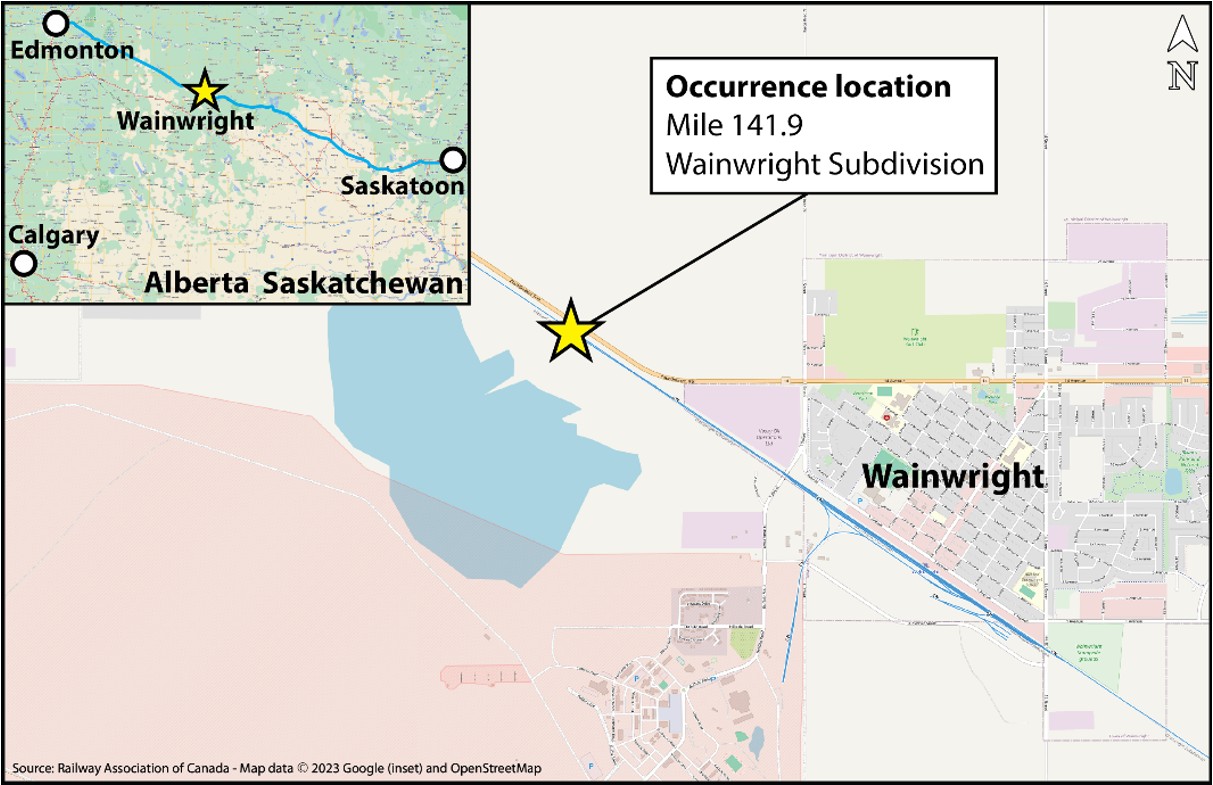
On 08 August 2023, Canadian National Railway Company (CN) train Z11531-06 (train 115) was scheduled to operate from Saskatoon, Saskatchewan (Mile 191.6 of the Watrous Subdivision), to Calgary, Alberta. There was to be a crew change at Wainwright West, in Wainwright, Alberta (Mile 141.9 of the Wainwright Subdivision) (Figure 1).
The crew consisted of a locomotive engineer (LE), a conductor, and a conductor locomotive operator (CLO)At CN, a conductor locomotive operator (CLO) is a conductor trained to provide temporary relief to the locomotive engineer (LE) for short periods when it is deemed safe. See section 1.9 (Conductor locomotive operator program) for more information. trainee under the supervision of the LE. This was the trainee’s 2nd on- the-job training (OJT) trip and his 1st time operating the locomotive controls.
Shortly after coming on duty at 0515,All times are Mountain Daylight Time. the crew held a job briefing, during which the LE’s approach to training and ongoing coaching during the trip was discussed. The LE indicated that the trainee would operate the locomotive controls for the entire trip, including bringing the train to a stop at Wainwright West. For training purposes, the train would be operated without the use of Trip Optimizer.Trip Optimizer is an energy management system installed on some locomotives that helps minimize fuel usage and in-train forces by automatically controlling the throttle and dynamic brake functions.
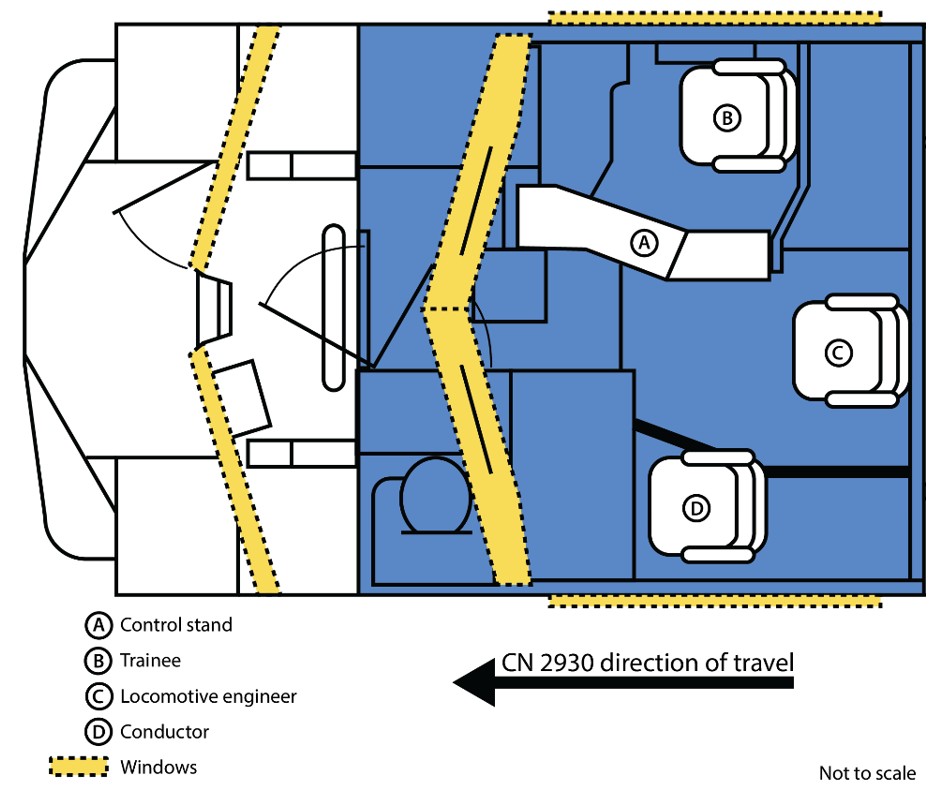
Train 115 departed westward at about 0534 with the trainee at the locomotive controls, the LE in the middle seat,In the middle seat, the LE was behind the other crew members, which would facilitate the coaching role; however, the other crew members could not see him unless they turned to face him. and the conductor in the left seat (Figure 2).
At about 0653, the LE, who has insulin-treated type 1 diabetes mellitus (diabetes), administered insulin by injection. At about 0725, he drank a protein shake.
For the first few hours of the trip, all 3 crew members were interacting with each other frequently. The LE and the trainee were engaged with various training and train handling matters. The trainee was asking relevant questions and the LE was providing clear answers. When approaching various train handling situations along the subdivision, the LE was actively providing the trainee with detailed instructions as part of his coaching. The trainee followed the instructions. There was also some light banter between the crew members, and the LE mentioned that the prior evening he had drunk some wine before going to the pub, where he consumed a few more drinks.The investigation could not determine the exact amount of alcohol the LE consumed.
At about 0811, around Mile 50.3, the conductor called an Advance Clear to Stop indication,Advance signals are used in connection with one or more other signals to govern the approach of a movement to the next signal. An Advance Clear to Stop indication informs train crews that the next signal is displaying a Clear to Stop indication. Train crews should expect the 3rd signal in progression to be a Stop signal. which presented the trainee’s first opportunity to apply the train’s air brakes.The air brakes on a train are applied through a controlled reduction in brake pipe pressure by use of the automatic brake handle. Train brakes can be applied with a minimum application (about 7 psi), which is the lightest brake application possible, and then gradually applied harder as required until a full service application (about 26 psi if the brake pipe pressure is regulated to 90 psi) is achieved. Once applied, the train air brake system cannot be incrementally released; it can only be further applied or fully released. To apply the train brakes with more force than a full service application requires that the air brakes be applied in emergency, which vents the brake pipe air at a rapid rate, to allow brake pipe pressure to drop quickly to 0 psi, thus applying maximum braking effort. Determining the appropriate level of braking force requires skill and practice; applying too much braking force too quickly can generate excessive in-train forces and potentially lead to equipment damage or derailment. The LE stood up and placed himself behind the trainee to view the locomotive controls and to provide coaching while the trainee applied a minimum reduction in brake pipe pressure as the train was proceeding at 40.1 mph on level track. Once the next signal came into view, it displayed a permissive indication,A permissive signal indication in centralized traffic control conveys 2 things: authority for a movement to pass the signal and occupy a portion of track beyond the signal, and information that governs the operation of a movement over that portion of track, such as speed. Switch position, broken rails, and equipment ahead in the block all affect the degree of permissiveness. and the LE indicated to the trainee that he could release the air brakes; the trainee complied, releasing the brake application at 29.7 mph, and the train resumed track speed. For the remainder of the trip prior to Wainwright West, the trainee had no further requirement to apply the train’s air brake and continued following the prompts from the LE for throttle modulations and dynamic braking.
Over the next hour, the trip was uneventful and the LE returned to the middle seat. As the crew members settled into performing their respective duties, their interactions became less frequent. The LE ate small amounts of food, at 0749 and 0820.
After 0930, the LE began to yawn and at times could not sit still; he drank several bottles of water in less than 10 minutes, and he was talking quietly to himself in a manner that was not clearly audible or intelligible. The other crew members did not appear to notice, in part because their seats were positioned slightly ahead of the LE’s and the LE was obscured from the trainee by the control stand.
At about 1020, with 4.7 miles remaining to the planned crew change location at Wainwright West, the crew was about to enter a busy, dynamic, and complex multi-track environment. The LE became less detailed in his instructions to the trainee and less responsive. When the conductor called an Advance Clear to Stop indication at signal 1369N (Mile 136.9), neither the LE nor the trainee responded. The LE remained seated and did not provide the trainee any coaching for handling the train from the current track speed to a controlled stop while progressing through the increasingly restrictive signal requirements. The trainee made the decision to throttle down to idle, then progressively increased dynamic braking to position 6.
At about 1024, as train 115 approached signal 1393N (Mile 139.3, about 2.4 miles from where it was to stop), the conductor observed and called a Clear to Stop indication. The other crew members did not acknowledge or respond. The LE did not provide any coaching to the trainee at this time. Train 115 passed the signal displaying the Clear to Stop indication at 42.2 mph. Shortly after, the trainee asked whether the train was coming in too fast, but the LE did not answer. At this time, train 115 was passing a stationary train on the north track; this train was obstructing the crew’s view of Wainwright Yard.
At about 1026, the LE of train 115 asked the trainee if he had made a minimum brake pipe pressure reduction yet, to which the trainee promptly replied that he had not. The LE did not provide further instruction. At this time, the train was on a moderate descending grade (about 0.3%–0.4%), and its speed was reducing from approximately 45 mph. The conductor looked in the direction of the other crew members but remained silent. The trainee asked if the action taken to control train speed was adequate; neither the LE nor the conductor responded. The LE then asked the trainee about the current setting of the dynamic brake handle, and the trainee indicated that it was in position 7.A review of locomotive event recorder data later determined that dynamic braking was, in fact, in position 6.,Dynamic braking provides greater retarding force at lower speeds, with maximum retarding force available at or below approximately 20 mph. At approximately 40 mph, the available braking force is reduced to about half of that available at 20 mph. At 1026:28, the LE took a standing position at the side of the control stand. The trainee asked whether he should apply the air brakes. The LE did not answer the question but made banter about his crewmates becoming nervous.
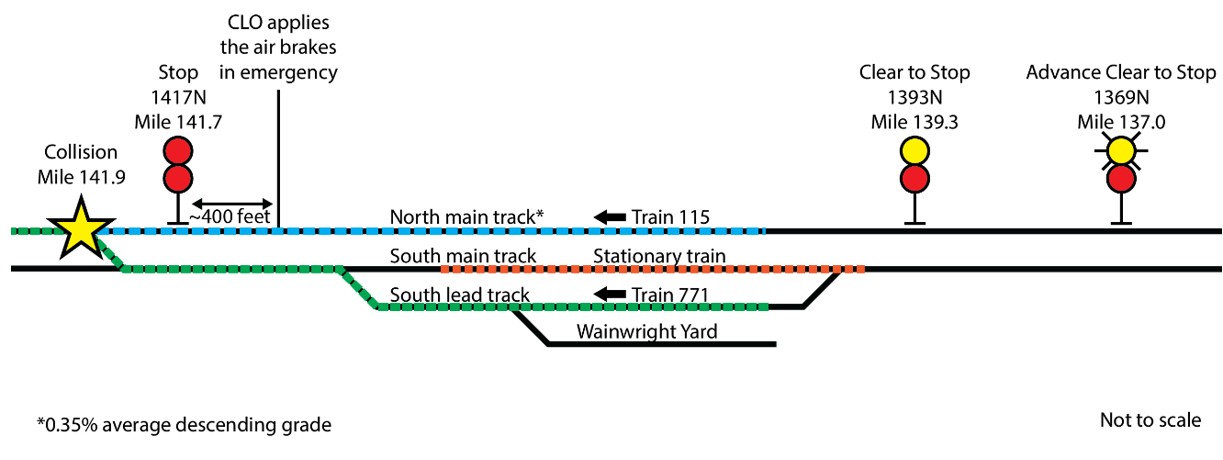
At 1026:49, the LE reached for the automatic brake handle, taking control of the locomotives, and made a minimum brake pipe pressure reduction of 7 psi. At this point, the train was travelling at 42.6 mph, about 3168 feet from the next signal (1417N), which was displaying a Stop indication that was visible from the locomotive cab.
At 1026:52, after seeing train S77181-04 (train 771) ahead on the track, the trainee asked whether an emergency application of the train brakes was warranted. Upon receiving an unclear response from the LE, the trainee asked him urgently to make an emergency application of the brakes.
At 1027:05, the LE made an additional reduction in brake pipe pressure of 7 psi. The trainee, concerned that they were going to go past the Stop signal and collide with train 771, again prompted the LE to make an emergency application of the train brakes. At 1027:29, the LE made a 14 psi reduction, bringing the pressure to 61 psi and resulting in a full service application. The trainee urgently asked the LE one more time to make an emergency application of the train brakes, but the LE did not respond.
At 1027:37, the trainee made an emergency application of the train brakes. At this point, the train was travelling at a speed of 35.2 mph, about 400 feet in advance of the Stop signal. Realizing that the train would not stop in time to prevent a collision, the trainee and the conductor braced for impact, but the LE remained standing, not reacting to the imminent danger.
At 1027:58, train 115, travelling at 20.4 mph, collided with the side of train 771, which was travelling at 10.7 mph in the same direction. The collision occurred at Mile 141.9 of the Wainwright Subdivision near Wainwright, as train 771—having departed the yard via the south lead track—was crossing over to the Wainwright Subdivision, with its head end occupying the north main track.
As a result of the collision, both trains derailed (Figure 3). On train 771, 6 loaded sand cars derailed. On train 115, the 2 head-end locomotives derailed, as well as the 2 intermodal cars immediately behind them. The lead locomotive leaked a small amount of diesel fuel, but the fuel did not catch fire. There were no other dangerous goods involved in the derailment and no one was injured. Train traffic on the Wainwright Subdivision was interrupted for about 24 hours.
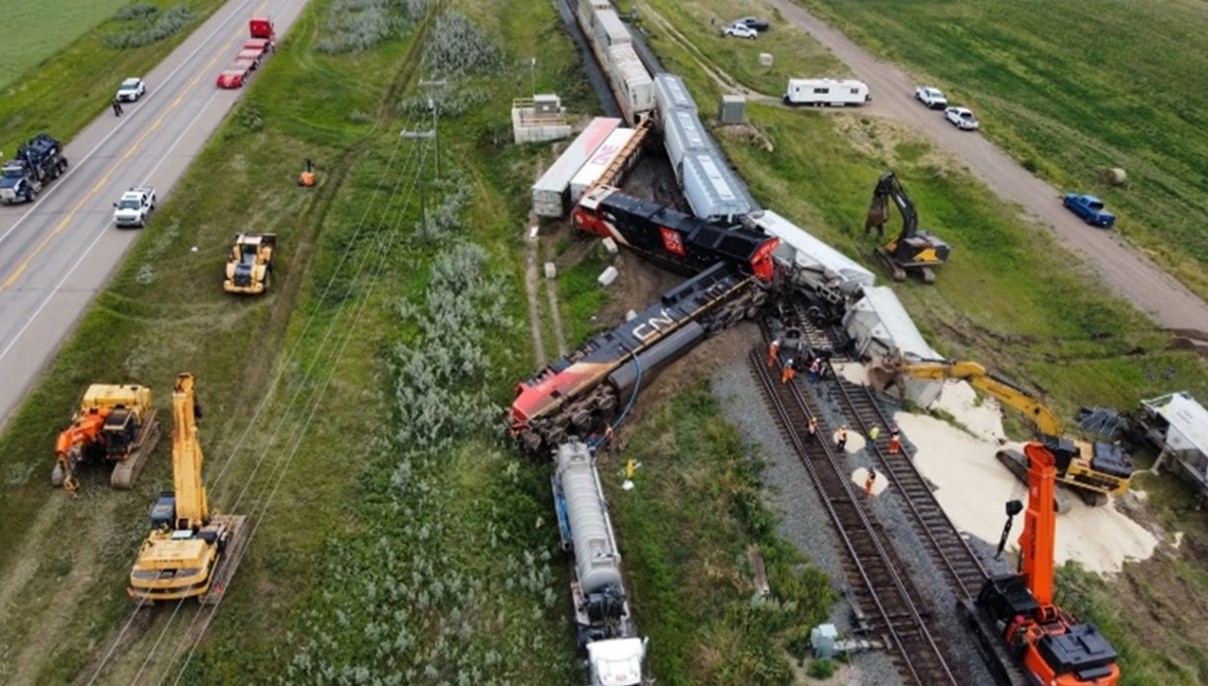
Figure 4 shows the location of the relevant signals and the position of the stopped trains in relation to these signals and to each other.
At the time of the occurrence, the temperature was about 19 °C and the sky was clear.
1.2 Site examination
The lead locomotive on train 115 had derailed on its side; the trailing locomotive had derailed upright and was leaning. The 1st car behind the 2 lead locomotives had derailed on its side, while the 2nd car had derailed upright.
On train 771, the first 3 derailed cars (positions 65 to 67) had derailed on their side. The 3 immediate trailing cars (positions 68 to 70) had derailed upright.
Most of the derailed rolling stock sustained major damage, except for the 2nd derailed car on train 115 and the car in position 70 on train 771, which sustained minor damage.
About 400 feet of the north and south main track was damaged, including the crossover and switches that were occupied by train 771 at the time of the collision.
1.3 Crew information
CLO, conductor, and LE are all safety-critical positions.A safety-critical position is any railway position directly engaged in the operation of trains in main-track or yard service and any railway position engaged in rail traffic control. Any person performing any of the duties normally performed by a person holding a safety-critical position is deemed to be holding a safety-critical position while performing those duties. (Railway Rules Governing Safety Critical Positions [14 September 2000, approved by Transport Canada 16 June 2000], Section 3: Definitions.) Employees in these positions are required to meet the medical fitness requirements stipulated in the Railway Medical Rules for Positions Critical to Safe Railway Operations (Railway Medical Rules), as well as the rest requirements stipulated in the Duty and Rest Period Rules for Railway Operating Employees (Duty and Rest Period Rules). In addition, under the Railway Employee Qualification Standards Regulations, railway employees are not authorized to work as LEs or conductors unless they are qualified for that position.
In accordance with the Canadian Rail Operating Rules (CROR),General Rule G of the Canadian Rail Operating Rules prohibits the use of intoxicants or narcotics by employees subject to duty, or their possession or use while on duty. It also prohibits the use of drugs, medication, or mood altering agents, including those prescribed by a doctor, which, in any way, will adversely affect their ability to work safely. all employees at CN are required to report for duty free of the negative effects of alcohol, cannabis, and other drugs. In accordance with CN’s Policy to Prevent Workplace Alcohol and Drug Problems, CN performed post-occurrence breath alcohol and urine tests on the crew members of train 115. The tests, performed approximately 3 to 4 hours after the accident, returned negative results. Based on these results, CN concluded that the employees involved were not impaired by alcohol or drugs at the time of the accident.
1.3.1 Conductor locomotive operator trainee
The trainee was hired by CN in February 2018 and qualified as a conductor in August 2018. As a conductor, he had worked more than 30 trips on the Wainwright Subdivision since 01 January 2023.
The trainee had completed the in-class portion of his CLO training in Saskatoon the week of 19 to 23 June 2023. The occurrence trip was his 2nd OJT trip and his 1st time at the controls of a locomotive.
According to the data collected during the investigation, the trainee’s performance was not negatively affected by medical or physiological factors, including fatigue.
1.3.2 Conductor
The conductor was hired by CN in August 2017 and qualified as a conductor in February 2018. After qualifying, he worked mostly in yards. He had limited experience working on main-line trains. This was his 2nd trip on the Wainwright Subdivision in the last 2 years.
The conductor was also a qualified CLO; he had taken his CLO training in Winnipeg, Manitoba, in June 2023.
According to the data collected during the investigation, the conductor’s performance was not negatively affected by medical or physiological factors, including fatigue.
1.3.3 Locomotive engineer
The LE had about 13 years of experience in train operations. He was hired by CN as a conductor in 2010 and qualified as an LE in 2014. He began working on the Wainwright Subdivision in 2022.
The LE had experience coaching both LE trainees and CLO trainees. In this instance, the trainee had specifically requested to train under the LE as the LE was known by other trainees to be an effective trainer.
The LE was experiencing personal stress and had taken a leave of absence earlier in the year.
On the day before the occurrence, the LE had gone to bed at midnight. He had checked the train line-up and expected to be called for work some time the following afternoon. However, he received a call for work at approximately 0330 and therefore would have slept for a maximum of 3.5 hours.
The TSB’s fatigue assessment identified a number of fatigue risk factors that were significant enough to affect the LE’s level of fatigue during his shift. Further information is provided in section 1.13.6 (Fatigue risk factors for train crew members).
In light of the LE’s diabetes, the investigation reviewed the LE’s medical file that was provided by CN; a history of the LE’s medical fitness for duty assessments is presented in section 1.11.3 (History of medical fitness for duty assessments for the locomotive engineer).
1.4 Train information
Train 115 was an intermodal train consisting of 2 head-end locomotives and 59 loaded cars (175 platforms), 9 of which were transporting dangerous goods; it measured 10 888 feet and weighed 10 522 tons.
Train 771 was a mixed-merchandise train that measured 9950 feet and weighed 14 344 tons. It was destined for Fort St. John, British Columbia.
1.5 Subdivision and track information
The Wainwright Subdivision runs east to west from Biggar, Saskatchewan (Mile 0.0), to Edmonton (Mile 264.7). Train movements are controlled by the centralized traffic control system (CTC), as authorized by the CROR, and are dispatched by a rail traffic controller (RTC) located in Edmonton.
The track on the subdivision is a Class 4 track under the Rules Respecting Track Safety. The maximum allowable speed for freight trains is 60.0 mph.
1.6 Signal indications
1.6.1 Centralized traffic control system
CTC is a system of interconnected track circuits, switches, and signals in the field that is used by a railway to control train movements and routing. Computer displays and controls are located in the RTC office. Signal indications (in combination with time tables) convey information to train crews that indicate the speed at which they may operate and how far they are permitted to travel. In addition, signal indications provide protection against certain conditions, including if the blockIn the centralized traffic control system (CTC), a block is a length of track of defined limits, the use of which by a movement is governed by block signals. (Source: Canadian National Railway Company, Canadian Rail Operating Rules [effective 28 October 2021], Definitions, p. 10.) ahead is occupied, a rail is broken, or a switch is left open. Signals are actuated in the field by the presence of rolling stock on the track that completes the track circuit.
In the RTC office, track occupancy is displayed on the RTC’s computer screen. Track occupancy normally indicates the presence of a train but can also be an indication of an interrupted track circuit (e.g., a broken rail or a switch left open). The RTC can control certain signals (controlled signals)A controlled signal is a CTC block signal that is capable of displaying a Stop indication until requested to display a less restrictive indication by the rail traffic controller. A controlled location is a location in CTC, the limits of which are defined by opposing controlled signals. (Source: Canadian National Railway Company, Canadian Rail Operating Rules [effective 28 October 2021], Definitions, p. 10.) by requesting that they display either a Stop indication or a permissive indication. When an RTC requests a route for a train, the signal system determines how permissive the indication will be based on the presence of other track occupancies and how many consecutive signals have been requested.
The CTC operates independently of locomotive control systems and cannot override the control settings selected by the LE (such as throttle, train air brake, and locomotive independent or dynamic brake) to stop a train before it passes a signal displaying Stop indication or another point of restriction.
1.6.2 Signal indications and associated rules in this occurrence
Rules 405 to 439 of the CROR govern the signals used in CTC territory.
In this occurrence, westbound train 115 was proceeding on the north main track when it encountered a progression of 2 signal indications that governed the approach to the controlled signal at the controlled location at Wainwright West:
- The 1st signal, 1369N, displayed an Advance Clear to Stop indication (CROR Rule 415), which identified that the train could proceed and had to be prepared to stop at the 2nd signal after the Advance Clear to Stop signal indication.
- The 2nd signal, 1393N, displayed a Clear to Stop indication (CROR Rule 411); it identified that the train could proceed but had to prepare to stop at the next signal.
- The 3rd signal, 1417N, the controlled signal at Wainwright West, displayed a Stop indication (CROR Rule 439), requiring that train 115 come to a full stop before this signal.
Train crews must control their trains so as to comply with all signal indications as specified in the CROR. Crews are also expected to know their operating territory, including the location of all fixed signals. This knowledge is used to facilitate the detection of signals and to help recognize the presence of an imperfectly displayed signal or the absence of a signal where one is required to be displayed.
Train crew awareness of a signal indication displayed in the field relies on visual detection and perception. Accurate and timely perception of a signal indication is essential for compliance with it. With unimpaired visibility, the perception of a signal indication can be accomplished rapidly from a relatively long distance. However, a crew’s fitness for duty (such as operating while fatigued), distractions, mental models, and expectations can affect perception and reaction time to a signal indication.
1.6.3 Signal recognition and compliance
Signal recognition and compliance is governed in part by CROR Rule 34 (Fixed Signal Recognition and Compliance) which states, in part:
[…]
(b) Crew members within physical hearing range must communicate to each other, in a clear and audible manner, the indication by name, of each fixed signal they are required to identify. Each signal affecting their movement must be called out as soon as it is positively identified, but crew members must watch for and promptly communicate and act on any change of indication which may occur.
The following signals/operating signs must be communicated:
(i) Block and interlocking signals;
[…]
(v) Stop sign;
[…]
(c) If prompt action is not taken to comply with the requirements of each signal indication affecting their movement, crew members must remind one another of such requirements. If no action is then taken, or if the locomotive engineer is observed to be incapacitated, other crew members must take immediate action to ensure the safety of the movement, including stopping it in emergency if required.Canadian National Railway Company, Canadian Rail Operating Rules (effective 28 October 2021), Rule 34: Fixed Signal Recognition and Compliance, p. 29.
During the trip, the conductor called every signal. The LE and the trainee did not call any signals and did not acknowledge or repeat back the signals called by the conductor to confirm that a common understanding of each signal indication had been established. Approaching the point of collision, the conductor observed and called the Advance Clear to Stop, the Clear to Stop, and later the Stop indication; however, the LE and the trainee did not respond, and the LE did not convey the urgency or the need for immediate braking action to the trainee. The conductor did not take further action to confirm the other crew members’ understanding of the signals to avoid disrupting the LE’s coaching of the trainee, nor did he take action to control the train in accordance with the signal indications.
1.6.4 Human factors issues associated with signal recognition and compliance
In railway operations, a variety of human factors issues can have an influence on the outcome of any given situation. In a complex system, such as rail transportation, rules provide a framework for safe operations; however, even motivated and experienced employees remain subject to slips, lapses,A slip or a lapse is an inadvertent or unintentional execution error during a given operation. adaptations,An adaptation is a deliberate deviation from a formal rule or procedure. These are often shortcuts that occur in repetitive jobs to make operations easier or gain some perceived operational efficiency. or other mistakes that characterize human behaviour.
1.6.4.1 Decision making and situational awareness
Decision making in general is a cognitive process that involves identifying and choosing a course of action from several alternatives.American Psychological Association, APA Dictionary of Psychology, at https://dictionary.apa.org/ (last accessed 17 June 2026). In the context of train operations, this process occurs within a dynamic environment and includes 4 steps: gathering information, processing information, making a decision, and acting on that decision. To facilitate effective decision making, people need to have an accurate understanding of their goals, decisions, and information requirements.
In addition, effective decision making depends on the accuracy of one’s situational awareness (i.e., perception of elements in the environment, comprehension of what these elements mean, and projection of what their status will be in the future).M. R. Endsley, “Toward a theory of situation awareness in dynamic systems,” Human Factors, Vol. 37, Issue 1 (1995), pp. 32-64. Accurate situational awareness enables informed, accurate predictions of the potential consequences of one’s decisions.
Crew members must have a shared situational awareness; that is, each crew member’s awareness of a situation such as a signal indication is consistent with that of the other crew members. It is important that each crew member establish this situational awareness, but it is also important that they communicate to establish and maintain a shared situational awareness.E. Salas, C. Prince, D. P. Baker, and L. Shrestha, “Situation awareness in team performance: Implications for measurement and training,” Human Factors, Vol. 37, Issue 1 (1995), pp. 123–136.
1.6.4.2 Closed-loop communication
Closed-loop communication is a practice used to avoid misunderstandings and requires that, when the sender communicates a message, the receiver repeats the message back and the sender confirms whether the message has been received accurately. While this approach is required for written authorities (e.g., CROR Rule 136) and radio communications, it is not typically used for routine in-cab verbal communications, where rules such as CROR Rule 34 apply.
CROR Rule 34 does not require full closed-loop communication. When a train encounters a signal in the field, 1 crew member must communicate the signal indication aloud in the locomotive cab to the other crew member. While the other crew member is also required to communicate the signal indication aloud, there is no requirement for the original sender to confirm that the message was received accurately or understood by the other crew member.
1.7 System safety defences in signalled territory
1.7.1 Administrative defences
To mitigate operational hazards, the railway industry in Canada relies heavily on administrative defences such as rules, policies, and procedures, and on employees’ adherence to these requirements.
In signalled territory, the primary administrative defence is compliance with the CROR, which govern all federally regulated railways in Canada. For these rules to be effective, initial training, re-examination every 3 years, as well as monitoring of compliance, are essential.
The effectiveness of the rules governing signal indications depends on a train crew’s ability to detect signal indications, interpret them correctly, and respond appropriately. To do this, a train crew relies on environmental cues, prior experience, and memory.
In the complex and dynamic environment of rail transportation, situational awareness requires the train crew to continuously extract information from the environment and integrate it with their knowledge to create a coherent mental model of the situation that helps prioritize information and anticipate future events. In familiar territory, attention and expectations are driven by the crew’s existing mental model. However, attention is a limited cognitive resource that can be diverted from a primary task by external stimuli or internal thoughts.U.S. Department of Transportation, Federal Railroad Administration, Why do Passenger Trains Pass Stop Signals? A Systems View, DOT/FRA/ORD-19/19, Final Report (June 2019), p. 47, at https://railroads.dot.gov/sites/fra.dot.gov/files/2019-12/Passenger%20trains%20pass%20stop%20signals2.pdf (last accessed 17 June 2026). When attention is directed toward information that is not critical to the task, it becomes a distraction. Distractions can impair the crew’s ability to detect and recognize signal indications. Memory lapses can also affect accurate recall of signal indications, particularly when attention is divided across multiple tasks.Ibid., p. 50. As attentional demands increase for other tasks, the retrieval of previously acquired information—such as the aspect of a recently observed signal—may be compromised.
These inherent limitations in human cognition are involuntary and cannot be entirely mitigated through training or procedural reinforcement. As a result, under certain conditions, signal indications may be missed, misinterpreted, or incorrectly recalled. When this occurs, the primary administrative defence fails.
To provide additional layers of defence, some railways have implemented company-specific procedures to supplement the CROR rules governing signal compliance.
For instance, to reduce or eliminate distractions, VIA Rail Canada Inc. (VIA) has introduced the cab red zone—special procedures that require crew members to cease non-essential communication and tasks during safety-critical operations. CN and Metrolinx have introduced similar procedures known as the critical focus zone. Although these procedures are designed to reinforce crew focus, they remain subject to the same limitations as other administrative defences: if crew members do not recognize the conditions that place them in such zones, the defence is compromised.
Administrative defences, even when layered, still rely on strict crew adherence and remain vulnerable to the inherent limitations of human cognition. These limitations underscore the need for additional layers of defence that do not rely solely on crew compliance to ensure the safe operation of trains.
1.7.2 Physical defences
To supplement administrative defences in signalled territory, railway operations in many countries have implemented physical defences in the form of advanced train control systems. These automated systems are designed to intervene when crews take inappropriate actions in response to signal indications. The term “advanced train control system” does not refer to a single technology or proprietary system, but rather to a group of certified implementations that function as safety overlays on top of existing train control systems. Examples include the European Train Control System (ETCS), the Automatic Train Stop – Pattern (ATS-P) system in Japan, the Advanced Train Management System (ATMS) in Australia, and the positive train control (PTC) system in the United States.
Appendix B provides an overview of the PTC implementation in the United States.
Canada has not yet implemented an advanced train control system. Canadian railways continue to rely on administrative defences. However, BNSF Railway has voluntarily implemented PTC on the New Westminster Subdivision in British Columbia.
The absence of mandatory physical, fail-safe defences capable of intervening to stop a train or control train speed to mitigate the risk of occurrences has been raised in TSB investigation reports since 1995.TSB Railway Investigation Report R95V0174. Crews not following signal indications has been cited as a cause or contributing factor in 28 TSB investigation reports,TSB rail transportation safety investigation reports R24T0064, R24D0070, R24C0020, R23V0205, R23Q0022, R23H0006, R23D0108, R19W0002, R18D0096, R16T0162, R16E0051, R15V0183, R15D0118, R14T0294, R14D0011, R13Q0001, R13C0049, R12T0038, R11E0063, R10V0038, R10Q0011, R09V0230, R07E0129, R99T0017, R98V0183, R98V0148, R96Q0050, R95V0218, and R95V0174. and this issue has been on the TSB Watchlist since 2012.TSB Watchlist, “Not following railway signal indications”, at https://www.tsb.gc.ca/eng/surveillance-watchlist/rail/2025/rail-01.html (last accessed 17 June 2026). The TSB has issued 3 recommendations calling for additional backup safety defences (i.e., physical fail-safe train controls) in signalled territory—in 2000, 2013, and 2022 (Appendix C).
TC has been working with railway companies and industry stakeholders on potential solutions for advanced train control in Canada.
In 2013, TC established the Train Control Working Group under the Advisory Council on Rail Safety to examine fail-safe train control systems. The working group studied the feasibility of implementing various levels of train control in Canada. In 2016, it published its findings and concluded that a one-size-fits-all approach would not be appropriate for Canada, given the diversity of railway operations, geographic conditions, and risk profiles. Instead, it recommended a targeted, risk-based, rail corridor-specific implementation of an advanced train control system as the most suitable option. Since then, TC has taken steps to lay the groundwork for this solution, referred to as enhanced train control (ETC).
In February 2022, TC published a Notice of Intent,Government of Canada, Canada Gazette, Part I, Vol. 156, No. 6 (05 February 2022). outlining the path forward for ETC in Canada. The notice described a high-level policy direction and the intent to develop supporting governance structures, technical specifications, and interoperability standards. However, several of these activities remain incomplete and no binding regulatory framework, enforceable timeline, or finalized implementation plan has been established. Because of the magnitude and complexity of some of these critical activities, their implementation could take several years to complete.
Implementing an advanced train control system is a complex and capital-intensive undertaking. Despite this, PTC was implemented in about 12 years, following its mandate under the Rail Safety Improvement Act of 2008. As of year-end 2020, PTC was fully operational on 57 536 route-miles of high-risk U.S. rail corridors, representing approximately 41% of the nearly 140 000 route-miles in the U.S. rail network. This includes PTC-equipped track segments operated by Canadian Class I railways in the United States: CN (3107 miles) and Canadian Pacific Railway Company, doing business as CPKC (2118 miles). By comparison, Canada’s rail network comprises about 26 000 route-miles, with 10 940 miles of main track accounting for roughly 42% of the total network.
On 17 April 2024, the TSB sent a letter to the Minister of Transport stating that, despite the calls from the TSB for additional physical fail-safe defences in signalled territory since 2000, the Canadian railway system continues to rely on administrative defences centred on compliance with rules by train crews. The letter further stated that TC and the railway industry have been discussing possible solutions for ETC implementation since 2013. Given the slow pace of progress and the risks involved, the TSB strongly urged the Minister to accelerate the implementation of physical fail-safe train controls on Canada’s high-speed rail corridors and all key routes.“’Key Route’ means any track on which, over a period of one year, is carried 10,000 or more loaded tank cars or loaded intermodal portable tanks containing dangerous goods, as defined in the Transportation of Dangerous Goods Act, 1992 or any combination thereof that includes 10,000 or more loaded tank cars and loaded intermodal portable tanks.” (Source: Rules Respecting Key Trains and Key Routes [22 August 2021, approved by Transport Canada on 22 February 2021], Section 3.1.) At the time of writing this report, the TSB had not received a response.
Following the investigation into a 21 November 2023 occurrence, in which a CN freight train collided with the tail end of a stationary commuter train, resulting in injuries to 4 passengers and 2 crew members,TSB Rail Transportation Safety Investigation Report R23D0108, published on 16 September 2025. the Board indicated that the risks associated with a failure to comply with signal indications remain high, and that it is unlikely that the level of risk will be significantly reduced before physical fail-safe defences are implemented. Pending implementation of ETC in Canada, no interim measures are required or planned by TC to reduce the risk of train collisions. Consequently, in the coming years, there will be few or no regulatory physical defences to stop a train when a crew does not follow a signal indication. In September 2025, the Board therefore recommended that
the Department of Transport immediately implement additional interim measures to mitigate the risks associated with train crews not complying with railway signal indications, such as collisions between trains, until adequate and permanent physical fail-safe defences are implemented.
TSB Recommendation R25-01
In December 2025, TC responded that it agrees with Recommendation R25-01 and is committed to advancing the ETC initiative. TC also submitted that, since signal adherence involves multiple risks such as human error, fatigue, and misinterpretation, it intends to advance an interim action plan until ETC is fully operational. TC will focus on revising rules to strengthen compliance, improving oversight and fatigue management to address human factors, and exploring short-term technological solutions that can provide signal safety alerts to operating crews.
In its January 2026 assessment of TC’s response, the Board acknowledged TC’s stated commitment to advance ETC. However, the Board noted that TC did not commit to any specific solutions or timelines to mitigate the risks associated with train crews not complying with railway signal indications until the implementation of fail-safe train controls in Canada. The Board stated that, until TC provides details of its action plan, including timelines for the implementation of additional interim measures to mitigate the risks associated with crews not following signal indications, it is unable to assess the response to Recommendation R25-01.
1.7.2.1 Industry initiatives
Beyond VIA’s cab red zone and CN and Metrolinx’s critical focus zone, some railways have implemented additional defences that include a physical component. For example, Quebec North Shore and Labrador Railway has implemented a combined administrative and physical defence system, which it calls the proximity detection device (PDD) system. The PDD system uses global positioning system (GPS) technology to determine the position, direction, and speed of locomotives and maintenance vehicles, alerting train crews of approaching movements. The crews of both movements must confirm on a screen that they acknowledge the alert and must also communicate with each other by radio to verify their respective positions. A penalty brake applicationA penalty brake application refers to a controlled braking action, similar to a full service brake application but automatically initiated by a safety system (such as locomotive vigilance control, overspeed protection, or positive train control) to stop the train. will automatically occur on the controlling locomotive of a train whose crew has not acknowledged receipt of the alert. Despite this technology, the PDD system will not prevent a collision if the crew acknowledges an alert but does not reduce speed or stop the movement in time.
In a previous investigation report,TSB Rail Transportation Safety Investigation Report R23V0205. the TSB found that, while some railways have introduced railway-specific initiatives to address signal non-compliance, these have not been standardized or implemented across the Canadian rail industry.
1.8 Crew resource management
Crew resource management focuses on providing crews with the interpersonal skills required to carry out their tasks safely:
Crew Resource Management (CRM) is a set of communication practices that focuses on threat and error management, communication, situational awareness, decision-making and leadership skills in environments where human error can impact on safety.Transport Canada, Best practices for crew resource management training, at https://tc.canada.ca/en/rail-transportation/publications/best-practices-crew-resource-management-training (last accessed 17 June 2026).
Crew members must successfully interact with each other, their equipment, and their environment to effectively manage unexpected events that may be encountered. This helps them adapt to changing circumstances and make informed decisions to perform in a coordinated, efficient, and safe manner. A fundamental element of crew resource management is the establishment of a shared situational awareness—a common understanding of the operational context between the crew members. When this understanding is established, crews are better able to effectively anticipate and coordinate their actions to achieve their common goal.
1.9 Conductor locomotive operator program
CN initiated the CLO program in 1995 as part of its implementation of extended runs.Extended runs were created by combining multiple subdivisions or adding portions of adjoining subdivisions to an existing run. Crews on extended runs thus travel longer distances in their maximum allowable hours of service to complete the trip from initial to terminating stations. In recognition of the need to provide LEs with an opportunity to take intermittent short breaks (for instance to use the washroom or to have a snack), a conductor assigned to a train on an extended run is required to qualify as a CLO. As an extension of their conductor duties, CLOs are trained to take over basic operation of the locomotive(s) under the direct supervision of the LE; however, the LE retains responsibility for the operation of the locomotive(s).
CN describes the role of CLO as follows: “To operate a train under the supervision of the locomotive engineer when the locomotive engineer requests periods of relief during a tour of duty.”Canadian National Railway Company, Conductor Locomotive Operator Training Course, Module 2, section on the role of the CLO, p. 3. Since the inception of the CLO designation, the meaning of “supervision” and the specific operating tasks and scenarios that may be performed by a CLO have not been defined. No specific restrictions have been imposed. However, the primary intent is for CLOs to operate locomotives during a non-critical time when the anticipated task load and complexity are relatively low. CN is the only railway in the industry to have a CLO designation; this position is not defined in the CROR.
A Memorandum of Agreement between CN and the Canadian Council of Railway Operating Unions dated 05 May 1995 provides details on the program (known at the time as “modified engine service”). It states, in part:
[…] in respect to the matter of the modified engine service training program for conductors, there was some discussion about the course structure and intent.
In this respect, the Company indicated that it is necessary in an extended run environment to have two employees who can operate the locomotive. The intent of the course is to provide the conductor the ability to operate the locomotive under the guidance of a qualified locomotive engineer. This will not affect their present duties as the conductor is still in charge of the train and the locomotive engineer is still responsible for the operation of the locomotive.Memorandum of Agreement between Canadian National Railway Company and Canadian Council of Railway Operating Unions (05 May 1995), Addendum No. 64, p. 298.
1.9.1 Conductor locomotive operator training
The 1995 Memorandum of Agreement describes the structure of the modified engine service training course as follows:
Technical & Rules Training - Gimli Manitoba 14 Days
- Basic Air Brake training Program
- Motive Power
- Simulator Training - 10 structured hours
On Job Training
- Joint Selection Process On Job Trainer
- Training with credible On Job Trainer - 2 weeks
- Review of runs with local [management] officer, trainee and OJT [on-the-job trainer], using downloads and evaluation sheets.Ibid.
The CLO training program has changed over the years, but it still encompasses in-class training, simulator sessions, and OJT.
In-class training, lasting for a week, includes both in-class learning and simulator training. In-class learning covers topics such as the types of locomotives and their components, the various brake systems (including air brakes and dynamic brakes), track-train dynamics, the principles of train handling, distributed power basics, and a review of the CROR and the railway’s General Operating Instructions. CLO trainees must pass a mid-term and a final exam with a grade of at least 90%.
Simulator training offers various scenarios for CLO trainees to practise, preparing them for different operational situations. This training is available in Winnipeg at the CN Training Centre Campus and at other locations across the CN network with the use of a portable training trailer equipped with a single simulator. The Winnipeg campus typically determines class sizes based on a 2:1 student-to-simulator ratio and 2 hours of simulator training per day. When providing training off-campus in the CN training trailer, student-to-simulator ratios vary, creating differences in simulator training hours for each student. Before moving to the OJT portion of training, CLO trainees must successfully complete the final simulator run.
OJT exposes trainees to real operational scenarios, supervised by a qualified LE. There are no standards regarding which operational situations trainees should or should not be exposed to; the specifics of each OJT trip are entirely at the discretion of the LE, depending on the train handling scenarios that may arise during the trip. According to CN’s documentation on the requirements for qualifying CLOs, CLO trainees must take 10 OJT trips. However, in practice, OJT spans 14 days, and CLO trainees are considered qualified at the end of this period, regardless of how many OJT trips were taken. There is no longer a requirement for the trainee, the trainer, and local management to conduct a review of the OJT trips.
After successfully completing the in-class and simulator training and the OJT trips, CLO trainees are deemed qualified. Once qualified, CLOs are expected to operate the locomotive controls under the direct supervision of an LE, which may include relieving an LE for short duty periods. “Direct supervision” is often understood to mean having the LE in the cab; however, if required, it may also include situations where the LE momentarily leaves the cab (for instance, to go to a trailing locomotive to check an alarm condition). After qualification, CLOs are required to requalify every 3 years.
CLO training is not intended to prepare CLOs to make train handling decisions under complex scenarios without the supervision or guidance of an LE. In contrast, LE training is intended to prepare LEs to gain the experience and confidence required to operate a train independently in a range of situations in yards, customer facilities, and on the main track under varying terrain. LE trainees at CN receive 3 weeks of in-class training, which covers the same topics in more depth and concludes with a series of written examinations. LE trainees must achieve a minimum of 90% on their written examinations, which is above the regulatory minimum requirement of 80%.Canadian Transport Commission, SOR/87-150, Railway Employee Qualification Standards Regulations, (16 March 1987), subsection 14(2). LE trainees also receive 4 to 6 months of OJT. At the end of their training, they are evaluated on their skills by an Engine Service Officer, who then determines whether they meet the standards to be qualified.
1.9.1.1 Training received by the conductor locomotive operator trainee
The trainee completed the in-class portion of his CLO training in Saskatoon, in the off-campus training trailer, the week of 19 to 23 June 2023. There were classroom lectures in the mornings and simulator training in the afternoons (each trainee did 1 or 2 simulator runs, which lasted between 30 and 50 minutes). For the simulator training portion, there were 8 students using the single simulator. The trainee successfully passed the in-class training evaluation exams.
For the 2 weeks after the in-class training, OJT was not available to the trainee and he went back to his regular duties as a conductor. His 1st OJT trip as a CLO trainee was in early August, with a different LE than the one on the occurrence trip. On this 1st trip, the trainee observed the LE and did not operate the locomotive controls. There is no indication that a formal evaluation was completed at the end of this trip.
1.9.1.2 Training received by the conductor
The conductor had also received CLO training. In addition to the in-class and simulator training, the OJT portion of the conductor’s CLO training consisted of operating the locomotive controls for 3 OJT trips between Melville, Saskatchewan, and Saskatoon on the Watrous Subdivision:
- On the 1st trip, he practised entering and exiting a few sidings and bringing the train to a stop at a crew change location.
- On his 2nd trip, he observed the LE’s train handling while the LE assembled a distributed power train (assembling a distributed power train is not part of CLO training).
- On his 3rd and final training trip, he practised picking up and coupling locomotives and cars, under the direction of the LE.
There is no indication that a formal evaluation was completed at the end of each trip.
After he completed the training, the conductor was considered a qualified CLO.
1.9.1.3 Training provided to trainers
At CN, LEs who act as CLO on-the-job trainers do not receive specific guidance on how to effectively coach and evaluate CLO trainees, nor on how training a CLO might differ from training an LE.
1.9.2 Learning and competency continuum
There are several established and recognized models to describe skill acquisition. According to one of them, the Dreyfus model, when learning a role, competence will develop along the following 5-stage continuum:H. L. Dreyfus and S. E. Dreyfus, Mind over Machine, The Power of Human Intuition and Expertise in the Era of the Computer (The Free Press New York, 1986), pp. 16–51.
- Novice: Learners have limited or no experience in the task environment. They rely heavily on rules and guidelines to perform tasks. Novices require clear and specific instructions to proceed and may have difficulty adapting to new or unexpected situations.
- Advanced beginner: Learners have gained a basic understanding of the fundamental concepts and principles. Advanced beginners can perform tasks with less guidance but still require structured support.
- Competent: Learners have developed a deeper understanding of the task environment. They become more efficient and organized in their approach, prioritizing relevant information, and making informed decisions.
- Proficient: Learners are experienced in the task environment. They possess a broad understanding of the principles and concepts and can effortlessly apply them in various contexts.
- Expert: Learners know what to do based on mature and practiced understanding. Experts have a comprehensive understanding of the task environment, often characterized by intuitive and automatic decision making. They can adapt their approach based on the specific circumstances.
In moving across this continuum, learners proceed through a series of predictable stages where time and effort required to reach each stage can vary depending on the learner and the learning environment. When a minimal level of competence is attained, learners can be at a stage where tasks may be performed effectively but require a significant level of attentional resources. As learners become proficient or expert, tasks become more automatic and require fewer attentional resources. Practice, experience, and feedback are important factors that contribute to skill development and the progression toward expertise.
1.9.3 Previous TSB safety concern relating to the conductor locomotive operator program
On 25 July 2004, 13 multi-platform intermodal cars derailed on a CN train near Burton, Ontario. Although train handling was not a factor, at the time of the derailment, a CLO was operating the locomotive controls. In its investigation report of this occurrence,TSB Railway Investigation Report R04T0161. the TSB expressed concern about the practice of using CLOs in complex operating situations without a formal risk assessment and regular retraining, potentially affecting their preparedness for such responsibilities.
As a result, the Board issued the following safety concern:
The Board is concerned that the use of CLO–designated conductors to operate locomotives may not be consistent with safe railway operations.
1.10 Regulatory requirements for knowledge and skills management
1.10.1 Railway Safety Management System Regulations, 2015
The Railway Safety Management System Regulations, 2015 (SMS Regulations) establish the minimum requirements with respect to the safety management system (SMS) that a company must develop and implement for the purpose of achieving the highest level of safety in its railway operations. Sections 25 and 27 of the SMS Regulations stipulate requirements related to the process for managing knowledge.
Under section 25, railways are required to list, among other things, the duties that are essential to safe railway operations, and the positions within the company that have the responsibility to perform those duties. Railways must also ensure that any employee who performs those duties has the required skills and qualifications to do so.
Under section 27, a railway’s SMS must include a plan for ensuring that any employee who performs duties essential to safe railway operations has the required knowledge, skills, and qualifications.
In accordance with these provisions, CN has identified the duties that are essential to its operations, one of which is the operation of locomotives. The positions that have the responsibility of carrying out this duty include LEs and CLOs, among others. In addition, CN’s SMS includes, as required, a plan for ensuring that employees who perform duties essential to safe railway operations have the required knowledge, skills, and qualifications; a key element of this plan consists of ensuring that the employees complete the necessary training.
TC has not conducted audits under sections 25 and 27 of the SMS Regulations to evaluate compliance with the requirements with respect to knowledge and skills management of CLOs.
1.10.2 Railway Employee Qualification Standards Regulations
The Railway Employee Qualification Standards Regulations (REQSR), issued in 1987, stipulate the minimum qualification requirements for LEs, transfer hostlers, conductors, and yard foremen, as well as the qualification standards for OJT instructors, classroom training instructors, and examiners for these occupational categories.
With respect to OJT, the REQSR state that any LE can act as an OJT trainer for student LEs provided that the LE
- obtained an overall mark of at least 90% when qualifying as an LE, and
- has at least 2 years of service as an LE, and at least 3 months of service in the area where the training will take place.Canadian Transport Commission, SOR/87-150, Railway Employee Qualification Standards Regulations, (16 March 1987), section 15: Qualification Standards for On-job Training Instructors.
The LE on train 115 met these requirements and was a qualified OJT trainer for LE trainees.
The CLO position is a safety-critical position. However, it is not listed as an occupational category under the REQSR, nor is it defined in the CROR and therefore there are no regulatory requirements stipulating qualification standards for CLOs, or for CLO on-the-job trainers. TC does not oversee CN’s CLO training program.
1.10.2.1 Previous recommendation concerning employee qualifications
The 17 June 2016 occurrence at the CN MacMillan Yard in Vaughan, Ontario, involving an uncontrolled movement during remote control locomotive system operations, highlighted deficiencies in the REQSR.TSB Rail Transportation Safety Investigation Report R16T0111. Following the TSB investigation into this occurrence, the Board recommended that
the Department of Transport update the Railway Employee Qualification Standards Regulations to address the existing gaps for railway employees in safety-critical positions related to training, qualification and re-qualification standards, and regulatory oversight.
TSB Recommendation R18-02
Since that time, the TSB has followed up annually with TC on action being taken to address this recommendation.
In its latest response, in January 2026, TC indicated that it had worked closely with stakeholders to address comments collected during the pre-publication consultation period for proposed new regulations to replace the Railway Employee Qualification Standards Regulations. At the time of pre-publication, in December 2024, TC indicated that the Railway Personnel Training and Qualifications Regulations—the proposed new regulations—would create a more comprehensive and robust framework for employee training and qualifications by broadening the scope to include 2 additional safety-critical positions: remote control locomotive operators and RTCs. The proposed regulations would also introduce provisions for crew resource management and establish requirements for pairing less experienced employees with those who are more experienced. In its January 2026 response, TC stated that the feedback received centred around 3 areas: expanding the criteria for positions deemed critical to safety to include maintenance-of-way employees, concerns that time-based criteria did not equate experience, and concerns that the proposed pairing requirement would pose challenges for employee scheduling. TC noted that it is now in the process of finalizing the regulations, with the aim to have them published in the Canada Gazette, Part II in 2026.
In its March 2026 assessment of TC’s response, the Board acknowledged that the draft regulations reflected efforts to address recommendations and risk findings identified in past TSB investigations. However, the Board noted that the identification of stakeholder concerns suggests that there is a potential to weaken the proposed regulations. Given that TSB investigations have identified the pairing of inexperienced crew members to increase risk in railway operations, the Board believes that railway scheduling should neither outweigh safety considerations nor limit the implementation of appropriate crew pairing.
Until the regulations are published in the Canada Gazette, Part II and the residual risk associated with the safety deficiency in this recommendation is assessed, the Board considers TC’s response to Recommendation R18‑02 to be Satisfactory in Part.TSB Recommendation R18-02: Training and qualification standards for railway employees in safety-critical positions, at https://www.tsb.gc.ca/eng/recommandations-recommendations/rail/2018/rec-r1802.html (last accessed 17 June 2026).
1.11 Medical fitness for duty
Medical fitness for duty requirements for safety-critical positions within railway companies are governed by the Railway Medical Rules. These rules are included in the railway’s list of instruments applicable to them as per the SMS Regulations. They outline the requirements regarding the frequency of medical fitness for duty assessments, the provisions related to these assessments, and medical restrictions that can be imposed if a person’s medical condition could present a threat to safe railway operations. The Chief Medical Officer (CMO)The Chief Medical Officer is “a physician licensed to practice [sic] medicine in Canada and who is employed or contracted by a railway company for the purpose of, among other things, directing and managing the area of Medical Fitness for Duty requirements and guidelines.” (Railway Medical Rules for Positions Critical to Safe Railway Operations [22 December 2006, approved by Transport Canada 22 December 2006], section 3: Definitions.) determines whether an employee is medically fit for duty, based on medical information provided by that employee’s general practitioner.
Regarding the frequency of medical fitness for duty assessments, the Railway Medical Rules state that a person must undergo a company-organized assessment
- before starting employment in a safety-critical position;
- upon promotion or transfer to a safety-critical position; and
- every 5 years until the age of 40 and every 3 years thereafter until retirement, or until that person is no longer employed in a safety-critical position.Railway Medical Rules for Positions Critical to Safe Railway Operations (22 December 2006, approved by Transport Canada 22 December 2006), section 4: Frequency of medical assessments, p. 2.
The CMO may require additional assessments if the person has or may have a medical condition that requires assessment or more frequent monitoring.Ibid.
The Railway Medical Rules also state that medical fitness for duty shall be assessed on an individual basis, taking into consideration medical conditions that could result in impairment, including sudden impairment and impairment of cognitive functions. These conditions include neurological, cardiovascular, and metabolic diseases, as well as mental health disorders and substance abuse.Railway Medical Rules for Positions Critical to Safe Railway Operations (22 December 2006, approved by Transport Canada 22 December 2006), section 5: Assessment for Medical Fitness for Duty, pp. 2-4. Medical fitness for duty assessments rely on employees accurately disclosing relevant medical information to the employee’s general practitioner, as there is no mechanism for undisclosed conditions to be independently identified.
The rules do not address the need for other crew members to be made aware that a member of the crew has a medical condition that could result in impairment. Moreover, no requirements are established for guidance or training to be provided to others in the event that a crew member with such a condition becomes impaired or incapacitated.
1.11.1 Medical fitness for duty for employees with diabetes
1.11.1.1 Diabetes
Diabetes is a metabolic disease that manifests in various forms, with type 1 diabetes being a distinct type. People with type 1 diabetes do not produce insulin and require lifelong insulin replacement therapy through injections or insulin pumps to regulate their blood glucose levels.Diabetes Canada, “Type 1 diabetes,” at www.diabetes.ca/about-diabetes/type-1 (last accessed 17 June 2026).
In its 2018 Clinical Practice Guidelines: Targets for Glycemic Control,Diabetes Canada, 2018 Clinical Practice Guidelines: Targets for Glycemic Control, at https://www.diabetes.ca/DiabetesCanadaWebsite/media/Health-care-providers/2018%20Clinical%20Practice%20Guidelines/Ch8-Targets-for-Glycemic-Control.pdf?ext=.pdf (last accessed 17 June 2026).,The Diabetes Canada Clinical Practice Guidelines Expert Committee includes 135 health-care professional volunteers from across Canada. Expert Committee members bring expertise from diverse practice settings across the country and include professionals from family medicine, endocrinology, internal medicine, cardiology, neurology, nephrology, infectious disease, urology, psychiatry, psychology, obstetrics, ophthalmology, pediatrics, nursing, dietetics, pharmacy, chiropractics, exercise physiology, and others. Diabetes Canada recommends that blood glucose targets for most people with diabetes (A1CA1C is the measurement of average blood glucose control for the last 2 to 3 months; approximately 50% of the value comes from the last 30 days.) be 7.0% or less and avoid higher than 8.5% to reduce the risk of symptomatic hyperglycemia and complications (Table 1).
A1C (%) | Targets for glycemic control |
|---|---|
≤6.5 | Adults with type 2 diabetes to reduce the risk of chronic kidney disease and retinopathy if at low risk of hypoglycemia* |
≤7.0 | Most adults with type 1 or 2 diabetes |
7.1 to 8.5 | Functionally dependent*: 7.1-8.0 % Recurrent severe hypoglycemia and/or hypoglycemia unawareness: 7.1-8.5% Limited life expectancy: 7.1-8.5% Frail elderly and/or with dementia: 7.1-8.5% |
Avoid higher A1C to minimize risk of symptomatic hyperglycemia and acute and chronic complications | |
* Based on class of antihyperglycemic medication(s) utilized and the person’s characteristics.
Hyperglycemia (high blood glucose) occurs when blood glucose levels are too high. People with type 1 diabetes develop hyperglycemia if their diabetes is not treated properly.National Library of Medicine, “Type 1 diabetes: Learn More – Hyperglycemia and hypoglycemia in type 1 diabetes,” at https://www.ncbi.nlm.nih.gov/books/NBK279340/ (last accessed 17 June 2026). The symptoms of hyperglycemia can include extreme thirst, tiredness, nausea, and poor concentration.
Hypoglycemia (low blood glucose) sets in when blood glucose levels are too low. This can occur when diabetes treatment includes insulin therapy. One of the major considerations in medically examining diabetics who are insulin-treated is the risk of gradual or sudden impairment caused by medication-induced hypoglycemia.Railway Association of Canada, Canadian Railway Medical Rules Handbook (May 2022), section 4, subsection 4.7, item 4.1: Diabetes, p. 146. The body’s initial response to low blood glucose is the release of adrenaline, which can cause symptoms such as sweating, dry mouth, trembling, restlessness, and difficulty concentrating. Diabetics who recognize symptoms of hypoglycemia can prevent a hypoglycemic event if sugary foods or drinks are available and consumed immediately. If blood glucose levels continue to drop, the brain does not get enough glucose and stops functioning as it should. People who have severe hypoglycemia may feel very drowsy and confused and might even become unconscious.National Library of Medicine, “Type 1 diabetes: Learn More – Hyperglycemia and hypoglycemia in type 1 diabetes,” at https://www.ncbi.nlm.nih.gov/books/NBK279340/ (last accessed 17 June 2026).
The occurrence and timing of hypoglycemia after administering insulin can vary greatly from one person to the next. Factors such as insulin type and dosage, dietary intake, alcohol consumption and levels of physical activity all play a role in determining when and how hypoglycemia might manifest.V. J. Briscoe and S. N. Davis, “Hypoglycemia in Type 1 and Type 2 Diabetes: Physiology, Pathophysiology, and Management,” Clinical Diabetes, Vol. 24, Issue 3 (01 July 2006), pp. 115–121. Research has shown that sleep deprivation can worsen hypoglycemia symptoms and prolong recovery in those with type 1 diabetes.B. E. Inkster, N. N. Zammitt, S. J. Ritchie, et al., “Effects of Sleep Deprivation on Hypoglycemia-Induced Cognitive Impairment and Recovery in Adults with Type 1 Diabetes,” Diabetes Care, Vol. 39, Issue 5 (May 2016), pp. 750–756.
The TSB consulted a medical expert in the field of internal medicine who has lengthy experience in managing patients with diabetes (including type 1, type 2, and gestational diabetes). The expert was able to provide information regarding symptoms, effects, and risk factors associated with type 1 diabetes and hypoglycemia. The medical expert confirmed that several factors, such as insulin dosage and type, dietary intake, alcohol consumption, and levels of physical activity, play a role in the onset of hypoglycemia in patients with type 1 diabetes. With respect to fatigue, the expert indicated that fatigue does not increase the risk of hypoglycemia but does increase the symptoms of hypoglycemia and time for recovery in people with type 1 diabetes.
1.11.1.2 Guidelines for the rail transportation sector
To help Canadian railways understand and apply the provisions under the Railway Medical Rules, the Railway Association of Canada developed the Canadian Railway Medical Rules Handbook, which CN applies as its policy in accordance with the Railway Medical Rules. Subsection 4.7 of the handbook provides medical guidelines specifically for people with diabetes. It outlines the medical monitoring frequency of insulin-treated diabetics, either at initiation or modification of treatment, and annually thereafter.Railway Association of Canada, Canadian Railway Medical Rules Handbook (May 2022), section 4, subsection 4.7, item 4: Medical Fitness for Duty Guidelines, p. 149.
The handbook provides definitions for hyperglycemia, hypoglycemia with cognitive impairment, and hypoglycemia unawareness, indicating that the symptoms and risks associated with these conditions are well established.
According to the handbook, a person’s type 1 diabetes is considered medically stable when all the following are met:
- No recent A1C level (within the previous 3 months) is greater than 12%.
- Over the previous 3-month period, no more than 10% of blood glucose self-monitoring values are below 4 mmol/L.
- For a person initiating insulin therapy, or for a person on insulin therapy, the person’s medication regimen has not changed for a minimum period of 1 month. This includes any change to the type of insulin or to the number of insulin injections.Ibid., item 3: Definitions, p. 143.
The handbook mentions that these guidelines were developed with reference to the 2018 Clinical Practice GuidelinesDiabetes Canada, 2018 Clinical Practice Guidelines: Quick Reference Guide, at https://www.diabetes.ca/DiabetesCanadaWebsite/media/Health-care-providers/2018%20Clinical%20Practice%20Guidelines/CPG-quick-reference-guide-web.pdf (last accessed 17 June 2026). provided by Diabetes Canada. However, it is important to note that the A1C level recommended by Diabetes Canada (A1C level of 7.0% or less) is lower than the A1C level that defines medically stable diabetes in the handbook (A1C level of 12% or less).
Neither the Railway Medical Rules nor the handbook establish requirements for people with type 1 diabetes to self-monitor their blood glucose levels immediately before duty and while on duty.
At the time of writing, there were 7480 employees in safety-critical positions at CN in Canada. Of these, 37 had type 1 diabetes and 151 had type 2 diabetes.
1.11.2 Guidelines in other transportation sectors
For comparison, guidelines for licensing a person with diabetes in the air, marine, and motor freight transportation sectors are provided below.
1.11.2.1 Air transportation sector
In the air transportation sector, the Handbook for Civil Aviation Medical Examiners (TP 13312)Transport Canada, TP 13312, Handbook for Civil Aviation Medical Examiners (last updated 20 February 2015), section on diabetes, at https://tc.canada.ca/en/aviation/publications/handbook-civil-aviation-medical-examiners-tp-13312#diabetes (last accessed 17 June 2026). outlines the medical certification guidelines for pilots, air traffic controllers, and flight engineers with diabetes. TP 13312 was developed with consideration of Diabetes Canada’s clinical practice guidelines.
TP 13312 provides a risk stratification and management framework for medical certification. Based on this framework, applicants are categorized into 4 risk levels—low, moderate, high, or very high—depending on factors such as glycemic control, disease duration, pharmacological treatment, and diabetes-related complications. TP 13312 states that diabetics treated with hypoglycemic medications who fall into the high-risk group would generally not be considered for any form of licence, whereas those falling in the low-risk group could be considered (Appendix D).
The risk level affects the determination of medical certification and any applicable restrictions. Pilot licence restrictions may include requiring mandatory blood glucose monitoring while in flight and the presence of an accompanying pilot who has received incapacitation training and does not personally need to be accompanied. Furthermore, TC requires that pilots with insulin-treated diabetes notify the operator of the restriction on their licence.TSB Air Transportation Safety Investigation Report A19Q0010.
1.11.2.2 Marine transportation sector
In the marine transportation sector, TC’s Seafarer Medical Examinations: A Physician Guide (TP 11343)Transport Canada, TP 11343E, Seafarer Medical Examinations: A Physician Guide (25 March 2013). provides a framework for assessing the medical fitness for duty of seafarers with diabetes. During each assessment, which takes into account risk factors and changes in conditions, specific information must be reviewed to evaluate medical fitness for duty and apply appropriate limitations if needed.
TP 11343 refers to Diabetes Canada’s Clinical Practice Guidelines for assistance. If the assessment reveals the potential for a significant hypoglycemic event, then the seafarer must address the risk and the physician must apply limitations.
If a seafarer is diabetic, geographical or duty limitations will typically be applied. Diabetic seafarers who use insulin are restricted to limited, contiguous waters voyages.In most cases, limited, contiguous waters voyages are voyages within 200 nautical miles from shore in Canada or the United States. For full definitions, see the Marine Personnel Regulations and the Vessel Safety Certificates Regulations.
1.11.2.3 Motor freight transportation sector
In the motor freight transportation sector, the Canadian Council of Motor Transport Administrators published, in February 2021, the National Safety Code, Standard 6: Determining Driver Fitness in Canada,Canadian Council of Motor Transport Administrators, National Safety Code, Standard 6: Determining Driver Fitness in Canada, at https://www.ccmta.ca/web/default/files/PDF/National%20Safety%20Code%20Standard%206%20-%20Determining%20Fitness%20to%20Drive%20in%20Canada%20-%20MAY%202025.pdf (last accessed 17 June 2026). which sets medical standards for commercial drivers with insulin-treated diabetes. This standard, which was updated in 2026, is enforceable through provincial and territorial legislation. For carriers operating across provincial and international borders, TC sets safety and fitness requirements that provinces then enforce.
Part of the rationale for these standards is the heightened risk of hypoglycemia in insulin-treated commercial drivers that can lead to adverse driving outcomes.
According to this standard, a commercial driver must meet the following conditions to maintain a licence:
- carry blood glucose self-monitoring equipment and an available source of rapidly absorbable glucose,
- remain under regular medical supervision to ensure that any progression in their condition or development of chronic complications does not go unattended,
- stop driving immediately if hypoglycemia is identified or suspected,
- not drive when glucose level is below 4.0 mmol/L,
- not drive until at least 40 minutes after successful treatment of hypoglycemia, and blood glucose level has increased to at least 5.0 mmol/L, and
- when driving, test blood glucose immediately before driving and approximately every 4 hours.
1.11.3 History of medical fitness for duty assessments for the locomotive engineer
The TSB reviewed the medical assessments of the LE that were provided by CN, including the assessments of medical fitness for duty required under the Railway Medical Rules and the assessments specifically mandated due to his diabetes.
This review revealed that there were no annual diabetes assessments for the years 2011, 2012, 2013, 2017, 2020, 2022, and 2023 on record.
After the LE’s initial medical evaluation in November 2010, to monitor the LE’s diabetic condition, the Chief Medical Officer (CMO) instructed CN’s Occupational Health Services (OHS) department to request from the LE 1 month of daily glucose readings and diabetic A1C results every 3 months. Despite OHS sending 2 letters in 2011 to the LE requesting this information, an internal communication dated 15 March 2012 highlighted to the CMO that the required glucose readings and diabetic A1C results were not provided. In response, the CMO reiterated the importance of submitting this medical information, emphasizing the critical need for OHS to do rigorous monitoring due to the LE’s suboptimal diabetes control. There was no indication of further follow-up action following the 2011 letters.
In 2013, given that diabetes assessments after 2010 had not been submitted, letters were sent by OHS to the LE requesting these assessments; there is no indication that they were provided, or that the absence of response prompted follow-up action. Similar letters were sent in 2019 and 2021, informing the LE that failure to submit the requested assessments by the deadline would result in temporary removal from service without pay. On these occasions, the LE provided the requested assessments. However, for the years 2017, 2020, 2022, and 2023, no diabetes assessments are on file, and there is no record of any follow-up letters being sent.
Furthermore, the TSB’s review of the LE’s diabetes indicated that, although he was deemed medically fit for duty, his A1C levels were consistently higher than the level of 7.0% recommended by Diabetes Canada, yet they remained below the medically stable limit of 12% as outlined in the Canadian Railway Medical Rules Handbook.
Additionally, the TSB identified several diabetes assessments that were incomplete, specifically noting the absence of checked boxes for blood glucose level tests done over the previous 3 months (indicating if more than 10% of the results were below 4 mmol/L – Yes or No). CN accepted these incomplete diabetes assessments, thereby not having all the relevant information to determine if the LE’s diabetes was medically stable.
1.11.4 Regulatory oversight of medical fitness for duty for railway employees
In the air and marine transportation sectors, TC is responsible for certifying the medical fitness for duty of operational personnel in safety-critical positions. In the rail transportation sector, this responsibility is within the purview of railway companies.
TC requires railway companies to comply with the Railway Medical Rules, ensuring personnel in safety-critical positions who have a medical condition, such as those with diabetes, are fit for duty.
To determine national and regional priorities for rail safety oversight activities, TC follows a risk-based business planning process. Monitoring compliance with the Railway Medical Rules has not been identified as a high priority, and consequently TC’s oversight of compliance with the Railway Medical Rules is generally reactive; it may conduct an inspection for compliance with the Railway Medical Rules when it receives an enquiry or a complaint. It may also conduct proactive oversight if a high-risk situation were to emerge, where non-compliance with the rules could have greater consequences. TC was asked to provide information on the inspections it conducted for compliance with the Railway Medical Rules in the 5 years preceding the occurrence. TC indicated that it had not conducted any proactive inspections, and 1 reactive inspection on a non-unionized employee during a labour disruption.
Additional oversight activities consist of audits to verify that the company has the required process for ensuring its compliance with the Railway Medical Rules.Paragraph 5(c) of the Railway Safety Management System Regulations, 2015 requires that railway companies implement a safety management system that includes a process for ensuring that they comply with applicable regulations, rules, and other instruments. The company’s records are also reviewed to verify that the process is effectively applied.
In the 12 years preceding the occurrence, TC did not conduct audits to verify CN’s compliance with the Railway Medical Rules.
1.11.5 Previous TSB investigations where issues related to medical fitness for duty were found to present a safety risk
The TSB has previously investigated 4 other occurrences where issues related to medical fitness for duty were found to present a safety risk. In at least 3 of these, the company was unaware of the underlying medical condition.TSB rail transportation safety investigation reports R16H0024, R12T0038, R10Q0011, and R07C0040.
In February 2012, a VIA Rail Canada Inc. passenger train derailed near Burlington, Ontario; the operating crew was fatally injured and 45 other people sustained various injuries. The TSB investigation into this occurrence determined that the LE’s medical condition had not been reported to the company. The investigation found that the absence of complete employee medical information increases the risk that significant medical issues affecting on-the-job performance in safety-critical positions may go undetected.
As a result, the Board issued the following safety concern:
The Board is concerned that current practices and requirements do not always ensure that employees in safety-critical positions are adequately assessed for medical fitness.TSB Railway Investigation Report R12T0038.
1.12 Effects of alcohol consumption
Alcohol affects human performance due to its negative effects on psychomotor skills and cognitive functions such as decision making, attention, and reasoning. Alcohol has a particularly serious effect on information processing and working memory and even relatively low doses of alcohol can lead to reduced performance.D. G. Newman, Alcohol and Human Performance from an Aviation Perspective: A Review, Australian Transport Safety Board (March 2004), at https://www.atsb.gov.au/sites/default/files/media/36525/Alcohol_and_human_performance.pdf (last accessed 17 June 2026).
1.12.1 Effects of alcohol on people with diabetes
Managing blood glucose levels in people with type 1 diabetes requires careful consideration of various factors, including alcohol consumption.N. V. Emanuelle, T. F. Swade, and M. A. Emanuelle, “Consequences of alcohol use in diabetics,” Alcohol Health and Research World, Vol. 22, No. 3 (1998), pp. 211-219.
Alcohol consumption can increase the risk of having a drop in blood glucose levels. This is because the liver is occupied with metabolizing alcohol, reducing its ability to release blood sugar when it is needed to prevent a blood glucose low.Diabetes Canada, “Diabetes and drinking,” at www.diabetes.ca/managing-my-diabetes/stories/diabetes-and-drinking (last accessed 17 June 2026). For people with type 1 diabetes, moderate consumption of alcohol with, or 2 or 3 hours after, an evening meal may result in delayed hypoglycemia the next morning after breakfastB. C. Turner, E. Jenkins, D. Kerr, et al., “The effect of evening alcohol consumption on next-morning glucose control in type 1 diabetes,” Diabetes Care, Vol. 24, No. 11 (2001), pp. 1888–1893. or as late as 24 hours after alcohol consumption.T. Richardson, M. Weiss, P. Thomas, et al., “Day after the night before: Influence of evening alcohol on risk of hypoglycemia in patients with type 1 diabetes,” Diabetes Care, Vol. 28, No. 7 (2005), pp. 1801–1802.
The effects of alcohol on cognitive functions can be particularly challenging for those with type 1 diabetes. In people with this condition, hypoglycemia causes a significant deterioration in attentional abilities.V. McAulay, I. J. Deary, A. J. Sommerfield, et al., “Attentional functioning is impaired during acute hypoglycaemia in people with type 1 diabetes,” Diabetic Medicine, Vol. 23, No. 1 (2005), pp. 26-31. Moreover, alcohol consumption can also have an impact on the ability to make informed decisions about insulin dosages and monitor blood glucose levels accurately. Notably, alcohol consumption is inversely associated with adherence to diabetes self-care behaviours.A. T. Ahmed, A. J. Karter, and J. Liu, “Alcohol consumption is inversely associated with adherence to diabetes self-care behaviours,” Diabetic Medicine, Vol. 23, No. 7 (2006), pp. 795-802.
The duration of alcohol’s effects on blood glucose levels and cognitive abilities can vary depending on factors such as the amount of alcohol consumed, the person’s tolerance, and other individual characteristics. Generally, it takes several hours for the body to metabolize and clear alcohol from the system; however, the impact on blood glucose levels may persist.
1.12.2 Canadian railway regulations and rules relating to alcohol consumption
The Railway Safety Act states, in part:
18 (1) The Governor in Council may make regulations
[…]
(b) declaring positions in railway companies to be critical to safe railway operations;
(c) respecting the following matters, to the extent that they relate to safe railway operations, in relation to persons employed in positions referred to in paragraph (b):
[…]
(iv) the control or prohibition of the consumption of alcoholic beverages and the use of drugs by those persons, [….]Transport Canada, Railway Safety Act, RSC, 1985, c. 32 (4th Supp.), (02 September 2022), paragraph 18(1)(b), paragraph 18(1)(c), and subparagraph 18(1)(c)(iv).
The Railway Safety Act and regulations made under the Act do not prescribe an alcohol prohibition period before assuming duties.
The CROR’s general rules state, in part:
A Every employee in any service connected with movements, handling of main track switches and protection of track work and track units shall:
[…]
(x) when reporting for duty, be fit, rested and familiar with their duties and the territory over which they operate.
[…]
G
(i) The use of intoxicants or narcotics by employees subject to duty, or their possession or use while on duty, is prohibited.
[…]
(iv) Employees must know and understand the possible effects of drugs, medication or mood altering agents, including those prescribed by a doctor, which, in any way, will adversely affect their ability to work safely.Canadian Rail Operating Rules (01 October 2022, approved by Transport Canada on 09 May 2022), General Rules, Rule A(x) and Rule G(i), p. 17.
In comparison, the Canadian Aviation Regulations stipulate the following:
Alcohol or Drugs — Crew Members
602.03 No person shall act as a crew member of an aircraft
(a) within 12 hours after consuming an alcoholic beverage;
(b) while under the influence of alcohol; or
(c) while using any drug that impairs the person’s faculties to the extent that the safety of the aircraft or of persons on board the aircraft is endangered in any way.Transport Canada, SOR/96-433, Canadian Aviation Regulations (as amended December 2020), section 602.03.
1.12.3 Canadian National’s policy on alcohol
CN’s Policy to Prevent Workplace Alcohol and Drug Problems strictly prohibits alcohol and drug impairment for employees and contractors while on duty at the company, requiring them to stay free from the influence of substances. The policy forbids operating CN vehicles or equipment while under the influence of alcohol or drugs, including the after-effects of such use. It provides employee assistance programs, sets out stringent compliance measures, and outlines serious consequences for policy breaches.
The CN policy does not prescribe an alcohol prohibition period before assuming duties.
1.12.4 Previous safety concern relating to the absence of an alcohol prohibition period before duty for railway employees in safety-critical positions
On 02 September 2021, CN intermodal train Z14921-02 collided head-on with CN train L53231-02, an industrial switching assignment, at approximately 37 mph in Prescott, Ontario. The investigation into this occurrence found that the RTC’s performance and level of attention were likely affected by the persistent effects of alcohol consumption. As a result, the Board issued the following safety concern:
Given that no time period prohibiting the consumption of alcohol by railway employees in safety-critical positions in Canada is required, the Board is concerned that such employees could be performing their duties while under the influence of alcohol.TSB Rail Transportation Safety Investigation Report R21H0114.
1.13 Fatigue management
In the transportation industry, crews may work irregular schedules, sometimes in challenging conditions. This is not always conducive to proper restorative sleep. Fatigue poses a risk to safety because of its potential to degrade several aspects of human performance.
To effectively manage the risks of fatigue in the transportation industry, organizations must adopt a proactive approach that includes, as a minimum, compliance with regulations and an education program that enables employees to identify fatigue and take preventive measures.
1.13.1 Duty and Rest Period Rules for Railway Operating Employees
To address the risk of fatigue for railway operating employees, the Duty and Rest Period Rules for Railway Operating Employees (Duty and Rest Period Rules) were developed pursuant to section 19 of the Railway Safety Act and came into effect on 25 November 2021 (Part D) and 25 May 2023 (parts A, B and C) for freight railways.
The Duty and Rest Period Rules apply to federally regulated railway companies and the employees of those companies. They define the requirements related to the hours of work and rest periods for employees who are in safety-critical positions and who are defined as employees in this rule.
Besides setting limits for hours of work and scheduling for operating employees, the Duty and Rest Period Rules also require railway companies to implement a fatigue management plan designed to reduce fatigue and improve on-duty alertness.
The Duty and Rest Period Rules also require that railway companies establish and maintain working conditions that allow operating employees sufficient opportunity to obtain adequate rest between shifts so that alertness can be sustained throughout the duty period. Operating employees have a responsibility to report for work rested; section 5.2 of the Duty and Rest Period Rules states the following:
Where an employee cannot commence a duty period in accordance with section 5.1, the employee shall report to the railway company that they are not fit for duty before the beginning of the duty period in accordance with the railway company’s fatigue management plan.Duty and Rest Period Rules for Railway Operating Employees, Part B, Section 5: Fitness for Duty and Operating While Fatigued (25 May 2023, approved by Transport Canada 25 November 2020), p. 6.
1.13.2 Fatigue management at Canadian National
In accordance with the Duty and Rest Period Rules, CN developed a fatigue management planCanadian National Railway Company, Fatigue Management Plan for Rail Operating Employees: Canadian Lines (15 April 2022). as well as training courses to educate its employees on fatigue in the rail industry and on the rules. Training is provided to new hires as part of their initial qualification program. All other employees receive refresher training. The refresher training is required every 3 years and is provided during the CROR recertification training. Initial and refresher training are mandatory and are delivered via an online web module.
CN has also defined a series of fatigue mitigation measures, including enhanced crew communication, reduced reliance on automation, proactive speed management, regular task rotation, increased physical activity, strategic air circulation, and moderated caffeine use.Canadian National Railway Company, General Operating Instructions (01 May 2023), section 4: Company Policy and Regulatory Affairs. These measures are meant to enhance safety by reducing fatigue-related risks in train operations.
1.13.3 Work scheduling at Canadian National
Most freight train crews work on an unscheduled basis and, consequently, they are called for duty as required. Shifts are assigned to operating crews in subdivision pools, based on a first-in, first-out system, subject to mandatory off-duty time and maximum duty times outlined in the Duty and Rest Period Rules. When crew members finish a trip, their names are placed back into their respective pool lists for reassignment. Such scheduling practices can lead to shift start times varying throughout the day.
In addition to the Duty and Rest Period Rules, operating employees in these pools have the following provisions available to them in accordance with their collective agreement:Agreement 1.2 between Canadian National Railway Company and Teamsters Canada Rail Conference (revised November 2018).
- LEs will be called as far as practicable 2 hours in advance of the time for which ordered, except in cases of emergency.
- Should an LE assigned to the subdivision pool miss a call for a trip, this LE will be removed from their rotation in the pool for 12 hours, then placed back in the rotation in the pool at the bottom of the list.
Operating employees attempt to manage their sleep by monitoring train line-ups that estimate arrival times of trains at the away and home terminals. However, train line-ups and estimated arrival times are not always predictable and can change dramatically within a short time for a variety of reasons related to operations, equipment, infrastructure or environmental conditions.
1.13.4 Performance impairments associated with fatigue induced by shift work
Unpredictable and variable schedules have been shown to increase the risk of fatigue and to make it difficult for workers to obtain good-quality sleep.A. K. Pati, A. Chandrawanshi, and A. Reinberg, “Shift work: Consequences and management,” Current Science, Vol. 81, No. 1 (2001), pp. 32–52.
Research shows that, compared to workers with regular shift schedules, workers with irregular shift patterns get, on average, less sleep. They are also more likely to experience sleep disturbance, excessive sleepiness, and desynchronized circadian rhythms. Symptoms of circadian rhythm desynchronization will often result in a further reduction in sleep time and quality.M. M. Ohayo, P. Lemoine, V. Arnaude-Briant, et al., “Prevalence and consequences of sleep disorders in a shiftworker population,” Journal of Psychosomatic Research, Vol. 53, No. 1 (2002), pp. 577–583.,A. K. Pati, A. Chandrawanshi, and A. Reinberg, “Shift work: Consequences and management,” Current Science, Vol. 81, No. 1 (2001), pp. 32–52.
There are numerous biological rhythms in humans that follow a circadian (daily) pattern. Many circadian rhythms are interdependent and synchronized both to each other and to the time of day. Fatigue and sleep propensity also follow a circadian pattern and increase significantly at night. Changing sleep-wake patterns too quickly can cause circadian rhythms to desynchronize, which can lead to performance impairments. Circadian desynchronization occurs when the internal biological rhythms are not synchronized to each other, or if internal sleep-wake rhythms are not synchronized to the light-darkness cycle. Optimal human performance occurs when all circadian rhythms are synchronized to each other as well as to external time cues.A. E. Reinberg, I. Ashkenazi, and M. H. Smolensky, “Euchronism, allochronism, and dyschronism: Is internal desynchronization of human circadian rhythms a sign of illness?” Chronobiology International, Vol. 24, No. 4 (2007), pp. 553–588.
The human body functions optimally when it follows a predictable routine. Any time there is a change to its routine, it takes time to adjust. During the adjustment period, the body functions at suboptimal levels. Changes to the sleep-wake schedule are no exception and can also result in suboptimal functioning. If the pattern is not stable, a person’s circadian rhythms will become desynchronized and reduced performance will result.M. Smith and C. Eastman, “Shift work: health, performance and safety problems, traditional countermeasures, and innovative management strategies to reduce circadian misalignment,” Nature and Science of Sleep, Vol. 4 (2012), pp. 111–132.
Early morning shifts are associated with shorter sleep (sleep obtained before the work shift will be shortened) and greater levels of stressG. Kecklund, T. Akerstedt, and A. Lowden, “Morning work effects of early rising on sleep and alertness,” Sleep, Vol. 20, No. 3 (1997), pp. 215–233. than are shifts that begin later in the day. A recent study found that, when workers sleep 5 hours or less in a 24-hour period, they are at risk of fatigue-related impairment and fatigue-related accidents.D. Dawson, M. Sprajcer, and M. Thomas, “How much sleep do you need? A comprehensive review of fatigue-related impairment and the capacity to work or drive safely,” Accident Analysis & Prevention, Vol. 151 (2021). Fatigue and decreased alertness resulting from insufficient or poor quality sleep can have several safety-related consequences, including slowed reaction time, reduced vigilance, reduced decision-making ability, poor judgment, distraction during complex tasks, and loss of awareness in critical situations.S. E. Lerman, E. Eskin, D. J. Flower, et al., “Fatigue risk management in the workplace,” Journal of Environmental Medicine, Vol. 54, No. 2 (2012), pp. 231–258.
Train operation performance impairments associated with fatigue related to shift work include slow reaction time to signals displayed in the fieldIbid. and non-conformance with train operating requirements.J. Dorrian, F. Hussey, and D. Dawson, “Train driving efficiency and safety: examining the cost of fatigue,” Journal of Sleep Research, Vol. 16, No. 1 (2007).
1.13.5 Effects of alcohol on fatigue
Consumption of alcohol is linked to poor sleep quality and duration, and effects depend on several factors such as the amount and rate of consumption, tolerance, age, gender, and medical and physiological conditions. Alcohol may help a person fall asleep more quickly; however, it could later disrupt the sleep cycles and affect the next-day’s daytime alertness.T. Roehrs and T. Roth, “Sleep, Sleepiness, and Alcohol Use,” Alcohol Research & Health, Vol. 25, Issue 2, (2001), pp. 101-109.
1.13.6 Fatigue risk factors for train crew members
Several factors can contribute to sleep-related fatigue, including the following: acute sleep disruptions, chronic sleep disruptions, continuous or prolonged wakefulness, circadian rhythm effects, sleep disorders, and medical or physiological conditions, illnesses, or drugs (Appendix E).
The TSB evaluated the above-mentioned fatigue risk factors to determine whether these factors were present for the crew at the time of the occurrence. Based on this evaluation, the conductor and trainee were likely not fatigued during the occurrence; they had slept sufficiently the night before and their work–rest schedules provided sufficient rest periods. However, the LE experienced several fatigue-inducing factors.
First, the LE had obtained 3.5 hours of sleep during the last sleep period before the occurrence. He was called into work earlier than he expected, which disrupted his sleep and caused acute sleep disruption. The LE’s work–rest schedule is provided in Appendix F.
Second, the LE’s circadian rhythm was likely disrupted due to an unexpected change in work schedule, leading to a misalignment with his natural sleep-wake cycle. This disruption may have been exacerbated by his medical condition, type 1 diabetes, which requires careful management of blood glucose levels that naturally fluctuate following a circadian pattern. Research has found that disrupted circadian rhythms can negatively affect blood glucose control in people with type 1 diabetes.F. Rutters and G. Nefs, “Sleep and Circadian Rhythm Disturbances in Diabetes: A Narrative Review,” Diabetes Metabolic Syndrome and Obesity, Vol. 15 (2022) pp. 3627-3637.
Third, the LE’s reported consumption of alcohol the night before could have further compromised his sleep quality and next-day alertness.
The number, extent, and combination of these fatigue risk factors were significant enough to affect the LE's level of fatigue during his shift.
Upon receiving a call to work, the LE carried out a self-assessment in accordance with the Duty and Rest Period Rules and determined that he was fit for duty (i.e., sufficiently alert to perform his duties safely).
1.14 TSB Watchlist
The TSB Watchlist identifies the key safety issues that need to be addressed to make Canada’s transportation system even safer.
1.14.1 Not following signal indications
Not following signal indications—when train crews do not observe or react to a signal indication, resulting in the signal not being followed and a train exceeding its limits of authority—is a Watchlist issue and has been on the Watchlist since 2012.
As this occurrence demonstrates, when railway signal indications are not consistently recognized and followed, there is a risk of serious train collisions and derailments.
ACTION REQUIRED Trains operating in Canada must have a level of protection against this safety issue equivalent to those operating in the United States. The issue of not following railway signal indications will remain on the Watchlist until there is demonstrable progress in the following key areas:
|
1.14.2 Safety management
Safety management is a Watchlist issue and has been on the Watchlist since 2010.
Federally regulated railways have been required to have an SMS since 2001, and regulatory requirements were significantly enhanced in 2015. However, the expected changes in safety culture and safety improvements with the implementation of SMS have not yet been demonstrated by industry. TSB investigations continue to identify hazards that are not always recognized and subsequently risk-assessed by operators so that effective risk mitigations can be taken. As a result, the TSB has determined that railway companies’ SMSs are not yet effectively identifying hazards and mitigating risks in rail transportation.
In this occurrence, despite requirements for railways to have an SMS that includes a process to ensure that they are compliant with applicable regulations and rules, including the Railway Medical Rules, insufficient action was taken by CN to ensure that an employee with type 1 diabetes working in a safety-critical position was medically stable.
ACTION REQUIRED The issue of safety management in rail transportation will remain on the Watchlist until operators demonstrate to TC that their SMS is effective. |
1.14.3 Regulatory surveillance
Regulatory surveillance is a Watchlist issue and has been an issue since 2020. Canadians expect that federally regulated transportation services are safe, that operators comply with regulatory requirements, and that, when they do not, TC will act quickly to enforce compliance.
TC oversees the Railway Medical Rules that require medical conditions that may impair safe performance, including metabolic disorders such as diabetes, to be properly evaluated and monitored.
In this occurrence, the LE’s medical assessments related to his diabetes were not carried out annually per the recommended practice (i.e., the Canadian Railway Medical Rules Handbook). Although the condition was identified by the railway in 2011, the issue persisted and it was not detected through regulatory oversight activities.
TC was asked to provide information on the inspections it conducted for compliance with the Railway Medical Rules in the 5 years preceding the occurrence. TC indicated that it had not conducted any proactive inspections, and that it had conducted 1 reactive inspection on a non-unionized employee during a labour disruption.
In the 12 years preceding the occurrence, TC did not conduct audits to verify CN’s compliance with the Railway Medical Rules.
ACTION REQUIRED The issue of regulatory surveillance in rail transportation will remain on the Watchlist until TC demonstrates it can
|
1.14.4 Fatigue management
Fatigue management is a Watchlist issue. Fatigue management in rail transportation has been on the Watchlist since 2016.
Fatigue is well recognized and well documented in the rail industry and has been a finding in 32 rail occurrences between 1990 and 2025. Despite regulatory efforts, risks remain because of unpredictable start times in freight operations, long duty hours, rotating day and night shifts, and provisions subject to collective bargaining.
Although TC approved the Duty and Rest Period Rules for Railway Operating Employees in 2020, the rules apply only to operating employees and do not always reflect the latest fatigue science with respect to daily and cumulative work and rest periods. Several TSB investigations between 2014 and 2025TSB rail transportation safety investigation reports R16H0024, R16D0076, R15V0003, and R14W0256. have shown that fatigue also affects non-operating roles essential to safe railway operations, such as rail traffic control and maintenance-of-way staff.
Between 2011 and mid-2025, the TSB issued 16 safety advisories or information letters to TC on fatigue-related concerns. While TC has acknowledged the need for a more comprehensive approach, progress has been slow. Proposed Fatigue Management System Regulations were consulted on in 2022; although TC plans to integrate these into the Railway Safety Management System Regulations, no firm timeline has been communicated. Until these amended regulations take effect and are enforced, fatigue-related risks may remain unmitigated.
In this occurrence, the LE was affected to some extent by fatigue. Fatigue would have reduced his alertness, having an impact on his coaching ability and interaction with the trainee as the train approached Wainwright West. Fatigue can also aggravate symptoms of hypoglycemia.
ACTION REQUIRED The issue of fatigue management in freight rail transportation will remain on the Watchlist until
|
1.14.5 Substance use
Substance use is a Watchlist issue. Substance use in the marine and rail industries is an emerging issue on the Watchlist.
Impairment from drugs or alcohol can compromise safety-critical tasks and endanger people, property, and the environment. While investigations have linked substance use to occurrences, the lack of consistent testing and reliable data suggests that the problem is more widespread.
As highlighted in this occurrence, the absence of a prescribed prohibition period for the consumption of alcohol before duty could mean that employees in safety-critical positions may consume alcohol close to their duty time, not allowing sufficient time for its effects to wear off.
For people managing medical conditions such as diabetes, such as the LE in this occurrence, alcohol consumption introduces additional challenges. Alcohol can complicate blood glucose management, potentially causing hypoglycemia.
NEXT STEPS The TSB will monitor the issue of substance use in the rail industry to determine if it should be elevated to a Watchlist issue. Examples of potential actions to mitigate the issue include:
|
2.0 Analysis
There were no track or equipment defects identified that were considered contributory to the occurrence, and the signal system functioned as intended. The investigation focused on the factors affecting the performance of the locomotive engineer (LE), the conductor locomotive operator (CLO) program, crew resource management, medical fitness for duty, and safety defences to prevent collisions in territory governed by the centralized traffic control system (CTC).
2.1 The occurrence
Canadian National Railway Company (CN) train Z11531-06 (train 115) was travelling west on the north main track of the Wainwright Subdivision on an Advance Clear to Stop indication followed by a Clear to Stop indication. A CLO trainee was operating the locomotive controls under the supervision of the LE. The LE, who had earlier in the trip been engaged with the trainee and provided proactive coaching, did not give instructions on how to safely bring the train to a controlled stop.
At about 1024:17, train 115 passed the signal displaying the Clear to Stop indication at 42.2 mph. At 1025:18, the trainee asked whether the train was coming in too fast, but the LE did not answer. At 1026:15, the trainee asked if the action taken to control train speed was adequate; neither the LE nor the conductor responded.
At 1026:28, when train 115 was 3168 feet from the Stop signal, the LE approached the control stand and enquired about the status of the dynamic brake. He then reached for the automatic brake handle, taking control of the locomotives, and made a minimum reduction in brake pipe pressure of 7 psi.
Ahead on the track, CN train S77181-04 (train 771) was leaving Wainwright Yard and crossing over from the south main track onto the north main track of the Wainwright Subdivision. The trainee, seeing train 771 ahead, recognized the impending danger and asked whether an emergency application of the train brakes was warranted. Upon receiving an unclear response from the LE, the trainee asked him urgently to make an emergency application of the brakes. The LE made a further 7 psi brake pipe pressure reduction followed by a 14 psi reduction, bringing the pressure to 61 psi and resulting in a full service brake application. The trainee, concerned that train 115 was going to go past the Stop signal and collide with train 771, again asked the LE to make an emergency application of the train brakes, but the LE did not respond.
Realizing that immediate action was necessary, the trainee made an emergency application of the train brakes; however, the delay in doing so had already reduced the available stopping distance. Although maximum available braking capacity was applied, there was insufficient distance to prevent a collision. While travelling westward at 20.4 mph, train 115 collided with the side of train 771, which was travelling westward at 10.7 mph.
Finding as to causes and contributing factors
As CN train 115 was approaching the Stop signal at Wainwright West, the LE did not respond to the CLO trainee’s several requests for guidance, which delayed the trainee’s decision to apply the air brakes. Consequently, train 115 was operated past the Stop signal and collided with the side of CN train 771, derailing both trains.
2.2 Locomotive engineer’s performance
In the hour preceding the collision, the LE appeared restless, yawned several times, and reduced his interactions with the trainee. He then began to show signs of declining cognitive functions: he talked to himself, gave responses to the trainee that were unrelated to the questions asked, and made insufficient brake applications when he took control of the locomotives (an indication of a diminished understanding of the operating conditions). In the critical moments before the collision, this decline had progressed to the point that he became non-responsive to the imminent danger and did not brace for impact.
The investigation reviewed the LE’s history of medical fitness for duty assessments from CN and considered factors such as alcohol, fatigue, stress, and medical conditions that could have potentially affected the LE’s cognitive functions. The investigation could not determine with certainty the reason for the observed decline in the LE’s cognitive functions. However, the signs of progressive decline in cognitive functions exhibited by the LE are consistent with many of the physiological symptoms of hypoglycemia (restlessness, drowsiness, difficulty concentrating, and confusion). Hypoglycemia is a condition that deprives the brain of the glucose it requires to function as it should, resulting in significant cognitive decline.
Hypoglycemia is a common occurrence in people with insulin-treated type 1 diabetes. Multiple factors can contribute to—or increase the symptoms of—hypoglycemia, including alcohol consumption, insulin therapy, and fatigue. These factors were present in this occurrence.
Alcohol consumption can lower blood glucose levels, making hypoglycemia more probable up to 24 hours post-consumption. The LE consumed alcohol the evening before his shift. Based on the results from post-occurrence breath alcohol and urine tests performed approximately 3 to 4 hours after the accident, CN determined that the LE was not impaired at the time of the accident.
Insulin therapy can cause medication-induced hypoglycemia, whose onset and severity can vary significantly from one person to the next, depending on factors such as insulin type and dosage, dietary intake, and physical activity. The LE administered insulin at 0653 and drank a protein shake about 30 minutes later but consumed only a small portion of food over the subsequent hour. This limited food intake, combined with alcohol consumption the previous evening, increased the risk of hypoglycemia.
Fatigue is also known to aggravate symptoms of hypoglycemia and to slow recovery in people with type 1 diabetes. The LE experienced acute sleep disruption, having slept only 3.5 hours the night before due to an unexpected early call to work. This, along with an unplanned schedule change, likely disrupted his circadian rhythm. Moreover, the alcohol consumed the night before may have degraded the quality of his sleep, depending on the amount consumed, exacerbating his level of fatigue and reducing his alertness the next day. While the LE’s level of fatigue was significant enough to negatively affect his cognitive functions, the acute and progressive nature of his symptoms—culminating in non-responsiveness—are more consistent with the physiological symptoms of hypoglycemia.
Finding as to causes and contributing factors
The LE experienced a significant decline in cognitive functions that negatively affected his ability to control the train and to coach the CLO trainee at a critical moment when his decision making and ability to act were essential to the safety of the train.
Finding: Other
While the LE exhibited many of the physiological signs consistent with hypoglycemia, the investigation could not establish its presence or severity at the time of the occurrence, as no post-occurrence blood glucose testing or medical assessment was conducted. As a result, the reason for the observed decline in the LE’s cognitive functions could not be determined with certainty.
2.3 Conductor locomotive operator program
The CLO program is intended to provide trained conductors with the knowledge and skills to operate a train under the supervision of an LE when the LE requests a period of relief. The program does not place restrictions on the operating situations in which a CLO can take control. CLOs are expected to follow LE instructions and are not intended to independently handle complex or emergency situations. The LE retains responsibility for the operation of the locomotive(s) at all times; the program is premised on the LE’s supervision being effective and continuous.
In practice, however, train operations are dynamic and the effectiveness of LE supervision cannot always be assumed. Supervision may become degraded or intermittent if the LE is occupied by competing operational demands (both inside or outside the locomotive cab), experiences reduced vigilance due to fatigue, or is incapacitated by a medical issue. In such circumstances, CLOs may be required to make time-critical train handling decisions, even though the CLO program does not formally prepare them to do so independently.
In this occurrence, the trainee’s experience with operating locomotive controls consisted of classroom simulations and limited on-the-job training (OJT). This was his 2nd OJT trip and his 1st time operating the locomotive controls. For most of the trip, the LE provided active coaching and the trainee followed the LE’s instructions. However, toward the end of the trip, there was a significant decline in the LE’s cognitive functions that affected his behaviour and coaching performance. As a result, coaching and supervision were reduced at a critical time when the trainee required direction to respond to signal indications and progressively slow and stop the train.
The trainee had previously made only 1 air brake application during the trip, at approximately Mile 50.3 from a speed of 40.1 mph, to comply with a Clear to Stop signal indication. At that time, the train was already being controlled with dynamic braking and the track grade had levelled out, allowing a minimum air brake application to be used. As the train approached the next signal, its indication became permissive, and the trainee released the air brake application at 29.7 mph under the LE’s supervision. This scenario occurred under low train handling demand and while the LE was actively coaching the trainee throughout.
In contrast, during the approach to Wainwright West, operational demands increased significantly. Signal indications became progressively more restrictive, the train was descending a modest grade, and effective speed control required early planning, brake timing, and coordinated use of dynamic and air braking to achieve a controlled stop from about 45 mph. During this time, the absence of consistent, proactive coaching placed the inexperienced trainee in a situation that required him to make time-critical train handling decisions beyond his competency level.
The CLO program contains few safety defences to prevent CLOs from being exposed to such a situation when LE supervision becomes ineffective or is temporarily absent.
Finding as to causes and contributing factors
During the approach to Wainwright West and without coaching, the CLO trainee was placed in a situation where he had to make independent, time-critical train handling decisions beyond his competency level. Consequently, the CLO trainee did not apply sufficient braking to stop the train before the Stop signal.
Finding as to risk
The CLO program relies on direct LE supervision as the main defence against improper train handling by CLOs. When this supervision becomes ineffective—for example, if the LE becomes distracted, fatigued, overloaded, or incapacitated—the defence against CLOs making serious train handling mistakes is weakened, increasing the risk of accidents.
Training for CLOs consists of a combination of classroom training, simulator training, and OJT. In contrast, compared to the training provided when the program was originally introduced in 1995, the classroom and simulator portion has been reduced from 14 to 5 days. There is also a high degree of variability in this training. For instance, the number of hours spent on the simulator depends on class size and the location of the training (CN’s Training Centre Campus in Winnipeg or the off-campus training trailer), with students at the Training Centre Campus typically receiving more hours because more simulators are available.
The number of OJT trips also varies. According to CN’s documentation on the requirements for qualifying CLOs, CLO trainees must take 10 OJT trips. However, in practice, the field portion of the training spans 14 days, regardless of how many OJT trips are taken in that period. The conductor on train 115 had also taken CLO training; he was qualified as a CLO after 3 OJT trips. In addition, there is no longer a mandatory requirement for the trainer, trainee, and local management to review the trip details at the end of each OJT trip.
Variability in the structure, duration, and content of training can lead to inconsistent knowledge transfer and uneven competency development among operating employees.
Although the role of CLOs is to operate trains under the supervision of LEs when LEs request periods of relief, the program does not clarify what is meant by “supervision.” This ambiguity can leave LEs confused about when a CLO can be at the controls (such as when an LE uses the washroom or checks an alarm on a trailing locomotive) and what tasks CLOs are permitted to handle independently. Different interpretations can, in turn, result in inconsistent supervision, where one LE gives step-by-step instructions for every task and another LE takes a more hands-off approach.
The unclear boundaries of CLO responsibilities extend into the OJT program. CN’s knowledge and skills management process does not cover training, coaching, and evaluation requirements for CLO on-the-job trainers. Consequently, LEs are not provided with structured guidance on the railway’s expectations of them as CLO trainers. The CLO program relies solely on their discretion to determine the extent of practical field experience a CLO trainee receives, depending on the scenarios that may arise during the trip. Some LEs may assume that the CLO trainees know more than they actually do.
In this occurrence, the LE opted to have the trainee, who was at the locomotive controls for the 1st time, operate the locomotives for the entire trip, which included bringing the train to a controlled stop at a busy, complex, multi-track controlled location.
Finding as to risk
Given the variability of delivery of the CLO training program and the absence of guidance from CN on how to effectively train, coach, and evaluate CLO trainees, trainees may not acquire the skills and knowledge needed to perform their duties safely, increasing the risk of accidents.
The CLO position is a safety-critical position; however, it is not identified in the Railway Employee Qualification Standards Regulations and no minimum training requirements exist for this position. TC does not conduct regulatory oversight of the CLO training program; therefore, CLOs may not be sufficiently trained or experienced to perform their duties safely.
Finding as to risk
The CLO position has no minimum training requirements in the Railway Employee Qualification Standards Regulations and TC does not conduct regulatory oversight of the CLO training program. As a result, CLOs may not be sufficiently trained or experienced to perform their duties safely.
2.4 Crew resource management
Crew resource management is essential in ensuring effective communication, decision making, and teamwork within a crew. The practice of closed-loop communication is a key component of effective communication, ensuring that critical information is not only observed but also confirmed by multiple crew members, minimizing the risk of misunderstandings and enhancing shared situational awareness.
According to Rule 34 of the Canadian Rail Operating Rules, when a train encounters a signal indication in the field, each crew member must communicate the signal indication aloud within the locomotive cab to the other crew member. There is no requirement for the original sender to confirm that the message was received accurately or understood by the other crew member. During the occurrence trip, only the conductor called every signal indication.
Despite this, early in the occurrence trip, the behaviour of the crew members indicates that they had a shared situational awareness of the operating conditions. For example, around Mile 50.3, the conductor called an Advance Clear to Stop indication; the LE stood up and placed himself behind the trainee to view the locomotive controls and to provide coaching while the trainee applied a minimum reduction in brake pipe pressure in response to the signal.
Before approaching signal 1369N, which was displaying an Advance Clear to Stop indication, the communication between the LE and the trainee showed effective coaching interactions. However, as the situation progressed, there were changes in communication patterns. These changes, including variations in the LE’s responsiveness, affected the crew’s ability to promptly respond to the evolving operational situation.
The LE’s decline in cognitive functions in the moments leading up to the collision, coupled with the trainee’s inexperience and reliance on coaching, created a situation where critical decisions were delayed or not taken. The LE’s inability to effectively communicate with and respond to the trainee, and his delayed initiation of braking, led to insufficient braking action.
The conductor observed and called the Advance Clear to Stop, the Clear to Stop, and later the Stop indications but he did not take further action to confirm the other crew members’ understanding of the indications because he was concerned it would disrupt the LE’s coaching of the trainee, which the LE had been doing throughout the trip. The conductor had not noted the LE’s decline in cognitive functions; therefore, he did not take action to bring the train to a stop.
Without active challenge, confirmation, and intervention among the crew members, shared situational awareness was not maintained, contributing to a delayed response to the Stop signal.
Finding as to causes and contributing factors
A breakdown in communication and shared situational awareness among the crew members, both key elements of crew resource management, contributed to the delay in decision making and response to the train’s speed approaching the Stop signal.
2.5 Medical fitness for duty assessments for railway employees with diabetes
Medical fitness for duty requirements for safety-critical positions within railway companies are governed by the Railway Medical Rules for Positions Critical to Safe Railway Operations (Railway Medical Rules).
These rules state that medical fitness for duty must be assessed on an individual basis, taking into consideration medical conditions that could result in impairment, including sudden impairment or impairment of cognitive functions. The Chief Medical Officer (CMO) conducts these assessments and determines whether an employee is medically fit for duty, based on medical information provided by that employee’s general practitioner.
Assessments are conducted before an employee begins or transfers into a safety-critical position, then every 5 years until age 40 and every 3 years thereafter, for as long as the employee remains in such a position. The CMO may require additional assessments if the employee has, or may have, a medical condition requiring assessment or more frequent monitoring (e.g., neurological, cardiovascular, or metabolic diseases, including diabetes).
Diabetes, if not well-managed or treated, can lead to hypoglycemia or hyperglycemia, each of which has significant impacts on cognitive and physical functions and can lead to impairment. Without regular medical assessments, especially in cases involving conditions like insulin-treated diabetes, changes in the medical stability of diabetes may go unnoticed.
Regular medical assessments of type 1 diabetics working in safety-critical positions help ensure that they can perform their duties safely and effectively.
The LE involved in this occurrence was insulin-treated for type 1 diabetes and required annual assessments specifically mandated due to his diabetes. The investigation determined that there were notable gaps in his workplace medical fitness for duty assessments and monitoring. Specifically, there were several years where annual diabetes assessments were not conducted, and there was no information to suggest that rigorous monitoring of his diabetic condition was taking place; the investigation could not determine why this was so.
At the time of writing, there were 188 employees at CN in Canada in safety-critical positions who had diabetes (37 employees with type 1 diabetes). Other medical conditions can also lead to impairment. It is not known how many employees in the Canadian rail transportation sector are working in safety-critical positions with such conditions.
Finding as to risk
If medical fitness for duty assessments for railway employees in safety-critical positions who have a medical condition that could result in impairment are not performed at the recommended frequency, the most recent status of these employees’ medical condition may not be known to the railway. As a result, medical issues can go undetected, allowing employees who are medically unfit for duty to continue working, increasing the risk of accidents.
In this occurrence, the LE’s medical fitness for duty assessments related to his diabetes were not carried out annually per the recommended practice (i.e., the Canadian Railway Medical Rules Handbook). This situation was identified by the railway in 2011 but not corrected, and it was not captured through regulatory oversight.
TC’s oversight of compliance with the Railway Medical Rules is generally reactive such as when it receives an enquiry or a complaint. It may take a proactive approach in high-risk situations where non-compliance with the rules can have greater consequences.
TC was asked to provide information on the inspections it conducted for compliance with the Railway Medical Rules in the 5 years preceding the occurrence. TC indicated that it had not conducted any proactive inspections and that it had conducted 1 reactive inspection on a non-unionized employee during a labour disruption. In the 12 years preceding the occurrence, TC did not conduct audits to verify CN’s compliance with the Railway Medical Rules.
As determined by this investigation, an absence of regulatory surveillance in this area indicates a gap in TC’s oversight of the Railway Medical Rules.
Finding as to risk
If TC does not inspect for compliance with the Railway Medical Rules or perform safety management system audits of railways’ application of these rules, there is a risk that railways will not adequately manage the medical requirements for people in safety-critical positions, such as mandatory medical fitness for duty assessments.
2.5.1 Comparison of guidelines in the rail transportation sector with those of Diabetes Canada and other transportation sectors
Elevated A1C levels indicate poor blood glucose control, which may be associated with increased risks of diabetic complications and symptoms such as decreased cognitive functions.
The LE, who was diagnosed with type 1 diabetes and managed it through insulin therapy, displayed an A1C level over previous years that was consistently higher than the level of 7.0% or less recommended by Diabetes Canada, but the level was below the medically stable limit of 12% indicated in the Canadian Railway Medical Rules Handbook.
In the air transportation sector, controls are placed on pilots with medical conditions like diabetes, placing particular emphasis on maintaining lower A1C levels in line with the target of 7.0% recommended by Diabetes Canada.
In the marine transportation sector, there is a process for assessing the medical fitness for duty of diabetic seafarers using medical assessments based on risk factors to determine appropriate limitations. Insulin-treated seafarers are restricted to limited, contiguous waters voyages, as international standards disqualify them from unlimited voyages due to the risk of hypoglycemic events.
In the motor freight transportation sector, the National Safety Code, Standard 6: Determining Driver Fitness in Canada for commercial drivers with insulin-treated diabetes sets conditions for maintaining a licence, such as requiring that drivers test blood glucose immediately before driving and approximately every 4 hours while driving.
The rail transportation sector’s higher A1C threshold and absence of controls or work limitations, such as mandatory blood glucose self-monitoring during work hours, may not adequately address the risk associated with railway employees with type 1 diabetes working in safety-critical positions.
The Railway Medical Rules do not address the need for other crew members to be made aware that a crew member has a medical condition that could result in impairment. Moreover, no requirements are established for guidance or training to be provided to others in the event that a crew member with such a condition becomes impaired or incapacitated.
Finding as to risk
If the Railway Medical Rules do not align with the latest recommendations from Diabetes Canada, and if controls and work limitations—such as mandatory blood glucose self-monitoring during work hours and training for railway employees to recognize and respond to impairment—are not adopted, there is a continued risk of occurrences due to impairment associated with suboptimal blood glucose levels for railway employees in safety-critical positions.
2.6 Prescribing a period prohibiting consumption of alcohol before assuming duties
Neither the Railway Safety Act and its associated rules and regulations nor CN’s Policy to Prevent Workplace Alcohol and Drug Problems identify an alcohol prohibition period. In comparison, the Canadian Aviation Regulations stipulate, in part, that no person shall act as a crew member of an aircraft within 12 hours after consuming an alcoholic beverage or, as an air traffic controller or a flight service specialist, within 8 hours after consuming alcohol. As such, they allow for the elimination of blood alcohol, reducing the risk that a person will assume operational duties while under its influence.
Because there is no specific alcohol prohibition period before starting a shift, railway employees in safety-critical positions might consume alcohol too close to the time they come on duty, meaning that the alcohol has not fully cleared their system before they begin work.
Alcohol consumption disrupts sleep patterns and reduces sleep quality, which is a critical factor in maintaining alertness. Reduced sleep quality can lead to fatigue. Fatigue, in turn, has been implicated in numerous transportation occurrences, as it impairs cognitive functions and slows reaction times.
For people managing medical conditions such as diabetes, alcohol consumption introduces additional challenges. Alcohol can complicate blood glucose management, potentially causing hypoglycemia. Combined with sleep disruptions caused by alcohol, these effects can further degrade cognitive functions during subsequent shifts. The combined effects of alcohol consumption, disrupted sleep, and medical conditions such as diabetes significantly heighten the risk of errors while on duty.
An alcohol prohibition period provides a buffer to mitigate these risks. Specifically, it reduces the likelihood of employees performing duties while under the influence of alcohol, addresses the risk of fatigue caused by alcohol-induced sleep disruptions, and allows employees to recover sufficiently to manage medical conditions effectively. By ensuring adequate time for alcohol to metabolize and for employees to recover from its effects, such measures reduce the likelihood of errors caused by alcohol-related cognitive impairments, alcohol-induced fatigue, and the compounded challenges posed by medical conditions.
An alcohol prohibition period is especially relevant for employees in safety-critical positions, where impairment could have significant safety consequences.
Finding as to risk
If an alcohol prohibition period, sufficient in duration to allow the effects of alcohol to dissipate, is not prescribed before duty, there is a risk of railway employees in safety-critical positions performing their duties with impaired cognitive functions, heightening the potential for accidents.
2.7 On-call scheduling practices for train crews
Train crew members have a responsibility to report for work well rested, as well as to be mentally and physically ready to handle their tasks. However, the on-call schedules of freight train crews may contribute to fatigue risk.
Most freight train crews work on an unscheduled basis and, consequently, they are called for duty as required. Shifts are assigned to operating crews in subdivision pools, based on a first-in/first-out system, subject to the mandatory off-duty time and maximum duty times outlined in the Duty and Rest Period Rules for Railway Operating Employees. When crew members finish a trip, their names are placed back into their respective pool for reassignment. Such scheduling practices can lead to shift start times varying throughout the day.
Unscheduled work often requires crew members to respond to short-notice calls. This can disrupt sleep patterns, making it challenging for train crew members to obtain consistent, quality sleep. Such disruptions are known to contribute to sleep-related fatigue and can cause circadian rhythm desynchronization. Sleep-related fatigue has a negative effect on cognitive functions, including alertness, attention, and the ability to react to stimuli; it can, therefore, have an impact on the detection of signals, timely reactions, and compliance with train operating requirements.
Train crew members in subdivision pools are prohibited from reporting for work if they are fatigued. Those who do not report for work or miss a call to report for work are removed from their rotation in the pool for 12 hours from the time ordered and then placed back in the rotation in the pool at the bottom of the list.
Finding as to risk
When train crews work variable, unpredictable schedules, they can experience decreased cognitive functions associated with sleep-related fatigue, increasing the risk of accidents due to operational errors.
2.8 Enhanced train control
Train movements on the Wainwright Subdivision are governed by the CTC signalling system. Although newer signal circuitry has been integrated into the CTC over the years, railway operations in Canada still rely predominantly on administrative defences, which are the least effective method for mitigating risk. Administrative defences place an over-reliance on employees to follow rules and procedures that may not consider the human factors that affect behaviour. The risks associated with slips, lapses, adaptations, or other mistakes that characterize human behaviour cannot be fully mitigated by administrative defences alone. Wherever possible, a combination of administrative defences and physical defences should be implemented.
In this occurrence, there were administrative defences in place, such as the requirement for a train crew to recognize and follow signal indications; nevertheless, these defences did not prevent the collision from occurring. When an administrative defence fails and there is no physical defence, it can result in an occurrence that otherwise could have been prevented.
To prevent trains from passing Stop signal indications and potentially colliding with other trains, as in this occurrence, a train control technology such as positive train control (PTC) can provide the necessary physical defences. A functioning PTC system is designed to calculate the required stopping distance and, if the crew does not apply the brakes in time, automatically enforce a penalty brake application to stop the train before it reaches the signal.
The implementation of physical fail-safe train control technologies such as PTC provides an extra layer of safety when operated in conjunction with existing administrative defences. However, there is no requirement to install physical fail-safe train control technologies on the Canadian rail network.
In February 2022, TC published a Notice of Intent, identifying its intention to require that the highest risk rail corridors in Canada be equipped with fail-safe, automatic train protection (referred to as enhanced train control or ETC). The notice described a high-level policy direction and the intent to develop supporting governance structures, technical specifications, and interoperability standards. However, several of the above-mentioned activities remain incomplete and no binding regulatory framework, enforceable timeline, or finalized implementation plan has been established.
Pending implementation of ETC in Canada, no interim measures are required or planned by TC to reduce the risk of train collisions. Consequently, in the coming years, there are no regulatory physical defences anticipated to be implemented to stop a train when a crew does not follow a signal indication. That is why, in September 2025, the Board recommended that
the Department of Transport immediately implement additional interim measures to mitigate the risks associated with train crews not complying with railway signal indications, such as collisions between trains, until adequate and permanent physical fail-safe defences are implemented.
TSB Recommendation R25-01
Since this recommendation was published, TC has taken no immediate action to mitigate the risks associated with train crews not complying with railway signal indications.
Finding as to risk
In the continuing absence of physical fail-safe train controls and effective interim measures to help ensure the success of administrative defences, there is an ongoing unmitigated risk of collisions and derailments in signalled territory in Canada.
3.0 Findings
3.1 Findings as to causes and contributing factors
These are the factors that were found to have caused or contributed to the occurrence.
- As Canadian National Railway Company (CN) train Z11531-06 (train 115) was approaching the Stop signal at Wainwright West, the locomotive engineer did not respond to the conductor locomotive operator trainee’s several requests for guidance, which delayed the trainee’s decision to apply the air brakes. Consequently, train 115 was operated past the Stop signal and collided with the side of CN train S77181-04 (train 771), derailing both trains.
- The locomotive engineer experienced a significant decline in cognitive functions that negatively affected his ability to control the train and to coach the conductor locomotive operator trainee at a critical moment when his decision making and ability to act were essential to the safety of the train.
- During the approach to Wainwright West and without coaching, the conductor locomotive operator trainee was placed in a situation where he had to make independent, time-critical train handling decisions beyond his competency level. Consequently, the conductor locomotive operator trainee did not apply sufficient braking to stop the train before the Stop signal.
- A breakdown in communication and shared situational awareness among the crew members, both key elements of crew resource management, contributed to the delay in decision making and response to the train’s speed approaching the Stop signal.
3.2 Findings as to risk
These are the factors in the occurrence that were found to pose a risk to the transportation system. These factors may or may not have been causal or contributing to the occurrence but could pose a risk in the future.
- The conductor locomotive operator (CLO) program relies on direct locomotive engineer (LE) supervision as the main defence against improper train handling by CLOs. When this supervision becomes ineffective—for example, if the LE becomes distracted, fatigued, overloaded, or incapacitated—the defence against CLOs making serious train handling mistakes is weakened, increasing the risk of accidents.
- Given the variability of delivery of the conductor locomotive operator (CLO) training program and the absence of guidance from Canadian National Railway Company on how to effectively train, coach, and evaluate CLO trainees, trainees may not acquire the skills and knowledge needed to perform their duties safely, increasing the risk of accidents.
- The conductor locomotive operator (CLO) position has no minimum training requirements in the Railway Employee Qualification Standards Regulations and Transport Canada does not conduct regulatory oversight of the CLO training program. As a result, CLOs may not be sufficiently trained or experienced to perform their duties safely.
- If medical fitness for duty assessments for railway employees in safety-critical position who have a medical condition that could result in impairment are not performed at the recommended frequency, the most recent status of these employees’ medical condition may not be known to the railway. As a result, medical issues can go undetected, allowing employees who are medically unfit for duty to continue working, increasing the risk of accidents.
- If Transport Canada does not inspect for compliance with the Railway Medical Rules for Positions Critical to Safe Railway Operations or perform safety management system audits of railways’ application of these rules, there is a risk that railways will not adequately manage the medical requirements for people in safety-critical positions, such as mandatory medical fitness for duty assessments.
- If the Railway Medical Rules for Positions Critical to Safe Railway Operations do not align with the latest recommendations from Diabetes Canada, and if controls and work limitations—such as mandatory blood glucose self-monitoring during work hours and training for railway employees to recognize and respond to impairment—are not adopted, there is a continued risk of occurrences due to impairment associated with suboptimal blood glucose levels for railway employees in safety-critical positions.
- If an alcohol prohibition period, sufficient in duration to allow the effects of alcohol to dissipate, is not prescribed before duty, there is a risk of railway employees in safety-critical positions performing their duties with impaired cognitive functions, heightening the potential for accidents.
- When train crews work variable, unpredictable schedules, they can experience decreased cognitive functions associated with sleep-related fatigue, increasing the risk of accidents due to operational errors.
- In the continuing absence of physical fail-safe train controls and effective interim measures to help ensure the success of administrative defences, there is an ongoing unmitigated risk of collisions and derailments in signalled territory in Canada.
3.3 Other findings
These findings resolve an issue of controversy, identify a mitigating circumstance, or acknowledge a noteworthy element of the occurrence.
- While the locomotive engineer exhibited many of the physiological signs consistent with hypoglycemia, the investigation could not establish its presence or severity at the time of the occurrence, as no post-occurrence blood glucose testing or medical assessment was conducted. As a result, the reason for the observed decline in the LE’s cognitive functions could not be determined with certainty.
4.0 Safety action
4.1 Safety action taken
4.1.1 Transportation Safety Board of Canada
As a result of 3 occurrences,TSB rail transportation occurrences R23E0079 (this occurrence), R23H0006, and R23V0205. the TSB sent a letter to the Minister of Transport on 17 April 2024 concerning the absence of physical fail-safe defences for trains operating in Canada. The letter stated that, despite the calls from the TSB for additional physical fail-safe defences in signalled territory since 2000 and the implementation of such a solution in the form of positive train control in the United States since 2020, the Canadian railway system continues to rely on administrative defences centred on compliance with rules by train crews. Given the risk to train crews and the travelling public, the TSB strongly urged Transport Canada (TC) and the railway industry to accelerate the implementation of physical fail-safe train controls on Canada’s high-speed rail corridors and all key routes in Canada. At the time of writing, the Minister of Transport had not responded to the TSB’s letter.
4.1.2 Canadian National
After this occurrence, Canadian National Railway Company (CN) issued the following bulletins:
- System operating bulletin No. 010, issued on 01 November 2023, which adds a special instruction to Rule 411 (Clear to Stop) that requires freight trains to reduce their speed to 10 mph below the permissible track speed before passing a signal displaying a Clear to Stop indication.
- System notice No. 959-23, issued on 12 December 2023, which provides a high-level look at critical focus zones (CFZs).Critical focus zones (CFZs) refer to special procedures to be applied at times when crew concentration is most important. When a CFZ is in effect, crews in the cab of a controlling locomotive must cease any communication or other duties unrelated to the train’s immediate operation. A CFZ begins 3 miles from a Stop signal indication or the moment that the advance signal is observed (if it is within 3 miles) and remains in effect until the movement has stopped for the Stop signal indication or the next signal has been identified to be permissive. The bulletin emphasizes that CFZs are not simply a set of instructions, but a philosophy to foster teamwork, focus, and success within the locomotive’s cab. The bulletin makes the following points, among others:
- CFZs are a matter of culture; they are about respect and understanding what must be done and why it is important to do it.
- CFZs require teamwork in the cab. Senior employees should encourage new employees to call signals, and locomotive engineers should not get defensive when asked their stopping plan when approaching a Stop signal indication. Junior employees are reminded that they must call signals when they positively identify them, and not simply repeat signals called by a more senior employee, and that they must not be shy about speaking up.
- CFZs are about focus. The bulletin reminds employees that, when operating in a CFZ, only conversations involving immediate train operations must be discussed and, if they are contacted by other employees, train crews must indicate that they are in a CFZ and tell the other employees to stand by unless it is an emergency.
4.2 Safety concern
On 08 August 2023, Canadian National Railway Company (CN) train Z11531-06 (train 115) was operated beyond a Stop signal and collided with the side of CN train S77181-04 (train 771) near Wainwright, Alberta. As a result of the collision, both trains derailed. There were no dangerous goods involved and no one was injured.
The crew of train 115 consisted of a conductor, a conductor locomotive operator (CLO) trainee, and a locomotive engineer (LE). The trainee was operating the locomotive controls under the supervision of the LE.
In the hour preceding the accident, the LE, who was diagnosed with type 1 diabetes mellitus (diabetes), showed signs of declining cognitive functions. As train 115 was approaching the Stop signal, the LE did not respond to the CLO trainee’s multiple requests for guidance, which delayed the decision to apply the air brakes and resulted in the train being operated past the Stop signal. In the critical moments before the collision, the LE became non-responsive to the imminent danger and did not brace for impact.
4.2.1 Guidelines for assessing the medical fitness for duty of railway personnel in safety-critical positions who have diabetes
In Canada’s rail transportation sector, federally regulated companies are responsible for certifying the medical fitness for duty of operational personnel in safety-critical positions.
Transport Canada (TC) requires railway companies to comply with the Railway Medical Rules for Positions Critical to Safe Railway Operations (Railway Medical Rules) to ensure that personnel in safety-critical positions who have a medical condition are medically fit for duty.
To help the railways understand and apply the provisions under the Railway Medical Rules, the Railway Association of Canada has developed the Canadian Railway Medical Rules Handbook, which CN applies as its policy in accordance with the Railway Medical Rules.
Subsection 4.7 of the handbook provides medical guidelines specifically for people with diabetes. According to the handbook, a person’s type 1 diabetes is considered medically stable when, among other conditions, no recent A1C level (within the previous 3 months) is greater than 12%. That level is higher than the A1C level recommended by Diabetes Canada, which recommends that A1C be 7.0% or less and not higher than 8.5% to reduce the risk of symptomatic hyperglycemia and complications.
The diabetes guidelines listed in the handbook are also not consistent with other recommendations published by Diabetes Canada (i.e., mandatory blood glucose self-monitoring during work hours, and training to recognize and respond to impairment), or with the guidelines used in the air and marine transportation sectors that also fall under direct TC regulatory oversight.
As of 2025, there were 188 employees at CN in Canada in safety-critical positions who had diabetes (37 employees with type 1 diabetes).
The investigation found that, if the Railway Medical Rules do not align with the latest recommendations from Diabetes Canada, and if controls and work limitations—such as mandatory blood glucose self-monitoring during work hours and training for railway employees to recognize and respond to impairment—are not adopted, there is a continued risk of occurrences due to impairment associated with suboptimal blood glucose levels for railway employees in safety-critical positions.
As a result, the Board is issuing the following safety concern:
The Board is concerned that the guidelines in the Canadian Railway Medical Rules Handbook used to assess the medical fitness for duty of railway employees in safety-critical positions who are diagnosed with diabetes are not aligned with recommendations published by Diabetes Canada, or with the medical certification guidelines used in the air and marine transportation sectors that also fall under Transport Canada’s regulatory oversight.
4.3 Safety action required
On 08 August 2023, Canadian National Railway Company (CN) train Z11531-06 (train 115) was operated beyond a Stop signal and collided with the side of CN train S77181-04 (train 771) near Wainwright, Alberta. As a result of the collision, both trains derailed. There were no dangerous goods involved and no one was injured.
The crew consisted of a conductor, a conductor locomotive operator (CLO) trainee, and a locomotive engineer (LE). The trainee was operating the locomotive controls under the supervision of the LE.
In the hour preceding the accident, the LE, who was diagnosed with type 1 diabetes mellitus (diabetes), showed signs of declining cognitive functions. As train 115 was approaching the Stop signal, the LE did not respond to the CLO trainee’s multiple requests for guidance, which delayed the decision to apply the air brakes and resulted in the train being operated past the Stop signal. In the critical moments before the collision, the LE became non-responsive to the imminent danger and did not brace for impact.
4.3.1 Regulatory oversight of medical fitness for duty
The TSB reviewed the medical assessments of the LE that were provided by CN, including the assessments of medical fitness for duty required under the Railway Medical Rules for Positions Critical to Safe Railway Operations (Railway Medical Rules) and the assessments specifically mandated due to his diabetes. This review revealed that there were no annual diabetes assessments for the years 2011, 2012, 2013, 2017, 2020, 2022, and 2023 on record. The TSB also identified several diabetes assessments that were incomplete, specifically noting the absence of checked boxes for blood glucose level tests done over the previous 3 months. CN accepted these incomplete diabetes assessments, thereby not having all the relevant information to determine if the LE’s diabetes was medically stable.
In addition to this occurrence, the TSB has investigated 4 other occurrences where issues related to medical fitness for duty were found to present a safety risk. The occurrences resulted in train collisions and derailments that, in total, fatally injured 3 crew members and injured 54 others (passengers and crew/rail employees). These occurrences highlight the risks associated with railway employees with medical conditions, such as diabetes, who may experience sudden impairment or impairment of cognitive functions while performing safety-critical operations.
Regulatory oversight of medical fitness for duty is the responsibility of Transport Canada (TC). Oversight activities consist of audits to verify that the company has the required process for ensuring its compliance with the Railway Medical Rules. The company’s records are also reviewed to verify that the process is effectively applied.
In the 12 years preceding the occurrence, TC did not conduct audits to verify CN’s compliance with the Railway Medical Rules. As a result, the gaps in the LE’s medical fitness for duty assessments were not captured through regulatory oversight.
As shown in this occurrence, without sufficient regulatory oversight of railways’ application of the Railway Medical Rules for Positions Critical to Safe Railway Operations and processes under their safety management system, railways may not adequately manage the medical requirements for employees in safety-critical positions, increasing the risk of occurrences due to employees not being medically fit for duty.
Therefore, the Board recommends that
the Department of Transport establish regular oversight activities of railways’ compliance with the Railway Medical Rules for Positions Critical to Safe Railway Operations to ensure that assessments of medical fitness for duty for employees in safety-critical positions are carried out as required.
TSB Recommendation R26-01
This report concludes the Transportation Safety Board of Canada’s investigation into this occurrence. The Board authorized the release of this report on 27 May 2026. It was officially released on 25 August 2026.
Appendices
Appendix A – List of select train handling events
Table A1 describes select train handling events compiled from locomotive event recorder data from the time Canadian National Railway Company (CN) train Z11531-06 (train 115) passed the signal displaying an Advance Clear to Stop indication to the time it came to rest after the derailment.
In this table,
- LE stands for locomotive engineer,
- DB stands for dynamic brake, and
- BPP refers to the brake pipe pressure, in pounds per square inch.
For reference, below are some key times related to the movement of CN train S77181-04 (train 771) during the same timeframe:
- At 1022:48, train 771 departed Wainwright Yard and began its movement westward.
- At 1025:04, train 771 proceeded west onto the south main track.
- At 1025:38, train 771 began crossing over from the south main track to the north main track.
Time | Event | Mile | Distance to Stop signal (miles) | Train speed (mph) | Throttle position | DB position | BPP (psi) |
|---|---|---|---|---|---|---|---|
1020:33 | The train passes signal 1369N (Advance Clear to Stop) | 137.05 | 4.73 | 32.6 | 8 | Off | 90 |
1023:23 | The trainee throttles down | 138.69 | 3.09 | 38.5 | 7 | Off | 90 |
1023:50 | The trainee throttles down | 138.99 | 2.79 | 40.4 | 6 | Off | 90 |
1024:14 | The trainee throttles down | 139.26 | 2.52 | 42.2 | 5 | Off | 90 |
1024:17 | The train passes signal 1393N (Clear to Stop) | 139.30 | 2.48 | 42.2 | 5 | Off | 90 |
1024:22 | The trainee throttles down | 139.36 | 2.42 | 42.6 | 4 | Off | 90 |
1024:31 | The trainee throttles down | 139.46 | 2.32 | 43.3 | 3 | Off | 90 |
1024:40 | The trainee throttles down | 139.57 | 2.21 | 44.1 | 2 | Off | 90 |
1024:49 | The trainee throttles down | 139.68 | 2.10 | 44.5 | 1 | Off | 90 |
1024:54 | The trainee throttles down to Idle | 139.74 | 2.04 | 44.8 | Idle | Off | 90 |
1025:15 | The trainee applies the dynamic brakes | 140.01 | 1.77 | 45.6 | Idle | DB1 | 90 |
1025:21 | The trainee increases dynamic braking | 140.08 | 1.70 | 45.6 | Idle | 2 | 90 |
1025:26 | The trainee increases dynamic braking | 140.15 | 1.63 | 45.6 | Idle | 3 | 90 |
1025:31 | The trainee increases dynamic braking | 140.21 | 1.57 | 45.6 | Idle | 4 | 90 |
1025:44 | The trainee increases dynamic braking | 140.37 | 1.41 | 45.6 | Idle | 5 | 90 |
1025:49 | The trainee increases dynamic braking | 140.44 | 1.34 | 45.6 | Idle | 6 | 90 |
1026:49 | The LE makes a 7 psi brake pipe pressure reduction | 141.18 | 0.60 | 42.6 | Idle | 6 | 90 |
1027:09 | The LE makes a 7 psi brake pipe pressure reduction | 141.41 | 0.37 | 41.1 | Idle | 6 | 86 |
1027:29 | The LE makes a 14 psi brake pipe pressure reduction | 141.63 | 0.15 | 37.4 | Idle | 6 | 84 |
1027:37 | The trainee makes an emergency application of the train brakes | 141.71 | 0.07 | 35.2 | Idle | 6 | 84 |
1027:38 | The brake application propagates (the pressure in the brake pipe is exhausted to 0 psi) | 141.72 | 0.06 | 34.8 | Idle | 6 | 83 |
1027:43 | The brake application is fully applied (the pressure at the end-of-train device is exhausted to 0 psi) | 141.77 | 0.01 | 34.8 | Idle | 6 | 0 |
1027:45 | The train passes signal 1417N (Stop) | 141.78 | 0 | 31.9 | Idle | 6 | 0 |
1027:58 | The train collides with train 771 | 141.88 | -0.10 | 20.4 | Idle | 6 | 0 |
1028:09 | Train 115 comes to rest after derailing | 141.92 | -0.14 | 0.0 | Idle | 6 | 0 |
Appendix B – Positive train control system
Positive train control (PTC) is a federally mandated safety overlay system in the United States, designed to prevent specific high-consequence train accidents resulting from operational rule violations or human factors issues associated with signal recognition and compliance. Its development and implementation were mandated under the Rail Safety Improvement Act of 2008, following a series of catastrophic rail accidents, including a 2008 collision in Chatsworth, California, that resulted in 25 fatalities and 102 injured passengers.U.S. National Transportation Safety Board, Railroad Accident Report NTSB/RAR-10/01 “Collision of Metrolink Train 111 With Union Pacific Train LOF65-12, Chatsworth, California, September 12, 2008”, at https://www.ntsb.gov/investigations/AccidentReports/Reports/RAR1001.pdf (last accessed 17 June 2026). Section 104 of the Act required the installation of interoperable PTC systems by all Class I railways and by intercity and commuter passenger rail operators, with deployment prioritized on higher-risk corridors. These included main lines transporting toxic- or poison-by-inhalation (TIH/PIH) hazardous materials, routes used for passenger or commuter service, and other lines as designated by regulation.
As of 2020, PTC systems are operational across 57 536 route-miles of U.S. rail infrastructure, including all Class I freight lines transporting 5 million gross tons or more annually, designated hazardous materials corridors, and major passenger and commuter lines. It is important to note that PTC is a U.S.-specific system developed to reflect the unique operational, regulatory, and risk environments of railways in the United States. While other countries employ various forms of advanced train control, these systems differ in design, scope, and technical specifications.
PTC enhances safety by automatically intervening when train crews do not comply with movement authorities or speed restrictions. Its enforcement logic is intended to prevent collisions, overspeed derailments, unauthorized incursions into work zones, misaligned switch movements, and signal non-compliances due to distraction, fatigue, or reduced situational awareness. A core capability of PTC is its continuous, train-specific calculation of safe braking and warning curves, which account for locomotive control settings, train speed, train weight, track grade, track curvature, and both permanent and temporary speed restrictions, as defined in the onboard track database.
When a potential violation is detected, PTC generates predictive warnings to allow a locomotive engineer to take corrective action. If the locomotive engineer does not respond within a defined safety margin, the system initiates a penalty brake application—an automated, service-level braking intervention. If necessary, the system can escalate to an emergency application of the train brakes, applying a greater braking force to bring the train to a controlled stop within the available distance. A PTC-initiated brake application cannot be cancelled or overridden; the train must come to a full stop before the brakes can be released.
PTC does not replace conventional signal systems or movement authorities issued by rail traffic controllers; rather, it is a fail-safe safety overlay system that reinforces compliance with train control rules. Its deployment represents a significant rail safety advancement in the United States.
Appendix C – TSB recommendations for additional fail-safe train controls in signalled territory
The TSB has issued 3 recommendations calling for additional backup safety defences (i.e., physical fail-safe train controls) in signalled territory.
Recommendation R00-04
Following the investigation into the 1998 collision between 2 Canadian Pacific Railway Company trains near Notch Hill, British Columbia,TSB Railway Investigation Report R98V0148. the Board determined that the backup safety defences for signal indications were inadequate and recommended that
the Department of Transport and the railway industry implement additional backup safety defences to ensure that signal indications are consistently recognized and followed by crew members.
TSB Recommendation R00‑04
The latest response from Transport Canada (TC) was assessed as Satisfactory in Part in March 2021 and the recommendation was assigned a Dormant status.TSB Recommendation R00-04: Consistent recognition of signals at https://www.tsb.gc.ca/eng/recommandations-recommendations/rail/2000/rec-r0004.html (last accessed 17 June 2026). It is linked to TSB Recommendation R13-01 and will be reassessed in accordance with that recommendation.
Recommendation R13-01
Following the investigation into a 26 February 2012 main-track derailment involving a VIA Rail Canada Inc. passenger train at Aldershot, Ontario, in which the operating crew were fatally injured and 45 people sustained various injuries,TSB Railway Investigation Report R12T0038. the TSB indicated that TC and the industry should move forward with a strategy that would prevent these types of accidents by ensuring that signals, operating speeds, and operating limits are always followed. The Board recommended that
the Department of Transport require major Canadian passenger and freight railways implement physical fail-safe train controls, beginning with Canada's high-speed rail corridors.
TSB Recommendation R13‑01
The response from TC was most recently assessed in March 2023 to be Satisfactory in Part and the recommendation was assigned a Dormant status.TSB Recommendation R13-01: Physical fail-safe train controls at https://www.tsb.gc.ca/eng/recommandations-recommendations/rail/2013/rec-r1301.html (last accessed 17 June 2026). This recommendation is linked to TSB Recommendation R22-04 and will be reassessed in accordance with that recommendation.
Recommendation R22-04
Following an occurrence on 03 January 2019, in which 2 CN trains collided after one of the trains went past a controlled signal that displayed a Stop indication near Portage La Prairie, Manitoba,TSB Rail Transportation Safety Investigation Report R19W0002. the TSB indicated that, despite 2 TSB recommendations to TC related to advanced train control dating back over 20 years, little has been done to either extend the use of positive train control (implemented in the United States) into Canada or to develop a similar form of train control in Canada. It is clear that current administrative defences for train operation are not always effective. If TC and the railway industry do not take action to implement physical fail-safe defences to reduce the consequences of inevitable human errors, the risk of collisions and derailments will persist, with a commensurate increase in risk on key routes in Canada. Therefore, the Board recommended that
the Department of Transport require major Canadian railways to expedite the implementation of physical fail-safe train controls on Canada’s high-speed rail corridors and on all key routes.
TSB Recommendation R22-04
In September 2025, the Board reiterated Recommendation R22-04.
In its January 2026 response, TC indicated that it is committed to advancing the enhanced train control (ETC) initiative. It also informed the TSB that regulatory development work to advance ETC continues to progress, along with frequent engagement with industry to finalize the risk methodology and other key design elements. Regulatory drafting instructions are expected to be finalized once this work is complete, with publication in the Canada Gazette, Part I targeted for 2026 or 2027.
TC also indicated that, as an interim approach until ETC is operational, it will work with industry and other stakeholders to advance a multi-pronged action plan to mitigate signals-related risks.
In its March 2026 assessment of TC’s response, the Board acknowledged the interim measures in TC’s proposed multi-pronged action plan. However, the Board felt that they do not provide assurance that there is a plan to ensure that the risks related to the safety deficiency underlying Recommendation R22-04 will be sufficiently reduced. The Board noted that, with the publication of the proposed regulations now expected to be in 2026 or 2027, it is unlikely that the safety benefits associated with ETC will be realized by 2030 as was originally targeted by TC. The Board also noted that BNSF Railway has recently voluntarily implemented positive train control on its Canadian main line, demonstrating that the technology is available, feasible, and compatible within the Canadian regulatory and operating environments. Therefore, the response from TC was assessed as Unsatisfactory.TSB Recommendation R22-04: Enhanced train control for key routes, at https://www.tsb.gc.ca/eng/recommandations-recommendations/rail/2022/rec-r2204.html (last accessed 17 June 2026).
Appendix D – Licensing guidelines for diabetics in the air transportation sector
In the air transportation sector, the Handbook for Civil Aviation Medical Examiners (TP 13312)Transport Canada, TP 13312, Handbook for Civil Aviation Medical Examiners, 2004. addresses the risk of hypoglycemia for the purposes of medical certification of aviation personnel (pilots, air traffic controllers, and flight engineers) with diabetes.
It states that diabetics treated with potentially hypoglycemic medications who fall into the high-risk group for hypoglycemia would generally not be considered for any form of licence, whereas those falling in the low-risk group could be considered (Table D1).
High risk | Low risk |
|---|---|
|
|
TP 13312 provides a risk stratification matrix to determine a person’s risk level for hypoglycemia, based on diagnostic details and blood glucose control information (Table D2). This matrix is intended as a general guide, as all factors do not necessarily carry equal weight; each case must be reviewed individually.
Diagnostic details and blood glucose control information | Risk level | |||
|---|---|---|---|---|
Low | Moderate | High | Very high | |
A1C | 6.0 – 7.0 | 7.1 – 8.5 | 8.6 – 10 | >10 |
Disease duration (years) | <5 | 5 – 10 | 11 – 20 | >20 |
Blood sugar readings below 4.0 | None | None | Few | Many |
Blood sugar readings above 18.0 | None | Few | Many | – |
Pharmacological treatment | None or non-hypoglycemic | Basal, long-acting insulins | Some oral agents, other insulins | Multiple insulin dosing and combinations |
Hypoglycemic episodes | None | – | Minor | Significant (requiring the intervention of another person) |
Treatment adherence and self-monitoring | Very good | Good | Satisfactory | Poor |
The risk level affects the determination of medical certification and any applicable restrictions (Table D3).
Risk level | Medical certification category | |||
|---|---|---|---|---|
Category 1* | Category 2** | Category 3*** | Category 4**** | |
Low | Fit with annual reports | Fit with annual reports | Fit with annual reports | Fit with annual reports |
Moderate | Restricted with co-pilot | Restricted with a 2nd controller | Fit with annual reports | Fit with annual reports |
High | Restricted with co-pilot or unfit | Restricted with a 2nd controller | Fixed wing only, daylight only, no passengers, or only 1 passenger single engine, not high performance craft | Fit with annual reports |
Very high | Unfit | Unfit | Restricted with co-pilot or unfit | Restricted with co-pilot or unfit |
* A Category 1 medical certificate is required for the following licences or permits, among others: airline transport pilot, senior commercial pilot, and commercial pilot.
** A Category 2 medical certificate is required for an air traffic controller licence.
*** A Category 3 medical certificate is required for the following licences and permits, among others: student pilot (helicopter, gyroplane or balloon), private pilot (aeroplane or helicopter), free balloon pilot.
**** A Category 4 medical certificate is required for the following licences and permits, among others: ultra light aeroplane pilot, glider pilot, and recreational pilot.
Appendix E – Fatigue risk factors
Sleep-related fatigue may result from 1 or more of 6 risk factors:Transportation Safety Board of Canada, A Guide for Investigation for Fatigue (September 2022).
- Acute sleep disruptions: Depending on the stage in which it occurs, sleep disruption may affect physiological functioning and/or cognitive functioning and elevates the risk of fatigue. The risk increases when the quality or quantity of sleep has been reduced within the previous 3 days.
- Chronic sleep disruptions: Any disruptions to sleep quantity or quality that are sustained for periods longer than 3 consecutive days are considered chronic sleep disruptions. Comparing the amount of sleep obtained to the amount of sleep required for a given period of wakefulness can provide an estimate of a person’s sleep debt.
- Continuous or prolonged wakefulness: Being awake for more than 17 hours heightens the risk of fatigue.
- Circadian rhythm effects: Changing sleep-wake patterns too quickly or working at a time of day at which our body is expecting sleep can cause circadian rhythms to desynchronize, leading to performance impairments.
- Sleep disorders: Many sleep disorders result in higher-than-normal levels of fatigue if they are untreated or not managed properly. Three of the more common sleep disorders are insomnia, obstructive sleep apnea, and periodic limb movement disorder.
- Medical or psychological conditions, illnesses, or drugs: A person’s ability to obtain restorative sleep may be influenced by individual factors, including certain illnesses, the use of drugs or medication that affect sleep or sleepiness, or characteristics such as morningness-eveningness, or one’s capacity to nap.
Appendix F – Work–rest schedule for the locomotive engineer the week before the occurrence
Date | Time on duty | Time off duty |
|---|---|---|
2023-08-01 | n/a* | n/a* |
2023-08-02 | 1515 | 0035 |
2023-08-03 | 1435 | 2315 |
2023-08-04 | n/a* | n/a* |
2023-08-05 | n/a* | n/a* |
2023-08-06 | n/a* | n/a* |
2023-08-07 | n/a* | n/a* |
2023-08-08 | 0545 | 1028 |
* The locomotive engineer was off duty.