Runway incursion and risk of collision
Air Canada Rouge, Airbus A320-214, C-GFCH
and
CANLink Aviation Inc. (Moncton Flight College [MFC]), Diamond DA 20-C1, C-FRJU
Greater Moncton Roméo LeBlanc International Airport (CYQM), New Brunswick
The occurrence
On 20 February 2026, an Airbus A320-214 aircraft operated by Air Canada Rouge was conducting a night instrument approach to land on Runway 06 at Greater Moncton Roméo LeBlanc International Airport, New Brunswick.
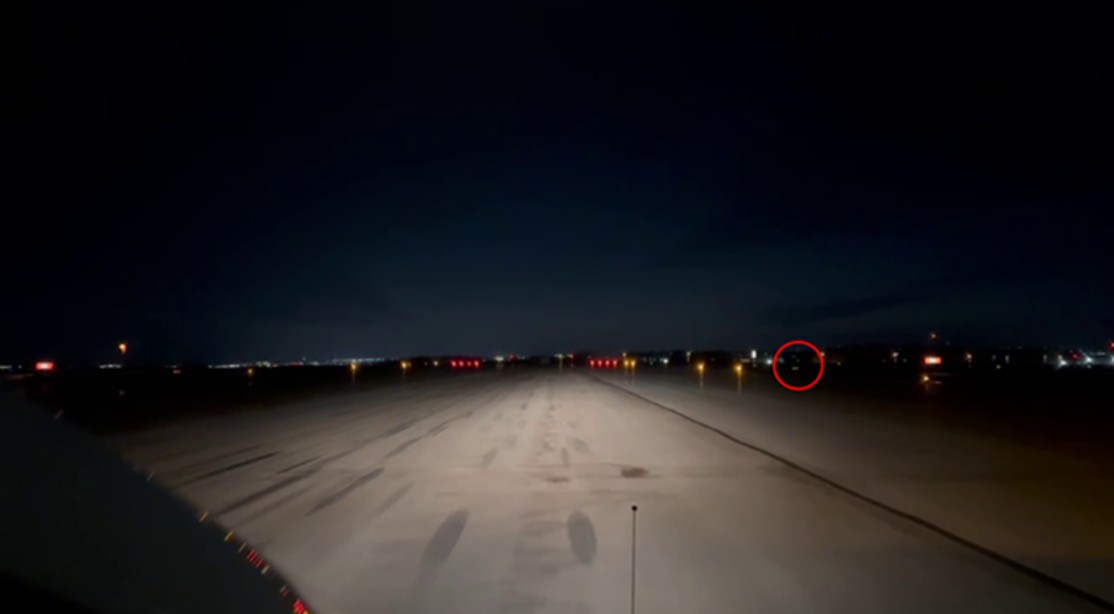
At the same time, a Diamond DA 20-C1 aircraft, operated by a solo student pilot from Moncton Flight College (MFC), was preparing to conduct a night visual flight rules flight. The aircraft had been cleared to taxi along Runway 29 for departure from Runway 06, with instructions to hold short of the runway.
While on short final for Runway 06, the Airbus flight crew observed another aircraft on the runway and initiated a go-around.
The student pilot subsequently contacted the control tower, reported experiencing significant wake turbulence from the Airbus aircraft and requested to return to the hangar for an inspection. During this exchange, the controller established that the flight training aircraft had taxied past the hold short line for Runway 06, and authorized the student pilot to carry out a 180-degree turn on Runway 06 and taxi back to the MFC hangar.
The Airbus aircraft conducted a second approach and landed on Runway 06 without further incident.
A maintenance inspection of the Diamond DA 20-C1 aircraft was carried out with no reported structural or mechanical damage.
The TSB is investigating.
Work completed as of April 2026
- The TSB has conducted witness interviews and additional interviews are planned.
- Relevant operational, maintenance, and training documentation is being collected.
- Aircraft and radar data have been received by the TSB Laboratory and are being used to reconstruct the flight path of the Air Canada Rouge aircraft.
- Air traffic control communication recording has been recovered and is being analyzed to better understand the circumstances leading up to the occurrence.
- No safety communications have been issued to date.
Investigation information
Photos
Download high-resolution photos from the TSB Flickr page.
Class of investigation
This is a class 3 investigation. These investigations analyze a small number of safety issues, and may result in recommendations. Class 3 investigations are generally completed within 450 days. For more information, see the Policy on Occurrence Classification.
TSB investigation process
There are 3 phases to a TSB investigation
- Field phase: a team of investigators examines the occurrence site and wreckage, interviews witnesses and collects pertinent information.
- Examination and analysis phase: the TSB reviews pertinent records, tests components of the wreckage in the lab, determines the sequence of events and identifies safety deficiencies. When safety deficiencies are suspected or confirmed, the TSB advises the appropriate authority without waiting until publication of the final report.
- Report phase: a confidential draft report is approved by the Board and sent to persons and corporations who are directly concerned by the report. They then have the opportunity to dispute or correct information they believe to be incorrect. The Board considers all representations before approving the final report, which is subsequently released to the public.
For more information, see our Investigation process page.
The TSB is an independent agency that investigates air, marine, pipeline, and rail transportation occurrences. Its sole aim is the advancement of transportation safety. It is not the function of the Board to assign fault or determine civil or criminal liability.