
Collision with terrain during landing
Endeavor Air (dba Delta Connection)
MHI RJ Aviation Group CL-600-2D24 (Regional Jet Series 900), N932XJ
Toronto/Lester B. Pearson International Airport (CYYZ), Ontario
The occurrence
On 17 February 2025, a CRJ-900 aircraftMHI RJ Aviation Group currently holds the type certificate for this aircraft. operated by Delta Endeavor Air, was conducting a flight from Minneapolis–Saint Paul International Airport, Minnesota, to Toronto/Lester B. Pearson International Airport (CYYZ), Ontario.
Upon landing, the aircraft impacted the runway. Following the initial impact, parts of the aircraft separated, notably a wing and the tail section, and a fire ensued. The fuselage came to rest slightly off the right side of the runway upside down facing the other direction.
Once the aircraft came to rest, the occupants began to evacuate. The passengers and cabin crew evacuated out the right forward door and one of the two right emergency exit windows. The cockpit door was unusable, so the flight crew exited out of the emergency hatch in the cockpit ceiling.
Twenty-one passengers and crew were injured during the accident, many of whom were hospitalized.
TSB investigators were joined by representatives from the U.S. National Transportation Safety Board (NTSB), the Federal Aviation Administration (FAA), the Greater Toronto Airports Authority (GTAA), NAV CANADA, the operator, and the manufacturers of the aircraft and engines, and Transport Canada.
Work completed as of 12 February 2026
The aircraft wreckage was removed from the accident site and transported to a hangar at CYYZ for examination and analysis. The right wing, landing gear, wing box structure and several components were subsequently sent to the TSB’s Engineering Laboratory in Ottawa for further testing.
A comprehensive metallurgical examination of the fracture surfaces on the wing and landing gear has been completed, and detailed analysis of this work is ongoing.
Data from all on-board recorders—including the flight data recorder, quick access recorder, cockpit voice recorder, enhanced ground proximity warning system, and other on-board units—have been downloaded and analyzed. Several hours of recorded data from previous flights of the occurrence aircraft were also reviewed and compared with the occurrence flight.
Data from NAV CANADA's Advanced Surface Movement Guidance and Control System and the GTAA’s closed-circuit television systems have been analyzed to support the review of the approach, landing, evacuation, and emergency response.
A comprehensive review of the meteorological conditions at the time of the occurrence, including an analysis of wind soundings and specific wind data, has been completed.
The investigation team conducted simulator exercises at the operator’s facility. The approach profile, including occurrence speeds and thrust settings, was examined in a series of exercises, and the analysis of the simulations is ongoing.
An analysis of the survivability factors and the emergency response, including an examination of restraint systems, emergency egress routes, crew coordination, and aircraft rescue and firefighting response is ongoing.
The investigation team is conducting an analysis of similar occurrences worldwide on other aircraft types.
Please refer to this page for further updates.
Photos and video from the site are also available.
Next steps
The investigation is ongoing and is currently in the examination and analysis phase.
Future work will focus on finalizing the analysis of all technical, flight operations, and laboratory results. Following this, the team will proceed with drafting the final investigation report while maintaining continued coordination with representatives from the manufacturer, the operator, the NTSB, the FAA, and Transport Canada.
Media materials
News release
Statement
Deployment notice
Investigation information
Photos
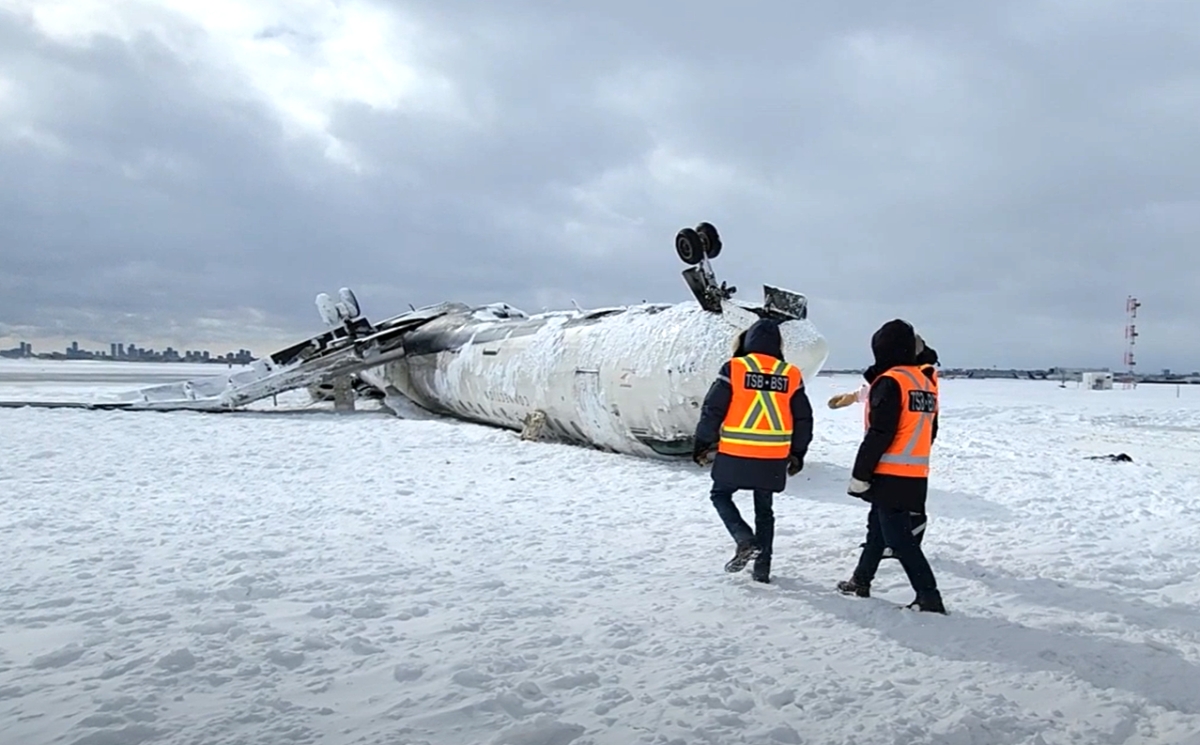
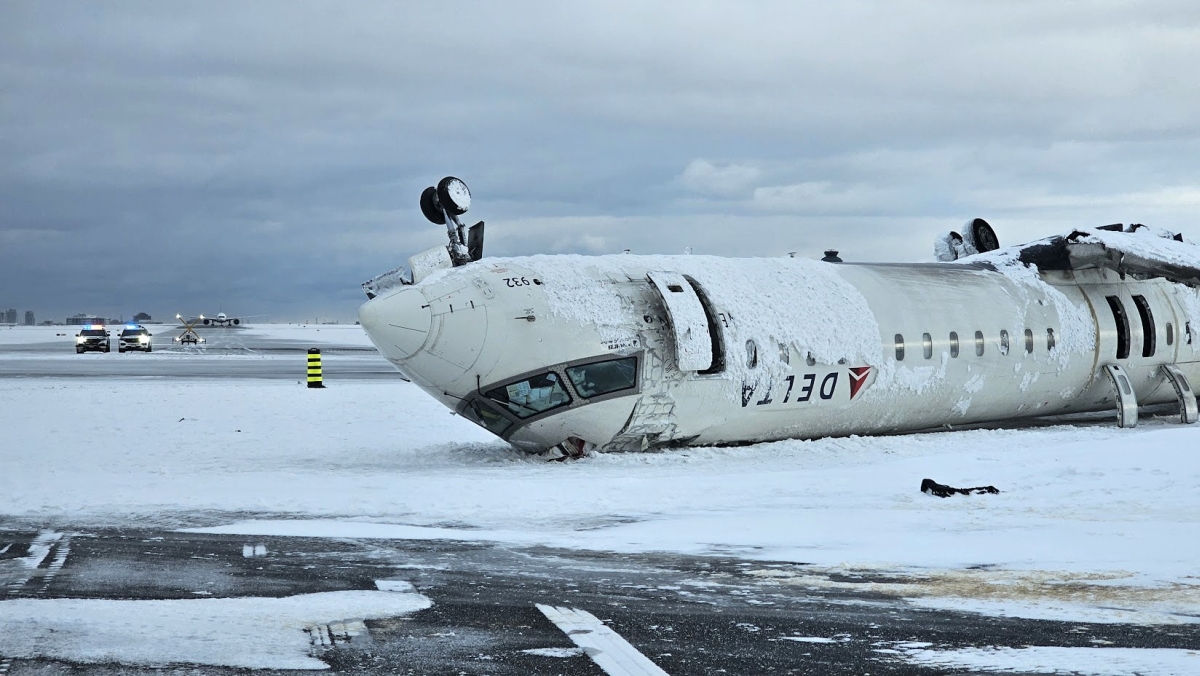

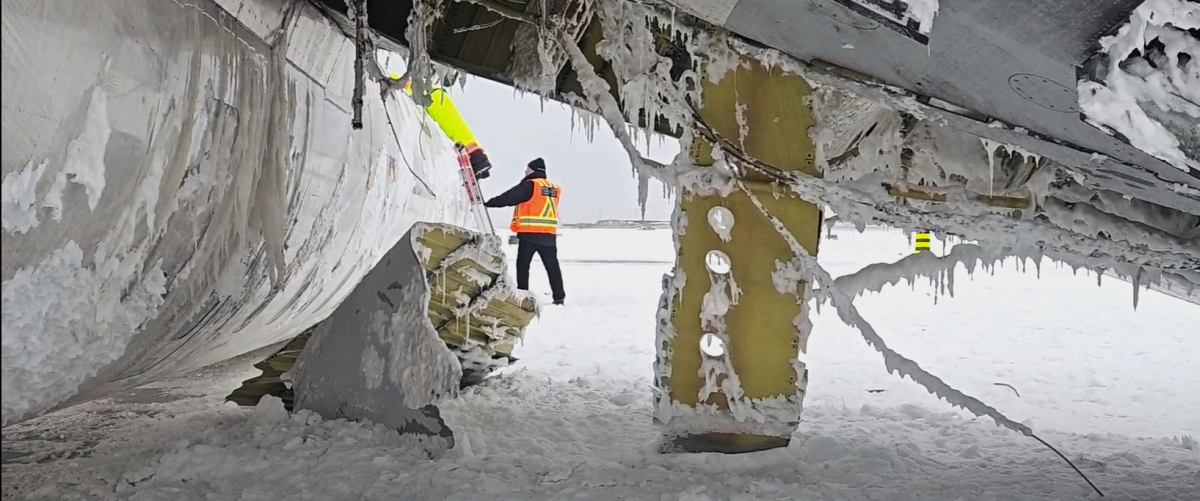
Download high-resolution photos from the TSB Flickr page.
Class of investigation
This is a class 2 investigation. These investigations are complex and involve several safety issues requiring in-depth analysis. Class 2 investigations, which frequently result in recommendations, are generally completed within 600 days. For more information, see the Policy on Occurrence Classification.
TSB investigation process
There are 3 phases to a TSB investigation
- Field phase: a team of investigators examines the occurrence site and wreckage, interviews witnesses and collects pertinent information.
- Examination and analysis phase: the TSB reviews pertinent records, tests components of the wreckage in the lab, determines the sequence of events and identifies safety deficiencies. When safety deficiencies are suspected or confirmed, the TSB advises the appropriate authority without waiting until publication of the final report.
- Report phase: a confidential draft report is approved by the Board and sent to persons and corporations who are directly concerned by the report. They then have the opportunity to dispute or correct information they believe to be incorrect. The Board considers all representations before approving the final report, which is subsequently released to the public.
For more information, see our Investigation process page.
The TSB is an independent agency that investigates air, marine, pipeline, and rail transportation occurrences. Its sole aim is the advancement of transportation safety. It is not the function of the Board to assign fault or determine civil or criminal liability.